129 ImprovedPROVED AVB PhotostabilityOTOSTABILITY UsingING NLCs
hydration and elasticity.6–8. Through the generation of singlet oxygen, UVA radiation can
induce the expression of matrix metalloproteinases that destroy connective tissue.9 In this
context, the availability of sunscreens with broader protection is an increasing consumer
concern. Although most available commercial formulations have a variety of UVB filters,
the number of UVB filters that are also effective UVA absorbers are rare, and they often
present poor performance or are not photostable.
In 2019, the American Regulatory Agency Food and Drug Administration published
regulations for products containing sunscreens, providing for their classification regarding
the safety of filters that are marketed in the USA, classifying them as totally safe, unsafe,
and requiring additional research.10 Among those that require further research is butyl
methoxydibenzoylmethane, also known as avobenzone (AVB).10 AVB is a chemical UV
filter associated with UVA protection. It is presented as a mixture of two tautomeric forms:
enol and keto.11 Chemical equilibrium between the two isoforms favors the enol form
in almost all media due to its ability to form hydrogen bonds. The enol form absorbs in
the UVA spectrum and is responsible for the UVA protection effect. Under irradiation,
the enol form in solution photoisomerizes to the keto form, causing a large decrease in
absorption. The keto form mainly absorbs in the UVC spectrum region, losing its UVA
protective effect.11,12
Photostabilization is critical to the development of sunscreen formulations. Studies have
shown that the use of nanotechnology in photoprotective formulations can improve the
photo stability of some filters.13,14 Formulations of lipid nanoparticles containing AVB have
been evaluated for their ability to absorb UV radiation and their UVA protection factor
after irradiation.14 Type, physical properties, and chemical nature of lipid-based excipients
may influence the physicochemical properties and stability of the lipid carriers,15,16 as well
as their interaction with biological systems.17,18 Therefore, the screening of the excipients
has been described to ensure the development of safe, stable, and efficient lipid-based
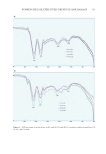
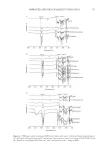
formulations.19,20 In this study, we used thermogravimetry (TG/DTG), differential thermal
analysis (DTA), and Fourier-transform infrared spectroscopy (FTIR) techniques to evaluate
the interaction between AVB and lipid excipients and to select the most suitable components
for a rational nanostructured lipid carrier (NLC) design.
In the development of photoprotective formulations minimal skin permeation is required,
since the exposure to many organic sunscreens has been associated with several adverse
effects, such as endocrine21 and metabolic disruption.22,23 Besides the safety concern, the
search for sunscreens that are stable, and thus maintain the photoprotective ability of the
formulation, mobilizes the investigation of new applications, methods, and technologies
applied to photoprotective formulations. In this work, we designed a NLC formulation
encapsulating AVB, and evaluated its photostability against UV radiation and its ability to
reduce the cutaneous penetration of AVB, favoring its retention on the skin surface.
MATERIALS
Avobenzone was purchased from Symrise AG (Holzminden, Germany). Avobenzone
standard was purchased from Sigma-Aldrich (Missouri, USA). Beeswax, carnauba wax,
isopropyl myristate, sorbitan monoleate (Span 80) and trioleate sorbitan (Span 85) were of
cosmetic grade and purchased from Sigma-Aldrich (Missouri, USA). Oleic acid of cosmetic
grade was acquired from Labsynth Products Laboratories (Diadema, Brazil), Polysorbate 20
hydration and elasticity.6–8. Through the generation of singlet oxygen, UVA radiation can
induce the expression of matrix metalloproteinases that destroy connective tissue.9 In this
context, the availability of sunscreens with broader protection is an increasing consumer
concern. Although most available commercial formulations have a variety of UVB filters,
the number of UVB filters that are also effective UVA absorbers are rare, and they often
present poor performance or are not photostable.
In 2019, the American Regulatory Agency Food and Drug Administration published
regulations for products containing sunscreens, providing for their classification regarding
the safety of filters that are marketed in the USA, classifying them as totally safe, unsafe,
and requiring additional research.10 Among those that require further research is butyl
methoxydibenzoylmethane, also known as avobenzone (AVB).10 AVB is a chemical UV
filter associated with UVA protection. It is presented as a mixture of two tautomeric forms:
enol and keto.11 Chemical equilibrium between the two isoforms favors the enol form
in almost all media due to its ability to form hydrogen bonds. The enol form absorbs in
the UVA spectrum and is responsible for the UVA protection effect. Under irradiation,
the enol form in solution photoisomerizes to the keto form, causing a large decrease in
absorption. The keto form mainly absorbs in the UVC spectrum region, losing its UVA
protective effect.11,12
Photostabilization is critical to the development of sunscreen formulations. Studies have
shown that the use of nanotechnology in photoprotective formulations can improve the
photo stability of some filters.13,14 Formulations of lipid nanoparticles containing AVB have
been evaluated for their ability to absorb UV radiation and their UVA protection factor
after irradiation.14 Type, physical properties, and chemical nature of lipid-based excipients
may influence the physicochemical properties and stability of the lipid carriers,15,16 as well
as their interaction with biological systems.17,18 Therefore, the screening of the excipients
has been described to ensure the development of safe, stable, and efficient lipid-based
formulations.19,20 In this study, we used thermogravimetry (TG/DTG), differential thermal
analysis (DTA), and Fourier-transform infrared spectroscopy (FTIR) techniques to evaluate
the interaction between AVB and lipid excipients and to select the most suitable components
for a rational nanostructured lipid carrier (NLC) design.
In the development of photoprotective formulations minimal skin permeation is required,
since the exposure to many organic sunscreens has been associated with several adverse
effects, such as endocrine21 and metabolic disruption.22,23 Besides the safety concern, the
search for sunscreens that are stable, and thus maintain the photoprotective ability of the
formulation, mobilizes the investigation of new applications, methods, and technologies
applied to photoprotective formulations. In this work, we designed a NLC formulation
encapsulating AVB, and evaluated its photostability against UV radiation and its ability to
reduce the cutaneous penetration of AVB, favoring its retention on the skin surface.
MATERIALS
Avobenzone was purchased from Symrise AG (Holzminden, Germany). Avobenzone
standard was purchased from Sigma-Aldrich (Missouri, USA). Beeswax, carnauba wax,
isopropyl myristate, sorbitan monoleate (Span 80) and trioleate sorbitan (Span 85) were of
cosmetic grade and purchased from Sigma-Aldrich (Missouri, USA). Oleic acid of cosmetic
grade was acquired from Labsynth Products Laboratories (Diadema, Brazil), Polysorbate 20