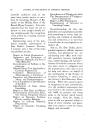
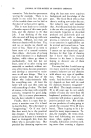
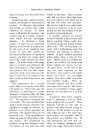
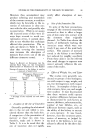
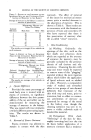
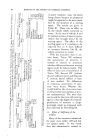
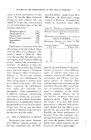
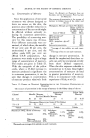
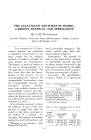
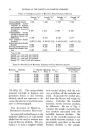
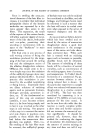
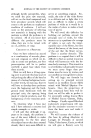
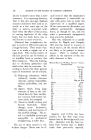
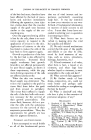
86 JOURNAL OF THE SOCIETY OF COSMETIC CHEMISTS TABLE 3--EFFECT OF THE LOCATION OF THE I•UNCTION SITE ON THE CUTANEOUS PENE- TRATION OF MERCURY IN THE RABBIT Storage of mercury in the kidney is used as a measure of penetration Micrograms Mercury per Gram Wet Kidney Calomel Oifitment Back Skin Belly Skin 1 26 35 2 45 38 3 17 27 4 20 18 5 6 7 6 22 26 -- __ Av. 23 25 The results are averages of two animals on each treatment. TABLE 4---EFFECT OF SIZE OF INUNCTION AREA ON THE CUTANEOUS PENETRATION OF MERCURY IN TI-IE RAT Storage of mercury in the kidney is used as a measure of penetration Micrograms Mercury per Gram Wet Kidney Half of Calomel Standard Area Standard Area Ointment 29 (Cm.) 2 14.5 (Cm.) 2. C 5.3 3.6 D 29 23 The results are averages of six animals on each treatment. 5. Species Difference Provided the same percentage of total body area is treated with an excess of ointment, no significant difference between the skin perme- ability of the rat and rabbit can be demonstrated by measuring the 'storage of mercury in the kidney. This was tested with two 'ointments ot widely different penetrati ng [apac- ities. The results are shown in Table 5. 6. Removal of Excess Ointment Excess ointment was allowed to remain in contact with the skin routinely. The effect of removal of the excess by mechanical means causes quite a marked decrease in the absorption of mercury. This is shown in Table 6. These results are in consonance with the chemical ex- perience of Cole and coworkers (7) who have reported that there is less penetration of mercury after the so-called "clean" inunction. 7. Skin Conditioning (a) Washing. Ordinarily. the openings of the skin• such as the hair shafts and sebaceous ducts which are regarded as the avenues o'f entrance for mercury, may be partially occluded by the presence therein of cell detritus and oily secretions. Cleansing the skin with soap and water would be expected to remove some of this "plugging" material without the more vigorous effects which follow the application of lipold solvents such as alcohol or ether. However a comparative study of washed and unwashed skins in two groups of rats showed definitely that treatment of the skin with soap and water, prior to inunction, had no effect on cutane- ous penetration of mercury as measured by storage of the metal in the kidney even though the cleaning operation was seen to re- move a visible yellowish scale of dander-like material. (b) Pretreatment tfith Lard. "Softening" of the skin by thor- oughly inuncting lard into the site 24 hours before application ot a mercury ointment had a tendency

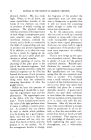
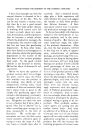
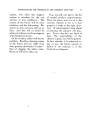
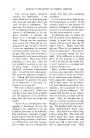
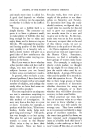
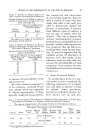
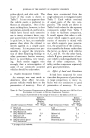
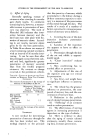
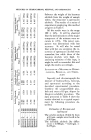
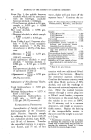
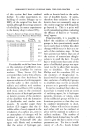
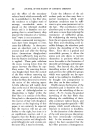
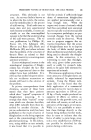
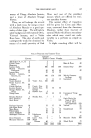
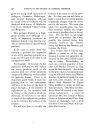
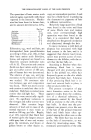
STUDIES ON THE PER.MEABILITY OF THE SKIN TO MERCURY 87 TABLE 5--EFFECT or ANIMAL SPECIES ON THE CUTANEOUS PENETRATION or MERCURY Storage of mercury in the kidney is used as a measure of penetration through 8 per cent of the total body area Micrograms 1V/ercury per Gram Wet Kidney Calomel Ointment Rat Rabbit C 5.3 4.5 D 29 25 The results are averages of six animals of each species on each ointment. TABLE 6•ErFECT OF REMOVAL OF EXCESS OINTMENT REMAINING ON THE SKIN OF THE RAT AFTER 2 MINUTES' INUNCTION Storage of mercury in the kidney is used as a measure of penetration Micrograms Mercury per Gram Kidney Excess Removed Excess Remained After 2 Min. 24 Hr. 22 41 20 29 4 ß 22 10 31 '15 18 21 23 -- ,__ Av. 15 27 to increase the permeability of the skin for mercury. All of the ointments presented to us for evaluation contained 30 per cent calomel, which was suspended in vehicles representative of three generally recognized classes, namely, fat, water-in-oil, and oil-in-water. It soon became apparent, however, after a number of assays had 1Seen made, that while it was easily pos- sible to demonstrate marked dif- ferences in penetration of mercury from different types of vehicles, it was not easy to explain these dif- ferences. This' was so because the ordinary multicomponent ointment presented such a formidable array of possible variables affecting penetra- tion ot mercury that the task of un- ravelling these would become hope- less. It must be admitted that the complete picture of • absorption of mercury, or for that matter, of any substance, must not .only take into account the individual effect of each component of an ointmefit but also the likelihood of interaction between components. 3. Single Component 1/ehicles In attempting to arrive at a par- tial answer we have considered the following components of ointments and used them as separate vehicles for calomel: water, petrolatum, mineral oil, anhydrous lanolin, hy- drous lanolin, corn oil, lard, pro- TABLE 7--THE CUTANEOUS PENETRATION or MERCURY WHEN APPLIED AS A J0 PER CENT SUSPENSION OF CALOMEL IN A NUMBER OF SINGLE COMPONENT VEHICLES The measure o{ penetration is the storage ooe mercury in the kidneys of the rat Micrograms Mercury per Gram Wet Kidney Anhy- Propy- ,Petrola- Mineral drous Hydrous, Corn lene Oleic Control Water tum Oil Lanolin Lanolin Oil Lard Glycol Acid Series A, Females* 0.07 4.4 6.0 5.6 6:0 5.9 13 11 19 Series B, Males* 0.17 4.1 5.6 5.2 5.6 ... 11 10 16 26 * Average of six animals on each treatment.
Purchased for the exclusive use of nofirst nolast (unknown)
From: SCC Media Library & Resource Center (library.scconline.org)