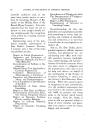
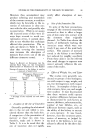
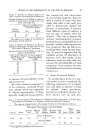
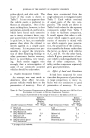
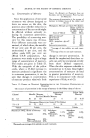
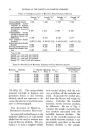
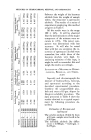
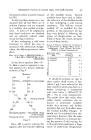
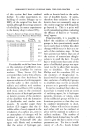
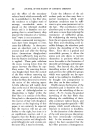
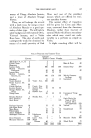
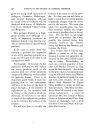
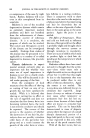
JOURNAL OF THE SOCIETY pylene glycol, .and oleic acid. The result of this study is shown in Table 7. It is at once apparent that the vehicle exerts a profound in- fluence.on absorption. One of the most striking facts, however, is that petrolatum, mineral oil, and lanolin, which have found such extensive use in many ointment bases, sup- port a penetration of mercury which is quite low, in fact, not markedly greater than' when the calomel Js merely applied as a simple paste with water. It is at present not per- missible to extend the interpreta- tion of these s•arprising findings to other penerrants besides mercury, but it is, nevertheless, very tempt- ing. Such results suggest very strongly that a reinvestigation of some of our commonly accepted vehicles should be undertaken. 9. Double Component ?ehicles An attempt was next made to determine what effect two-com- ponent vehicles would have on the penetration of mercury. Four of OF COS. METIC CHEMISTS these were con'structed from the single substances investigated under Table 7. Each vehicle consisted of equal. parts of the two com- ponents. The results are shown in Table 8 with values for the separate components added from Table 7 in order to facilitate comparison. It would appear that when a sub- stance which supports good pene- tration of mercury is mixed with one which supports poor penetra- tion, the properties of the combina- tion resemble the former rather than the latter, as shown with vehicles A, C, and D. On the other hand, vehicle B gives penetration of mer- cury which is indistinguishable from that of either component. No- tably, neither component separately gives good penetration. To. Effect of Lard and Petrolat}•m It had been suspected for some time that the presence of petrolatum in large proportions in many ve- hicles was not conductive to good penetration of mercury. To con- TABLE 8--THE CUTANEOUS PENETRATION OF MERCURY W•IEN APPLIED AS A 30 PE•. CENT SUSPENSION OF CALOM. EL IN DOUBLE COMPONENT VEHICLES ß The measure of penetration is the storage of mercury in the kidneys of the rat Double Component Vehicle Kidney*, Kidney, . Micrograms Micrograms Mercury Mercury per Gram per Gram Wet Weight Single Component Vehicle Wet Weight A 50% Lard 50% Anhydrous lanolin B 50% Mineral oil 50% Anhydrous landin C 50% Corn oil 50% Petrolatum D 50% Propylene glycol 50% Petrolatum Lard 11 Anhydrous landin0 5.9 Mineral oil 10 Corn oil Petrolatum 14 Propylene glycol 10 5.8. 5.4 12 5.8 17 * Averages of six animals.

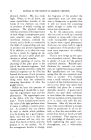
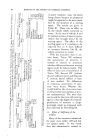
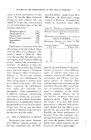
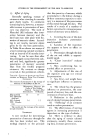
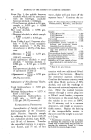
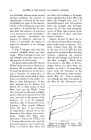
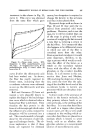
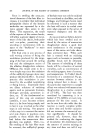
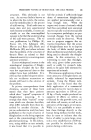
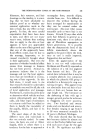
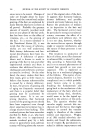
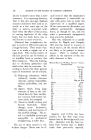
STUDIES ON THE PERMEABILITY OF THE SKIN TO MERCURY 80 firm this, four different mercurials, ammoniated mercury, metallic mer- cury, yellow oxide of mercury, and calomel were suspended, re- spectively, in each of two double component bases consisting of equal parts of lard and lanolin and equal parts of petrolatum and lanolin. These vehicles were selected for st. ud.y because they frequently form the main base for a number of com- monly used ointments. The' con- centration of mercury was 25 per cent in all cases. In Table 9 is shown ammoniated mercury, while of little or no significance in vehicle E, is highly significant in vehicle A. Pre- sumably this marked effect of the 'vehicle may be attributed to some interaction with the compound, as has been suggested by Moncorps (8) who observed that the stability of ammoniated nlercury was some- what uncertain. It is, therefore, not unlikely that the reactivity of a compound with its vehicle may be one of the causes of differences be- tween compounds. TABLE 9--COMPARISON BETWEEN Two TYPES OF VEHICLES CONSISTINO 'OF LARD AND PETKO- LATUM WITH nANOLIN AS COMMON CONSTITUENT ON THE PENETRATION OF FOUR DIFFERENT MERCUP4ALS The concentration of mercury in all ointments is 25 per cent. The measure of penetration is' the storage of mercury in the kidneys of the rat Vehicle Calomel Micrograms Mercury per Gram Wet Kidney Ammoniated Metallic Yellow Oxide Mercury Mercury Mercury E 50% Petrolatum). 50% Lanolin f 4.2 5.5 ' 7.9 11 A 50% Lard } . 50% Lanolin f 8.8 19 14 23 The results are averages of six animals on each treatment. the marked superiority of the lard- component vehicle over the petro- latum-component vehicle. The in- crease in penetration of mercury from calomel, metallic and yellow oxide is roughly twofold, but in the case of the ammoniated mercury the increase is nearly fourfold. Be•ides the profound difference in penetra- tion of mercury, which can be at- tributed directly to the influence of the vehicle, it must be emphasized that the compound of mercury also has an effect on penetration, yellow oxide giving the highest and calomel the lowest. It is to be noted that the difference between calomel and Effect of PFetting /lgents Numerous observations have indi- cated that the presence of wetting agents might be very important to the penetration of substances through the skin. In order to study the effect of wetting agents on mer- cury penetration, two factors were considered: (1) type of wetting agent, (2) type of vehicle. For the first experiment a well-known aryl alkyl polyether alcohol (Triton NE) was mixed in 2 per cent concentra- tion in three different bases, repre- sentative of (A) a pure animal fat, (B) a pure mineral base, (C) an oil-
Purchased for the exclusive use of nofirst nolast (unknown)
From: SCC Media Library & Resource Center (library.scconline.org)