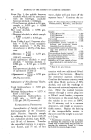
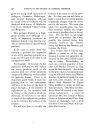
94 JOURNAL OF THE SOCIETY OF COSMETIC CHEMISTS BIBLIOGRAPHY 1. Cole, H. N., Schreiber, N., and Soil- mann, T., Arch. DermatoL and SyphiloL, 21,373 (1930). 2. Cole, H. N., DeWolf, H. F., Schreiber, N., Soilmann, T., and Cleve, J. V., Ibid., 27, 1 (1933). 3. Soilmann, T., Cole, H. N., and Schrei- ber, N. E., Ib/d., 32, 242 (1935). 4. Laug, E. P., J. Lab. and Clin. Med., 29, 308 (1944). 5. Laug, E. P., and Nelson, K. W., 2. Assoc. O•c. Agric. Chem., 25, 399 (1942). 6. Rothman, S., Arch. Dermatol. u. Syphi- lis, 131,549 (1921). 7. Cole, H. N., Gainreel, J. A., Rausch- kolb, J. E., Schreiber, N., and Soilmann, T., Arch. Dermatol. and SyphiloL, 17, 625 (1928). 8. Moncorps, C., Arch. f. Exper. Path. u. Pharmacol., 155, 51 (1930). 9. Dueruling, W. W, Arch. Dermatol. and Syphilol., 43, 264 (1941). 10. Menschel, H., Blochem. Ztschr.• 137, 193 (1923).

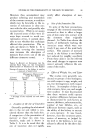
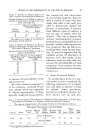
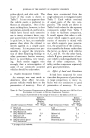
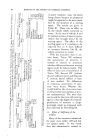
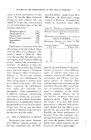
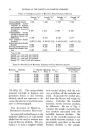
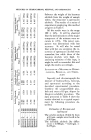
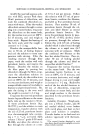
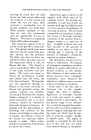
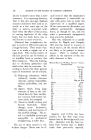
THE ANALYSIS OF MIXTURES OF HYDRO- CARBONS, BEESWAX, AND SPERMACETI* By S. H. NEwiuROF. R Cosmetic-Division, Food and Drug Atdministration, Federal Security /Igency, If ashington, D.C. T•. coMmsAT•os of hydro- carbons, beeswax, and spermaceti is frequently encountered in cos- metic creams but the chemical methods of analysis available for such mixtures are unsatisfa. ctory. This paper is a report of studies on the use of chromatography as'a new approach to the problem. We. have found that after the saponi- fication of the mixture, we can chromatographically separate the unsaponifiable hydrocarbons from the unsaponifiable beeswax and spermaceti alcohols. Further- more, from solubility studies on the' unsaponifiable beeswax and sper- maceti alcohols, it is possible to cal- culate the bkeswax and spermaceti. An outline of the procedure is given in Charts 1, 2, and 3. It is, of course, necessary to know the behavior of each of the com- ponents to apply the data ob- tained by the above procedure to the analysis of a mixture. Ac- cordingly, the samples of beeswax, spermaceti, and hydrocarbons used * Presented at the December 3, 1947, Meeting, New York City. were individually examined. The results indicate that these sub- stances behave as follows: Hydrocarbons. The mineral oil used as the hydrocarbons contains no saponifiable material and will be almost entirely recovered in the material not adsorbed by the Al•.Oa from the petroleum benzin solution. The data are presented in Table 1. Spermaceti. The saponification constants (Table 2) of spermaceti TABLE I--CHROMATOGRAPHY OF HYDRO- CARBONS Sample Gm. U.S.P. White Mineral Oil (Heavy) 5. 230 First petroleum benzin fraction* 5.225 Second petroleum benzin fraction 0.001 First hot alcohol fraction 0. 007 Second hot alcohol fraction 0. 000 * Rate 4 ml. p.b./minute. TABLE 2----THE SAPONIFICATION OF SPER- MACETI Sample U.S.P. Unsaponifiable Fatty Spermaced, Matter, Acids, Gm. Gm. Gm. 3.825(a) 1.894(49.5%) 2.041(53.4%) 3.823(b) 1.903 (49.8%) 2.040(53.4%) Av. (49.7ø7o) Av. (53.4ø7o)
Purchased for the exclusive use of nofirst nolast (unknown)
From: SCC Media Library & Resource Center (library.scconline.org)