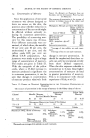
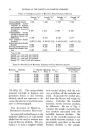
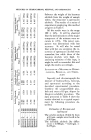
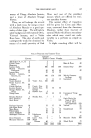
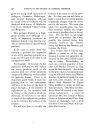
92 JOURNAL OF THE SOCIETY OF COSMETIC CHEMISTS •4. Concentration of Mercury Since the application of mercurial ointments was always designed to leave an. excess on the skin, the question arose whether reduction in concentration of the mercurial might be affected without seriously re- ducing its cutaneous penetration. The possibility of. conserving mer- cury by this means was obvious. Four different mercurials were ex- amined, of which three, the metallic 50 per cent and 10 per cent, the ammoniated 4 per cent, and the yellow oxide 0.93. per cent are official U.S.P. preparations. Ad- justments were made to give a large range of concentration of mercury. The results are given in Table 13. With the exceptlob of the yellow oxide, where a 25-fold increase in mercury produced a significant rise in cutaneous penetration, it can be seen that changes in concentration of mercury produce relatively little TABLE 12--EffECT or PARTICLE SIZE OF CALOMEL ON THE CUTANEOUS PENETRATION OF MERCURY The measure of penetration is the storage of mercury in kidney tissue of the rabbit arid the rat Micrograms Mercury per Grain Wet Kidney Range of Size' 6f Calomel Particles 10-1000 1-10 Type of Vehicle Micra Micra 100% petrolatum • 16 26 Oil-in-water* 18 35 Water-in-oil* 11 32 100% propylene glycolt 15 28 Av. 1--•' % Increase in penetration 100% * Average of two rabbits on each treat- ment. t Average of six rats on each treatment. change in mercury penetration. It should be emphasized that these re- sults can only be interpreted strictly from short 24-hour exposures. When the skin exposure schedule is extended up to 4 days these higher concentrations of merc. ury do lead to greater penetratio.n of mercury. This is in consonance with clinical experience of Cole, et al:(1). TABLE 13--EFFECT •OF MERCURY CONCENTRATION IN THE CUTANEOUS PENETRATION OF MERCURY The measure of penetration is the storage of mercury in the kidney tissue of the rat Yellow Oxide Mercury Ammoniated Calomel Metallic Mercury ø Mercury Per Cent Metallic Mercury 25 8.3 50 25 10 25 4 25 0.93 Micrograms Mercury per Gram of Wet Kidney 7.9 6.8 12 13 10.5 12 11 13 7.0 Vehicle Vehicle Vehicle Vehicle Petrolatum 100% Oleate of mercury 4% Anhydrous Anhydrous lanolin '5.3% lanolin 1.0% Lanolin 60% White petro- Yellow ' latum 94.7% petrola- turn 99.0% White wax 10% . White pdtrolatum 26% The results are averages of six animals on each treatment.

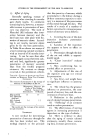
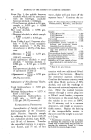
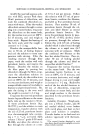
STUDIES ON THE PERMEABILITY OF THE SKIN TO MERCURY 98 •5. 'Effect of Aging Generally speaking, reassay of ointments after standing for months gave check results. In ointments containing lard, however, a measur- able increase in penetration of mer- cury was observed. The work of Menschel (10) indicates that inter- action between mercury and the lard base may take place with for- mation of mereuric oleate. Accord- ing •o our results, mercuric oleate gives by far the best penetration. In Table 14 are shown two assays of a lard containing calomel ointment, with an interval of 16 months inter- vening. It can be seen that after the prolonged contact between calo- mel an'd lard, significantly greater penetration of mercury occurred than (rom the freshly prepared ointment. By contrast no change occurred.in the petrolatum vehicle. TABLE 14--EFFECT oF A6tN6 ON THE PENE- TRATION OF MERCURY FROM TWO CALOMEL OINTMENTS The measure of penetration is the storage of mercury in the kidneys of the rat Micrograms Mercury per Gram of Wet Kidney Assayed Assayed After Immediately 16 Months 30% Calomel 70% Benzolin- atedlard 30% Calomel 70% Petrola- rum 11 17 5.6 5.5 The results are the averages of six animals on each treatment. SUMMARY A new method for determini.ng penetration of mercury through the skin has been worked out. This method depends on the principle that the quantity of mercury which accumulates in the kidney during a 24-hour cutaneous exposure to mer- cury is a measure of the penetration of this metal through the skin. The results of a study of a number of factors concerned in cutaneous pene- tration of mercury are as follows: 1. Covering the site of the skin inunction increases penetration nearly fourfold. 2. Lo(•ation of the inunction site appears to have no effect on penetration. 3. Penetration through the skin of the rat and rabbit is approxi- mately equal. 4. "Clean inuncti0n" reduces penetration. 5. Skin conditioning has no marked effect on penetration. 6. Adjustments of the size of the exposure area alie not critical for penetration. 7. Sex, litter, and weight have no significant'influence on penetra- tion. 8. The vehicle has the greatest influence on penetration, the com- pound of mercury less, and the con- centration of mercury least. 9. Reduction in the particle size of calomel i'ncreases penetration. 10. "Stiffening" of an ointment tends to reduce penetration. 11. The effectiveness of wetting agents in increasing penetration is dependent on the type of vehicle. 12. There is evidence to show that the aging of certain calomel ointments, notably those contain- ing lard, increases penetration.
Purchased for the exclusive use of nofirst nolast (unknown)
From: SCC Media Library & Resource Center (library.scconline.org)