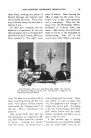
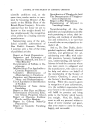
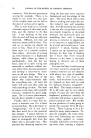
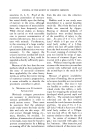
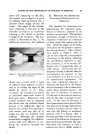
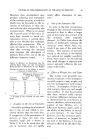
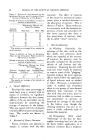
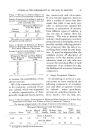
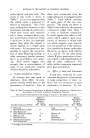
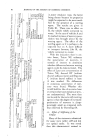
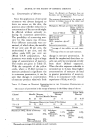
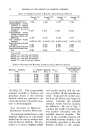
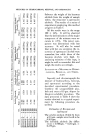
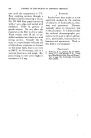
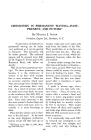
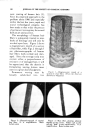
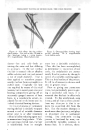
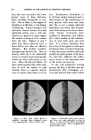
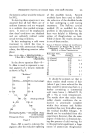
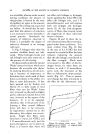
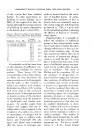
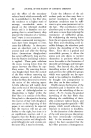
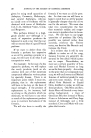
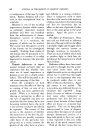
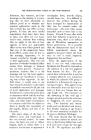
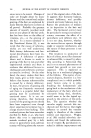
110 JOURNAL OF THE SOCIETY OF COSMETIC CHEMIffFS nent waving of human hair (1). Since his empirical approach to the problem about 1906 and especially within the last few years, rapid and sound technological progress has been made so that today the process of permanent waving may be termed both an art and a science. The morphology of human hair fibers is adequately treated in text- books of histology and will only be touched upon here. Figure 1 shows a diagrammatic sketch of a section of hair fiber, while Figs. 2 through 5 are photomicrographs of human hair fibers both normal and dam- aged. Since the average scalp may contain either a preponderance of resistant or of damaged hair, it will be appreciated that the chemist in formulating waving lotions must exercise a great deal of judgment. Permanent waving may be broadly subdivided into two Figure l.-Diagrammatic sketch of a section of a hair fiber. (From the qmerica. Hairdresser 3Iagazine) Figure 2.--Photomicrograph of normal hair fiber. 55 X magnification. Basic fuchsin stain Figure &--Hair fiber showing physical damage to the cuticle. Fibers such as this will not "hold" a wave satisfactorily. 55 X magnification. Basic fuchsin stain

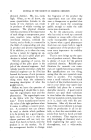
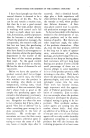
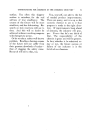
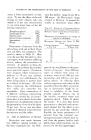
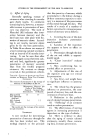
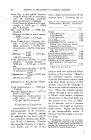
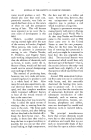
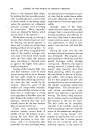
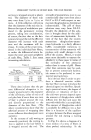
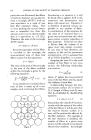
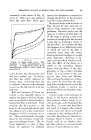
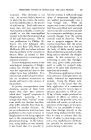
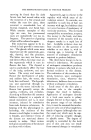
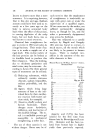
PERMANENT WAVING OF HUMAN HAIR: THE COLD PROCESS 111 Figure 4.--Hair fibers showing trichor- rhesis nodosa. Hair such as this will tend to show breakage during a waving process. 55 X magnification. Basic filchsin stain v•gurc 5.--wamageu fiber showing longi- tudinal splitting. 50 X magnification. Basic fi•ch•in stain classes-hot and cold--both at- raining the same end but differing in approach. In the hot method the hair is treated with an alkaline sulfite solution and wrapped around a rod of small diameter. lieat is then applied to transform perma- nently the hair from a straight to a curled state. Originally the heat was supplied bv means of electrical heaters, but in recent years chemical heating compositions giving off' an accurately gauged amount of heat have, to a considerable extent, re- placed t•e rather elaborate and in- volred electrical heating devices. In the cold process of permanent waving the hair is similarly wrapped around a rod of suitable diameter either prior to or after treatment with an alkaline reducing agent such as ammonium thiogl.ycolate. With- out applying external heat, the hair is transformed from its straight state into a desirable undulation. When this has been accomplished, as determined by inspection of test curls, the undulations are perma- nentiv fixed in position bv the appli- cation of a suitable oxidizing agent. This is a brief outline of the process. It will be of interest to discuss each step in greater detail. Prior to giving any permanent wave, but particularly prior to giv- ing a successful cold wave, it is essential that the hair be effectively cleaned. To the uninformed, soap is soap, and all that can be expected from any shampoo is that it re- move the superficial dirt from the hair. But the modern shampoo is much more than just soap, and plays an important role in permanent waving. Any permanent waving process is burdened by many un- controllable variables common to human hair. It is obvious, there-
Purchased for the exclusive use of nofirst nolast (unknown)
From: SCC Media Library & Resource Center (library.scconline.org)