118 JOURNAL OF THE SOCIETY OF COSMETIC cI-rEMISTS Since in swelling the cross-sec- tional diameter of the hair fiber in- creases, it is evident that individual polypeptide chains of the keratin molecules are separated by a dis- tance greater than exists in dry fibers. This separation, the result of the rupture of the various bonds, will allow a greater degree of move- ment of the side chains, both polar and non-polar, permitting their uncoiling or reorientation with re- spect to the "backbone" or main peptide chains. The final step in any process of cold waving consists of fixing the undulation produced by the wrap- ping of the hair around the curling rod and the subsequent action of the alkaline thioglycolate solution. Offhand, this would seem to be a very simple step since the oxidation of the sulfhydryl groups alone may produee the desired effect.' In actual practice this reoxidation is pro- duced by the so-called neutralizing or fixing lotions. Essentially these are dilute solutions of oxidizing agents such as potassium bromate, hydrogen peroxide, potassium io- date, etc. If the fundamental as- pects of this step are examined carefully, it soon becomes evident that it is far from being simple, and in fact it is as involved as the other steps in cold waving. One purpose of this step is to reorient the amino acid side chains in positions com- parable to those which they had had before the ammonium thio- glycolate was applied. Then, too, the swelling of the hair fiber must be reversed, the sulfhydryl groups of the hair must not only be oxidized but reoxidized to disulfides, and salt linkages and hydrogen bonds must be reformed in such a manner that the hair will retain its curled state even when exposed to the action of repeated shampoos and the ele- ments. As was pointed out before, keratin which has been swelled and re- duced by the action of ammonium thioglycolate shows a good deal more randomness in the arrange- ment of the amino acid side chains than untreated hair. When such hair is treated with an oxidizing agent such as bromate or peroxide, disulfide bonds will be reformed. The amount of rebuilding of these bonds will be a function of several variables, such as concentration of the oxidizing agent, time of contact, and temperature. In Table 3 the ef- fectiveness of a commercial 3% po- tassium bromate solution in oxi- dizing reduced hair is shown. In this particular experiment a sample of hair was reduced with ammonium thioglycolate to a cystine content of 2.5-3.0%. The hair was then reoxidized by immersing it in a beaker of 3% KB.rOa at room tem- perature for the time stated. It can be seen from this table that the reaction is nearly complete within a short time and further oxidation did not increase the amount of cys- tine significantly. It should be pointed odt, however, that the method for evaluating the degree of reoxidation (6) determined only the amount of cystJne existing at any time and does not tell if any

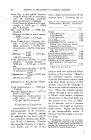
PERMANENT WAVING OF HUMAN HAIR: THE COLD PROCESS 119 of this cystine had been oxidized further. In other experiments re- building of cystine linkages up to 100% of the original has been ob- tained, although the average amount of rebuilding (in many experiments in the beauty shop) is about 85%. TABLE 3--EvvECT Or T•ME ON OF RoeOXIDATION OF REOUCeO HUMAN HAIR Cystine Oxidation Time, Min. Found, % Av. 0--Control not reduced 16.1 0--Control not reduced 15.1 15.6 3 10.2 3 10.3 10.3 6 11.9 6 12.0 12.0 9 12.1 9 12.4- 12.3 15 13.2 15 13.2 13.2 Considerable work has been done on the oxidation of sulfhydryl com- pounds and disulfides by various workers. Thus, Stoves (11) has contended that cystine links of kera- tin fibers are first hydrolyzed 'by aqueous solutions of oxidizing agents and the sulfur is then oxidized to sulfuric and sulfonic acid residues. Rutherford and Harris (12) working with wool, came to the conclusion. that the action of hydrogefi peroxide on keratin consists of the oxidation of the disulfides with the formation of disulfoxides and similar com- pounds. In another paper these authors (13) suggest that the di- sulfide sulfur of wool, exposed tb the irradiation of a carbon arc, even in an atmosphere of nitrogen will be oxidized in part to sulfuric acids. Lemin and Vickerstaff (14) also agree with Harris and co-workers that the action of hydrogen per- oxide on keratin leads,to the oxida- tion of disulfide bonds. It seems, therefore that oxidation of hair or keratin does not necessarily stop at the cystine stage but will frequently go beyond it. This is a point well worth remembering when evaluating the efficacy of fixative or "neutral- izing" agents. Experimentally, it is possible to follow the oxidation of sulfhydryl groups in hair quantitatively much more easily than to follow the other changes which occur in hair as a re- suit of the oxidation step. It has been pointed out before that one Of the actions of ammonium thiogly- colate is to swell the hair. In such hair it would seem that som• of the pairs of sulfhydryl groups are sepa- rated too far to allow their reoxida- tion to disulfides. The work of Phillips and his coworkers (15) on the oxidation of thioglycolate re- duced wool by oxygen also indicates that oxidation of sulfhydryl groups to disulfides may not be as smooth a process as is generally conceived. It can be visualized that when re- duced hair is treated with an excess of oxidizing agent, be it hydrogen peroxide, bromate, or iodate, some of the sulfliydryl groups will be in a fortuitous position so that they can be oxidized immediately to disul- fides. Others will not be so situated and either will not be oxidized at all or will be oxidized to sulfuric or sulfonic residues. The number of disulfide bonds formed may be suffi- cient to give the hair a more or less permanent set. Yet due to insuffi- ciency of--S•S-- bonds formed
Purchased for the exclusive use of nofirst nolast (unknown)
From: SCC Media Library & Resource Center (library.scconline.org)