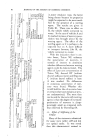
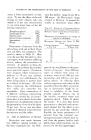
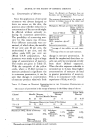
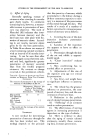
128 JOURNAL OF THE SOCIETY given by using small quantities of Aubepine, Coumarin, Heliotropin, and natural Ambergris, whereas an initial note of freshness will be obtained with traces of Aldehydes C-8, C-12, Aldehyde Violet, Citral, and Bergamot. This perfume diluted in a high- grade alcohol can--although it is made of expensive productsrobe balanced in such a way that the cost will not exceed that of a good French perfume. If we want to derive from this formula a perfume less expensive or an oil for scenting a powder or 'a soap, we will have to do what I call transposition work. For example: In the case of a less expensive perfume, we will replace the costly products (such as ab- solutes) with one of the numerous compounds offered at various prices by specialty houses. There is an important point which I must em- phasize, that is: the replacement will have to be done on the basis of equal strength if the product of replacement is, for instance, half as strong as the absolute which we eliminate, we will have to use twice as much of the replacement product so as to maintain the balance of the formula. We will also have to modify the OF COSMETIC CHEMISTS formula if we want an oil for pow- der. In that case we will have to ke. ep in mind that an oil for'powder is generally cheaper than the oil we use for the extract. We must also take into consideration the fact that materials oxidize and evapo- rate more in powders than in the ex- tract. We will have to use larger quantities of products like Orris, possibly use resinoid rather than concrete, reinforce the Vetiver notes, use fixative like Benzoin and increase the Civet. It is evident that it will be very difficult to make an oil for soap, because Ionones are generally de- stroyed by free alkali which is. pres- ent in soaps. Nevertheless, we may use a certain quantity of Ion- ones and Methyl Ionones as long as we fix them properly. According to the price that our compound must cost, we will use Ionones and Methyl Ionones of technical grade for soap and even some residues. If we can 'afford Orris Resinold or Liquid Orris, distilled on cedar, we will use these products. Oak Moss and Syn- thetic Moss will furnish a very inter- esting background a trace of' Geranium Bourbon instead of Rose Cistus or Labdanum and Clary Sage instead of Ambergris and a little synthetic Civet and Musk will com- plete the formula.

THE DERMATOLOGIST LOOKS AT THE HAIR PROBLEM* By EUGENE F. TRAUB, M.D. New York, N.Y. S•½cE EV•R¾O• has hair, either too much or too little, daily attention must be giyen to this appendage either by combing, brushing, shaving, washing, cut- ting, or arranging. Innumerable preparations are sold to aid these processes and to help eliminate un- wanted hair or to stimulate and grow new hair. The therapeutic claims used to promote the sale of these items are such that it is well to study, for a moment, the basic knowledge we have concerning hair. At once one becomes aware that most of our information is based on legend or theory rather than on act- ual proved facts. Even the phylog- eny of the hair isnot entirely settled. For those who have not been in- clined to postulate a primary sensory function for hair, i.e., its derivation from scale borne sense organs of reptiles or tactile spots of mam- malian skin, one of the simplest and at the same time most plausible views is that hair, feathers, and scales are morphologically equiva- lent. There are many develop- mental features that speak against * Presented at the May 13, 1947, Meeting, New York City. such relationships. There are some resemblances between hair and teeth and those who would homologize the two structures point out that certain developmental disturbances in the pilary system are associated with malformations in tooth de- velopment. Danforth (1) concludes that for the present, we must con- tent ourselves with regarding mam- malian hair as akin to lateral line organs, tactile organs of' reptiles, placoJdal scales, teeth, claws, der- mal scales, and feathers. It is more closely related to some of these structures than to others, but with none of them is it fully homologous. The subject offers an attractive field for future research. The actual process of hair ex- change, commonly called shedding of the hair, continues throughout life. Shedding of the hair in humans differs from that in animals in that it is a constant phenomenon although it may progress more rapidly at cer- tain seasons than at others. The hair loosens from its papilla and rises up to the level of the middle of the follicle. It here becomes at- tached to the hair bed and is called a bed hair to differ it from the 129
Purchased for the exclusive use of nofirst nolast (unknown)
From: SCC Media Library & Resource Center (library.scconline.org)