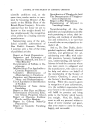
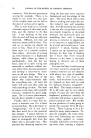
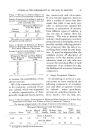
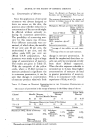
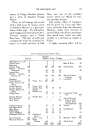
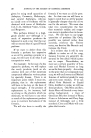
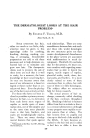
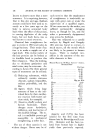
13t3 JOURNAL OF THE SOCIETY . known to deserve more than a mere comment. It is surprising, however , ' that in this day and age, thallium acetate could have been used as re- cently as a few years ago on the body to remove unwanted body hairs when the effect of this poison, in causing depilation of the scalp hairs, but not body hairs, was so well known to most everyone. Chemical hair straighteners be- gan to evolve in 1910 and today do a huge business. Their mode of ac- tion is to make a supple out of a rigid shaft. The cystine variety of the hair proteins can be broken at its disulfide bond to produce this fiber relaxation. Thus the kinking, due to thickness gradations and axial twists, may be overcome. Ac- cording to Lewis (9a) three general types of treatments can be utilized: (1) Reducing substances, which ordinarily contain stannous chloride, sodium hyposulfite, sodium polysul'fide, and the like. (2) Agents which bring large amounts of heat to the indi- vidual hairs by their exother- mic reaction with water( cal- cium oxide, for example). (3) Caustics, chiefly sodium and barium hydroxide. Three changes occur: hydrolysis, inhibition, and destruction of the disulfide linkage. The re- sult is a malleable protein gel susceptible to mechanical straightening, a softer hair. ' The use of these caustics is not Without danger. Burns may be of OF COSMETIC CHEMISTS such severity that the employment of straighteners is inadvisable ex- cept with great care or under the supervision of a qualified expert. Of two cases seen by the author, one suffered permanently damaging burns, as though by lye, and the other a permanently depigmented area across his forehead. Hair was subjected to a careful analysis by Bagchi and Ganguly (10) and. was found to contain, in much excess,. all the metals which are likely to be present in human tissues. There is marked vari- ability in the amounts of the me- tallic elements in hair. MXxED HAXR-oF 30 MALE ADULTS--FROM A BARBER S}tOP Per Cent C ........................... 44.60 N ........................... 14.60 H ............................ 5.40 S ............................ 3.80 P ........................... 0.08 C1 ................... : ....... 2.00 Mg. per Kilo Water ....................... 4.10 Pb .......................... 47.7 Cu .......................... 108.0 As .......................... 2.2 Zn .......................... 212.0 Fe .......................... 141.0 Mn .................... • ..... 38.0 Co .......................... 18.1 Ni .......................... 8.2 Ca .......................... 208.4 A1 ........................... 32.0 Si ........................... 150.4 Bi ........................... -- St) .......................... -- Hg .......................... -- Aspa•rtic acid (3.5%) has been isolated for the first time from hfiman hair by Beveridge and Lucas (11). Glutamic acid has been iso- lated from human hair in higher yields than previously reported.

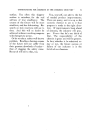
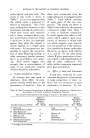
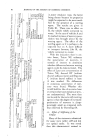
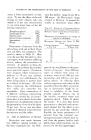
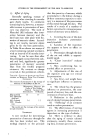
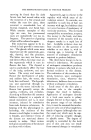
THE DERMATOLOGIST LOOKS AT THE HAIR PROBLEM 137 The quantities'of basic amino acids isolated agree essentially with those reported in the literature. Methio- nine has been found in human hair, and its amount determined as 1.0%. Per Cent Arginine ..................... 10.7 Histidine ..................... 0.63 Lysine ....................... 2.40 Cysteine ..................... 13.7 Tyrosine ..................... 2.1 Glutamic acid ................ 10.6 Aspattic acid ................. 3.5 Methionine ................... 1.0 Enkeratins, e.g., wool and hair, are distinguished from pseudokeratins according to Clay, et al. (12), in that their basic amino acids (histidine, lysine, and arginine) are found in a relatively constant molecular ratio of 1:4: 12. The cystine and cysteine (both non-basic amino acids), nitro- gen and sulfur content of 120 sam- ples of human hair was determined. The relation of age, sex, and pig- menration to the composition of hair was studied. No consistent rela- tion between age and composition was found. There was more cystine and cysteine in male hair than in fe- male hair. Dark hair contained more cystine than did light hair. These differences were statistically signifi- cant. No significant variations in the nitrogen and sulfur content were observed. Hair contains larger amounts of lead and in cases of ab- normal exposure 'it may retain as much as 508 mg. per kilo. Bagchi, et al. (13), reported that black hair of women gives the largest amount while gray hair of men and women gives the minimum, and brown or golden brown or other shades oc- cupy an intermediate position. Lead may be a likely factor in producing the characteristic pigments of hair in different nationalities. Relatively large quantities of lead 'were found in the urine and feces of some Hindu men and women and, since correspondingly high quantities were then found in the hair, it is considered that lead is absorbed into the general circulation and eliminated through the hair. In many instances a mild form of alopecia was associated with high lead content in the hair, and it is suggested that chronic lead intoxi- cation may prevent access of nour- ishment to the follicles, with the re- sult that the hair falls out. According to Butcher when skin producing black hair is inter- changed with skin producing white hair in the piebald rat, white hair frequently grows on the skin which for.rnerly had black hair. Likewise if skin producing black hair is in- cised and sutured back in place, it often produces white hair. The present conception of pig- ment fiormation seems to be that pigment results from the combina- tion of a chemical substance, or propigment, carried by the blood with an enzyme in the cells of the hair bulb. In these rats the pro- pigment was present, since the rest of the hair of the animal remained black and black hairs often peared among the white ones on the grafts. The white hair was not due to the lack of innervation, as was shown by denervating areas. The enzymatic potentialities of the cells
Purchased for the exclusive use of nofirst nolast (unknown)
From: SCC Media Library & Resource Center (library.scconline.org)