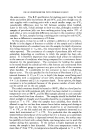
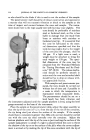
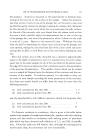
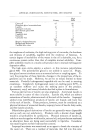
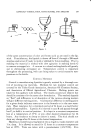
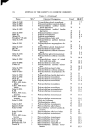
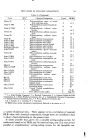
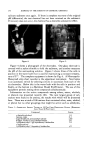
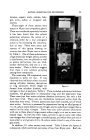
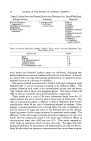
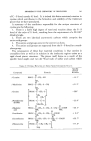
USE OF PENETROMETER WITH PETROLEUM JELLY 239 the shadow). A mirror is mounted on the penetrometer to facilitate posi- tioning of the cone tip on the surface of the sample. Adjust the measure- ment bar so that it rests on top of the plunger bar, set the scale to zero, and quickly but gently release the plunger, keeping the release catch depressed for five seconds by stop watch while the cone penetrates the jelly surface. At the end of five seconds, take your thumb from the release catch so that the cone is held, carefully adjust the measurement bar to rest on the top of the plunger bar, and record the penetration which is shown on the scale in units of 1/10 mm. Report to the nearest 0.1 ram. Withdraw the cone from the jelly by depressing the release catch and moving the plunger and cone upward, wiping the cone free from jelly with a clean cloth and ascer- taining that no jelly or cloth fibres are on the cone before making the next test. The total surface area of jelly disturbed has a diameter approximately equal to the depth of penetration and it is essential that, for every subse- quent test on the same sample, the tip of the cone shall not be placed nearer the edge of the previous depression than a distance equal to the penetration of the previous determination. The number of tests which can be carried out on a sample will depend upon the diameter of the container and the con- sistency of the sample. If conditions permit, it is advisable to carry out ten tests on each sample recording the mean penetration of the ten tests. Any three test results should not differ from the mean by more than the following amounts: (a) with consistencies less than 200 ....................... 1.$ (b) with consistencies greater than 200 .................... 3.0 and the reproducibility with different operators'should not be greater than (c) with consistencies less than 200 ....................... 7 (d) with consistencies greater than 200 .................... 11 To illustrate variations in consistency, there is given in the table below results from samples of straight petroleum jelly, together with their melting points, and also results in consistency with melting points of petroleum jelly which has been doctored with additions of 1, 5, and 10% of paraflqn wax. From this table you will observe that, although the melting points may be quite close, the consistency can vary considerably.

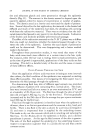
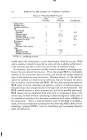
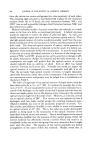
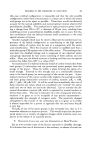
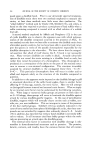
240 JOURNAL OF THE SOCIETY OF COSMETIC CHEMISTS Consistency Melting Sample Composition (Mean of 10) Point, øC. 2907A 2908A 2909A 2910A 2911A 2912A 2913A 2914A Straight white Petroleum Jelly 170 40.9 2907A + 1% paraffin wax 163 41.8 2907A + 5% paraffin wax 158 42.7 2907A + 10% paraffin wax 136 43.6 Straight Yellow Petroleum Jelly 172 40.5 Straight Yellow Petroleum Jelly, different source 158 41.6 Straight White Petroleum Jelly, different source from 2907A 162 42.3 Straight White Petroleum Jelly, different source from 2907A and different grade from 2913A 164 43.4 It will be apparent to you from reading these results that the firmer the jelly, the lower its consistency conversely, a soft jelly will show a high con- sistency and, although the melting point between samples may be only small, the difference in consistency can be large. Whether you require a petroleum jelly with a low or high consistency depends upon your particu- lar problem but to those of you in the audience who have not before used the penetrometer I would say that this instrument is of use in the classifi- cation of petroleum jellies, providing it is appreciated that consistency is not necessarily related to quality. ASSESSING THE QUALITY OF AN ESSENTIAL OIL* By G. W. FERGUSON, B.Sc., Pu.D., F.R.I.C. Parry & Ferguson, London, S.E.I, England "QUALITY" IS a somewhat vague term, especially when applied to essential oils, on account of its wide scope. Its general meaning may be taken as suitability for all purposes for which the product in question may be used. In so far as essential oils are concerned, assessment of quality involves several factors which differ in importance according to the principal use to which the oil is to be put, These factors are in the nature of specific requirements and are quite independent of the intrinsic "genuineness" of the oil, which for the mo- ment may be assumed to conform with recognised trade standards in its * Presented at the April 9, 1954, Meeting, London, England.
Purchased for the exclusive use of nofirst nolast (unknown)
From: SCC Media Library & Resource Center (library.scconline.org)