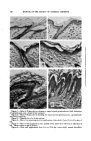
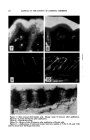
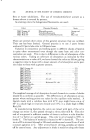
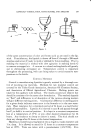
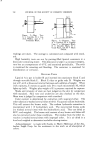
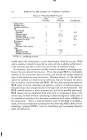
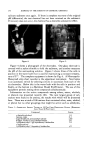
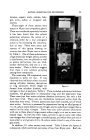
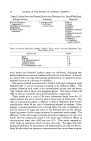
234 JOURNAL OF THE SOCIETY OF COSMETIC CHEMISTS cles and sebaceous glands and some penetration through the epidermis directly (Fig. 11). The amount in the dermis seemed to depend upon the quantity applied, either by means of concentration or number of applica- tions. The dermis acted as a barrier and restricted the depth of penetra- tion. Several days after the last application, the material in the dermis had diffused and much of the epidermis had shed, the shedding cells carrying with them the radioactive material. There was no evidence that the iodi- nated material had passed in any quantity into the blood vessels. Iodination of the linoleic acid molecule probably prevented such passage. The effect of the radioactive material on the N. B. T. plates was so diffuse that one could not determine whether the material passed through or be- tween the cells of the epidermis. Likewise the exact depth of penetration could not be determined. This was disappointing and a better method needs to be devised. Throughout these penetration studies, it was noted that many of the fatty acids were much more effective at a certain time in the hair cycle. For instance, when the hair coat is resting, there is much penetration, and as the time of growth is approached, applications of the fatty acids are less irritating. This led to a detailed study of the skin and the cause or causes of these different effects. FLt•ID P^ss^GE T.Rot•G. T,E SKttq Since the application of fatty acids was more irritating at some intervals than others, the fluid condition of the epidermis was suspected as making these effects possible. One means of investigating the fluid aspect was to determine the fluid passage through the epidermis. For determining fluid loss, skin of different aged animals was stretched across diffusion chambers (13) containing 10 cc. normal saline. The cham- bers were inverted and left on a screen in an oven maintained at 35øC. and at a humidity of 28-32 per cent. The fluid loss through the skin of rats 22 days old averaged 1.302 mg./sq. cm. for the first hour. The loss gradually increased and by the 29th day of life the average loss per square centimeter was 2.922 mg. for the first hour. Fluid loss through the epidermis is therefore least when the epidermis is thinnest, there is no distinct granulosum and the comeurn is dry, hard, and brittle. There is less fluid in the skin as shown by a previous investigation (3) and more is evaporated than is supplied by the underlying tissues. This tends to dry out the corneum which aids in retarding and reducing the fluid loss. In the 30-day-old rat the epidermis is thicker, and a distinct granulosum is present. At this age the fluid content of the skin is greater. The ratio of the fluid supplied the epidermis by the underlying tissues in respect to evaporation is greater than in a 22-day-old rat and thus a moist comeurn exists.

EXPERIMENTS ON EPIDERMIS OF ANIMALS 235 Linoleic acid was gently applied in the morning and in the evening to 22-day-old rats. On the following morning, skin was removed and placed on two diffusion chambers. The first hour the loss was 18.237 mg./sq. cm. By the 29th day of life, as shown by skin from animals of this age, the lino- leic acid was less effective and the loss was only 3.239 mg./sq. cm. Thus when the comeurn is dry, linoleic acid penetrates more rapidly. By this penetration the epidermis is altered and the water loss is tremendous. D•scuss•o2½ Hair growth, changes in the epidermis, fluid content, and metabolism of the skin are closely correlated in the rat. One may ask if we have condi- tions comparable to this in the human. Undoubtedly there are intervals when the metabolism of the human skin is low. The greater shedding of dry epidermal cells during the winter months is in all probability quite similar to the conditions in the low stage of the skin in the rat. When such a low exists, then applications of many substances may be irritative, resulting in parakeratosis and shedding of moist cellular material. If coolness does favor the formation of unsaturated acids (14), more of the latter may be found than usual during the winter months and enhance the shedding of epidermal cells. The fact that mineral oil caused parakeratosis and was not conducive to an improvement of the skin is somewhat disappointing for mineral oil is used widely in the cosmetic industry. According to O'Brien (15), daily applications of kerosene caused parakeratotic plugs in human sweat pores. The importance of a moist corneum has been emphasized in this review. One may ask if such a condition would not always be present in the human since the presence of sweat glands would supply much moisture to the surface while in the laboratory animals where the skin is devoid of sweat glands, this asset would be entirely lacking. Despite the presence of sweat glands and invisible perspiration in the human, I am still inclined to believe that the scalp and skin become very dry and need additional coverings to prevent water loss and thereby keep the corneum soft and moist. A moist comeurn, active granulosum, high fluid content, and high me- tabolism of the skin are characteristic of a good skin. In all these experi- ments, lanolin is the only substance which has not affected the skin ad- versely. Castor oil also seemed to have little effect. The other substances, in many instances, induced parakeratosis which was not due to the retarda- tion of desiccation for wool fat, would have had the same effect. Lanolin undoubtedly prevents the loss of moisture content from the skin. What one needs is something which when applied will not only do this but also increase the metabolism and fluid content of the skin as a whole without causing parakeratosis. The development of this substance is the challenge for the cosmetic chemist.
Purchased for the exclusive use of nofirst nolast (unknown)
From: SCC Media Library & Resource Center (library.scconline.org)