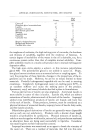
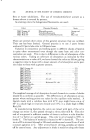
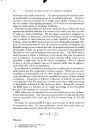
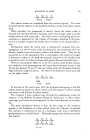
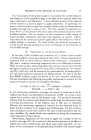
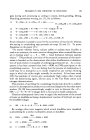
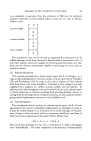
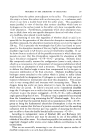
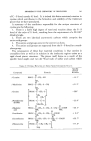
PROGRESS IN THE CHEMISTRY OF DISULFIDES 291 ion capable of one electron transfer, in the presence of oxygen, undergoes an auto-oxidation-reduction reaction to form radicals. initiation SOa z + SOF q- 1/202 --SOa-- q- SO4= propagation SOa-. q- RSSR ) RSSOa- q- RS. RS. +SOa= ' • RS- +SOs-. termination RS- q- RS. RSSR The products resulting from these reactions are identical with those ob- tained above. Clarke (26) had noted that sulfate is formed during the re- action of a sulfite with cystine which suggests that the latter mechanism is operative. As further evidence for the one-electron transfer concept, Karchmer (27) in polarigraphic studies of mercaptans, has shown that mercaptans readily undergo the following reaction: R'SH • R'S. q- H* q- le One would predict that in the presence of an electron acceptor this step would proceed rapidly requiring almost no energy of activation. Thus in the presence of a simple disulfide, a mercaptan would be expected to rapidly undergo a radical displacement reaction resulting in a disulfide interchange equilibrium. Current work being done in our laboratory indicates that this is indeed the case, namely: (1) R'SH •" R'S. q- H + q- le (2) R'S. + R--S- .S--R • R'S--SR + RS. (3) R'S. + R'S- R'S--S--R' One-electron transfer would also account for the ease with which a mer- captan will oxidize in an alkaline medium in the presence of both oxygen and a one-electron metal catalyst such as Ag + or Cu ++ or Fe +++. For ex- ample: R'SH q- Cu** • R'S. q- H* q- Cu* Cu* + O2 + H + Cu ++ + H20• R'SH q- HaOa R'SSR' q- HaO If we accept the one-electron transfer-radical displacement theory as the mode of action of disulfide cleavage, how does one reconcile the fact that alkali or water, as Sch6berl initially showed, is capable of cleaving the S--S bond? It should be remembered that the formation of hydroxyl radical from hydroxyl ion or from water under normal reaction conditions is ener- getically impossible. What is probably occurring is that the hydroxyl or alkoxy ion is performing in the role of a base by reacting with a proton in an acid-base relationship. Thus the hydroxyl ion is involved in a reaction

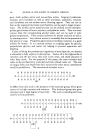
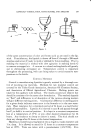
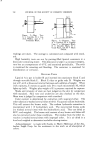
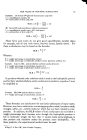
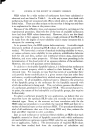
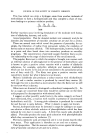
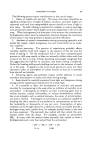
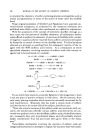
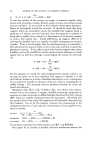
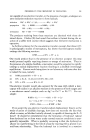
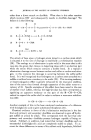
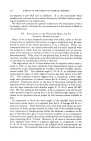
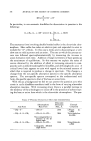
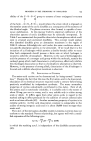
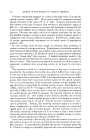
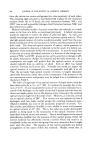
292 JOURNAL OF THE SOCIETY OF COSMETIC CHEMISTS other than a direct attack on disulfide. What then is this other reaction which involves OH- and subsequently results in disulfide cleavage? We believe it is the following: H H I I - (1) OH- q- R--C--S--S--C--R 2 ' R--C--S--S--CH_o--R + HOH I I I H H H (2) R--C--S--SCH2R • • R--C=•--SCH2R H (3) R--C=S + - S--CHaR [ H H20 (4) R--C=S RCHO + H.,S I H The attack of base upon a hydrogen atom joined to a carbon atom which is situated • to the site of cleavage is essentially a • elimination reaction (28). The analogy to a/• elimination is quite valid in the sense that in this case also the group that cleaves in departing takes with it an electron pair while the entity which remains contains a double bond. In a typical f$ elimination cleavage occurs between carbon and sulfur or carbon and nitro- gen in this instance the cleavage is occurring between the sulfur-sulfur bond. It is well recognized that hydrogens on a carbon atom attached to a sulfide or sulfone have a tendency to be acidic (29). This ionizing tendency or hyperconjugation effect is greatly enhanced by the resonance stabiliza- tion of the anion thus formed through expansion of the sulfur octet to a valency of 10. Specific examples of this effect have been noted in the case of methyl vinyl sulfide, whereas the high Q value has been interpreted as signifying an apparent tendency on the part of the R--•H--S--CH,• radical to expand the sulfur shell in order to achieve a resonance stabiliza- tion (30): R--•H--S--CH, • R--CH--•--CHs Another example of this is the base catalyzed condensation of a diketone with thiodiglycolic acid to give substituted thiophenes (31). Chemical evidence in favor of the • elimination mechanism is the fact that only primary and secondary disulfides are observed to give off hydro gen sulfide on attack by alkali. This corresponds with the fact that only primary and secondary disulfides possess hydrogen capable of being at- tacked. Sch6berl, in addition, had noted that tertiary disulfides such as tetramethyl dithiodiglycolic acid are completely stable to alkali. To ac- count for these differences in terms of his sulfenic acid hypothesis, Sch6berl
Purchased for the exclusive use of nofirst nolast (unknown)
From: SCC Media Library & Resource Center (library.scconline.org)