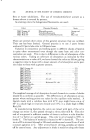
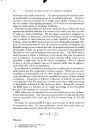
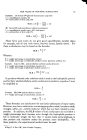
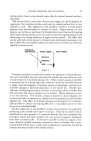
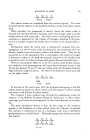
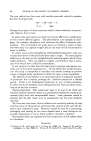
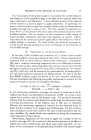
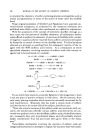
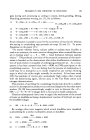
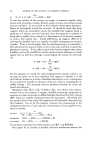
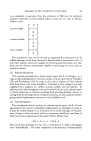
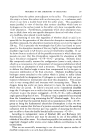
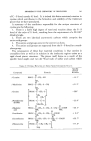
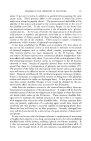
PROGRESS IN THE CHEMISTRY OF DISULFIDES 293 was compelled to postulate that the evolution of H.•S was the exclusive property of primary and secondary sulfenic acids and not that of tertiary sulfenic acids. primary disulfide R--•--S L R J., I secondary disulfide R--C--S R ,_, tertiary disulfide L The conclusions that can be arrived at regarding the mechanism of di- sulfide cleavage, aside from thermal or photochemical dissociation of S--S into thiyl radicals which are capable of initiating polymerization, are that there are two distinct mechanisms capable of operating, one ionic and one radical in nature: (1) Radical Mechanism This reaction proceeds via a direct attack upon the S--S linkage, i.e., a typical radical displacement reaction similar to those observed by Tobolsky (32) and Stockmayer (33) to occur in the case of reaction of free radicals with both linear and cyclic disulfides. Included in this category are such supposed ionic reagents as: sulfite, cyanide, sulfide, and mercaptide. In addition such radical reagents as an active metal with an acid, sodium metal in liquid ammonia, or radicals resulting from growing polymer chains, or arising from the decomposition of radical catalysts, are also capableof under- going radical displacement reactions on the disulfide bond. (2) Ionic Mechanism This mechanism which involves an indirect attack upon the S--S link- age results from a direct nucleophilic displacement on hydrogen by base, or it may be viewed simply as an ionization of an acidic hydrogen in the pres- ence of base to form an anion which is resonance stabilized, one form of which involves an expansion of the sulfur shell to 10 electrons. --•H--S--S • This anion then proceeds to react via a B elimination to yield a mercaptan and a thioaldehyde. The latter compound in the presence of water readily

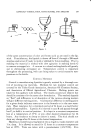
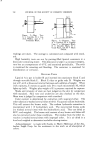
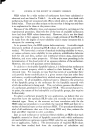
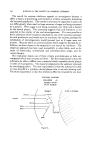
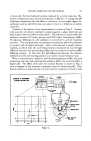
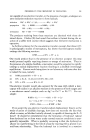
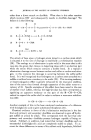
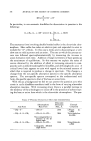
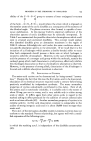
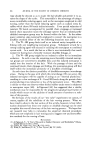
294 JOURNAL OF THE SOCIETY OF COSMETIC CHEMISTS decomposes to give H•.S and an aidehyde. It is this mechanism which satisfactorily accounts for the results obtained by Sch/3berl without requir- ing the postulation of a sulfenic acid. We shall now consider the spectral evidence for the dissociation of the • hydrogens, which is the basis for our mechanism for the attack of alkali on the disulfide bond. III. STRUCTURE OF THE DISULFIDE BONY ANY ITS SPECTRAL MANIFESTATIONS Many of the unique properties associated with sulfur, either in the ele- mental state or combined with carbon in organic compounds may be inter- preted in terms of the orbital distribution of its •r electrons. These "un- committed electrons" are readily polarizable and are easily unpaired when the molecule in which they are contained is introduced into an environ- ment of free electrons or radicals, or when it is activated either thermally or photochemically. Thus, much of the spectral data as well as the chemical reactivity of sulfur compounds, as we shall indicate later, may be correlated on the basis of a consideration of these •r electrons. The angle which the S--S bond makes with an adjacent carbon atom is equal to 104 ø , as has been calculated from measurements made on such compounds as p,p'-dibromodiphenyl disulfide, dimethyl trisulfide, and ele- mental sulfur (34). The dihedral angle C--S--S--C as calculated from measurements taken on N,N'-diglycyl cystine has been shown to be 101 ø (35). This combined evidence suggests that a non-planar, almost right- angle skew distribution of valences about the S--S bond, is energetically preferred. Pauling has shown on the basis of theoretical calculations that repulsion of the •r electrons on the sulfur atoms should lead to a chain struc- ture for these molecules with dihedral angles C--S--S--C about 90-100 ø (36). He thus explained the stability of S8 as compared to S6 and S•0 and other puckered rings by noting that in S8 the dihedral angle appears to be closest to the optimum value as judged by the literature values available to date. In compounds in which the bond angles of the disulfide bond deviate from those stated above, it is expected that the S--S linkage will be in a strained condition. These deviations may arise from such factors as steric hindrance of bulky groups situated on either side of the disulfide linkage, ionic interaction of charged groups within the molecule, a tendency on the part of the molecule to gain in total resonance stability, or as a consequence of electronic and angular distortions resulting from the formation of planar rings containing the S--S bond. However, in all cases of structures which have imposed strain there is a general approach to co-planarity of the C--S--S--C unit at the expense of the dihedral which concomitantly ap- proaches zero. The resultant distortion of electronic orbitals should, as one
Purchased for the exclusive use of nofirst nolast (unknown)
From: SCC Media Library & Resource Center (library.scconline.org)