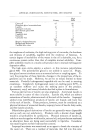
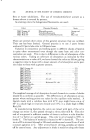
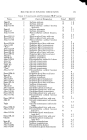
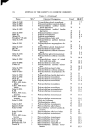
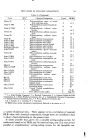
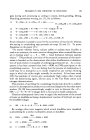
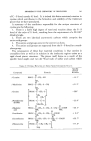
PROGRESS IN THE CHEMISTRY OF DISULFIDES 295 might predict, manifest itself in a greater ease of electronic perturbility. Thus one would expect that electromagnetic waves of longer wavelength, that is, light of lesser energy will be required to excite the • electrons to an activated state. This is what Calvin (37) essentially observed in his com- parative study of the ultraviolet spectra of cyclic disulfide compounds as is shown in Table 1. Qualitative chemical evidence of strain associated with disulfide ring size was obtained by Affleck and Dougherty (38), who noted that tl•e speed of polymerization of cyclic disulfides in the presence of A1Cla decreased with an increase in the number of atoms in the ring in the range of 5 to 7 in which they made their observations. Birch (39) had similarly noted that the 5-membered ring was only stable at 0øC. in the dark--in the presence of light it underwent immediate polymerization. Thus we may regard Calvin's data as indicating that the S--S linkage in cyclic disulfides is strainless when it absorbs at the lower wavelength (2500 J-.) and the strain is greater the greater is the wavelength of the ab- sorption maximum. From the above, it would appear that the relative strain existing in any disulfide might readily be determined by an observation of its ultraviolet spectrum. This, however, is not the case. The conclusions thus far stated apply only to cyclic disulfides of the type examined by Calvin. Many disul- fides fail to display any specific ultraviolet absorption and are described as being "highly transparent" in this region. Furthermore some disulfide-con- taining compounds such as /-cystine have ultraviolet spectra which are highly sensitive to changes in pH. This is probably the reason why there are at least a dozen publications which contest the precise ultraviolet ab- sorption of/-cystine. In view of all these seemingly inconsistent and uncorrelated data we undertook an intensive study of the ultraviolet spectra of disulfide com- pounds with the view to answering the following questions: 1. Why is it that not all disulfide-containing compounds show absorp- tion maximum in the ultraviolet ? 2. What is the precise nature of the chromophoric group responsible for the ultraviolet absorption ? TABLE 1--ULTImAVIOLET ABSORPTION SPECTRA O1• CYCLIC DISULlrlDES (37) No. of Atoms No. of S Wavelength, -•., Compound in Ring Atoms Ultraviolet Max. 6,8 Thioctic acid 5 2 3340 Trimethylene disulfide 5 2 3340 5,8 Thioctic acid 6 2 2860 Tetramethylene disulfide 6 2 2865 4,8 Thioeric acid 7 2 2580 n-Propyl disulfide Linear compound 2 2500

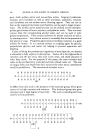
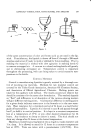
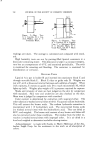
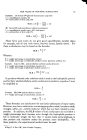
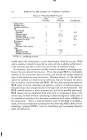
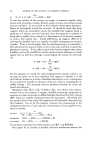
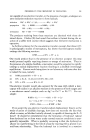
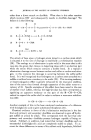
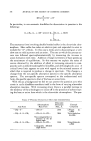
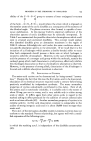
296 JOURNAL OF THE SOCIETY OF COSMETIC CHEMISTS 3. Can the concept of employing ultraviolet absorption to interpret di- sulfide strain be generalized to include compounds other than cyclic disul- fides ? Among the compounds which we studied were Lcystine, oxidized gluta- thione, propyl disulfide, (t) butyl disulfide, penicillamine disulfide, dithio- diglycolic acid, dithiodisalicylic acid, dihydroxy dinaphthyl disulfide, di- thiodimorpholine, dithiodimalic acid, g, •' diaminodiethyl disulfide and 0,0' dibromodibenzyl disulfide. The ultraviolet spectra of these compounds were determined as a function of pH, i.e., examinations were made under acid, neutral, and basic conditions. The conclusions that were arrived at as a result of this investigation may be summarized as follows: 1. All disulfide-containing compounds, regardless of whether or not they showed an absorption or transparency under conditions of examination employed by previous workers, revealed absorption maxima either under alkaline or acid conditions. This generalization does not apply to tertiary disulfides. 2. This behavior of disulfide in alkali or acid media permits a general classification of disulfides to be made. First, there are those compounds such as the tertiary disulfides that give a non-specific absorption which is independent of pH. The remaining disulfide compounds will show absorp- tion maxima either in acid or in alkali media. 3. The extinction coefficients of the observed maxima are continuous functions of pH. That is, if the maximum occurs in acidic medium--in- creased acidity will enhance the absorption. Likewise if the maximum oc- curs in alkali medium above a critical pH, the absorption is enhanced with increasing alkali. 4. The absorption spectra of those disulfides which show a response to changes in pH, exhibit three distinct phases: (a) non-specific absorption, (b) shoulders or inflections, and (c) absorption maximum. Phase "b" spec- trum is an artifact in the sense that it can be shown to arise as a composite of the spectra of phase "a" and "c". Therefore there are essentially only two types of SS absorption--a non-specific and a specific absorption. An interpretation of these data can be made if one assumes that it is R I doubly bonded sulfur :S-- such as --C=S-- which is behaving as the ultraviolet chromophore. Compounds such as tetra methyl thiourea which possess the --C•S group absorb at 250 mu--coincident with the region in which simple unstrained disulfides such as n-propyl disulfide are observed to R I absorb. Implicit in the postulation of the --C:S-- chromophore in di- sulfides is the assumption that some positive group such as a proton has
Purchased for the exclusive use of nofirst nolast (unknown)
From: SCC Media Library & Resource Center (library.scconline.org)