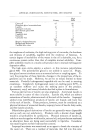
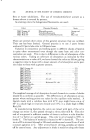
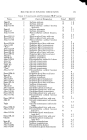
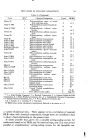
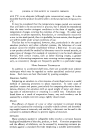
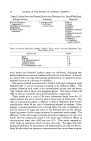
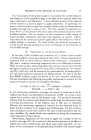
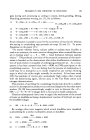
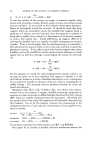
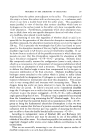
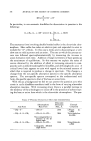
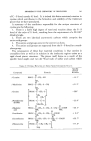
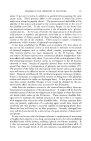
PROGRESS IN THE CHEMISTRY OF DISULFIDES 301 of C--S bond namely 45 kcal. It is indeed this finite restricted rotation in cystine which contributes to the formation and stability of the tridentate pincer that we have postulated. A summary of the conditions responsible for the unique structure of cystine are the following: 1. There is a fairly high degree of restricted rotation about the S--S bond of the order of 15 kcal., resulting from the requirement of a 90-1013 ø dihedral angle. ,• 2. There are two identical asymmetric carbons which comprise the amino acid groups. 3. The amino acid groups exist in the zwitter ion form. 4. The amino acid groups are separated from the S--S bond by a meth- ylene group. The consequence of these four essential conditions is that cystine in crystalline form as well as in solution in the isoelectric regions exists as a rigid closed pincer structure. The pincer itself forms as a result of the specific bond angles and van der Waal radii of sulfur and carbon which TAULE 3--OPTICAL ROTATION OF AMINO ACIDS CONTAINING SULFUR Compound Formula Specific Optical Rotation /-Cysteine /-Methionine /-Cystine LPenicillamine disulfide /-Djenkolic acid LLanthionine LCystathionine LHomocystine H H00C--C--CHs--SH I NHs H H00C--C--CHs--S--CHa I NH• - H H00C--•--CH•--S 1 _ NH• - H CHa 1 H00C--C--C--S _ NH2 CH• H H HOOC--C--CH•--S--CH•--S--CH=--C--COOH NH= NH= H H HOOC--C--CH=--S--CH=--C--COOH NH• NH= H H HOOC--C--CH=--CH=--S--CH=--C--COOH NH= NH2 I NH• -- 10.1 ø -3-21.2 ø --220 ø --23.8 ø --44.5 ø 8.0 ø +23.7 ø +77.0 ø

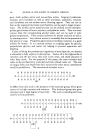
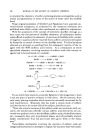
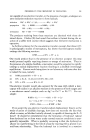
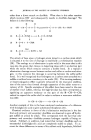
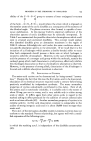
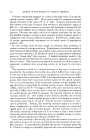
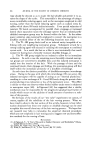
302 JOURNAL OF THE SOCIETY OF COSMETIC CHEMISTS force the zwitter ion amino acid groups into close proximity of each other. This resulting rigid structure is essentially fixed in place by the restrained rotation about the S--S bond, the ionic interaction between NH3 + and COO- ions as well as possible hydrogen bond formation between NH3 + and the •r electrons on sulfur. Skeletal molecular models of cystine reveal that the molecule as a whole exists in the form of a helix, as mentioned previously. A helical structure would be expected to rotate the plane of polarized light. As such, one should accordingly expect such a structure to possess optical activity. Thus the high optical rotation of cystine would presumably result from the com- bined contribution of the two asymmetric carbons and that produced by the helix itself. The observed optical rotation of quartz, which possesses no intrinsic asymmetric elements, is believed to be the result of a helical con- figuration of the molecules within the crystal lattice. It must be noted that in the case of cystine the helical structure is a function of the charge inter- action of NHa + and COO- groups and as such is sensitive to changes in pH. In alkali, the positive charges are removed and the helix destroyed. As a consequence one might well predict that the optical rotation of cystine should radically drop on addition of alkali. Such an effect was indeed noted by Toennies and Lavine (45). Normally one would not expect the optical rotation of a compound to vary so markedly with pH, if at all. That the extremely high optical rotation of cystine is largely dependent upon helix formation, rather than as the consequence of the presence of the two asymmetric amino acid groups, may be judged from a consideration of the data in Table 3. The order of magnitude of the optical rotation of simple amino acids has been observed to be q-7 to & 15 ø (48). L-cysteine, for example, has a rota- tion of if-11 o. If one visualized the union of two cysteine molecules by re- moval of the hydrogen on the sulfur atoms and if optical activities were ad- ditive one might predict that in the absence of any interaction the resulting optical rotation might be of the order of 22 ø. However, as is known, cystine has an optical rotation of 220 ø. If in cystine now one replaces the four/• hydrogens with four bulky methyl groups the resulting compound, peni- ciliamine disulfide, has none of the anomalous properties of cystine. Un- like cystine, penicillamine disulfide is very soluble in water and possesses an optical rotation of 23 ø (49). This is the value one would theoretically predict as being equal to the summation of the optical rotations of two equivalent isolated amino acid centers. Thus it would appear in the case of penicillamine disulfide that the presence of four methyl groups within the cystine molecule has effectively erected a barrier whose end result is to completely isolate one amino acid group from any interaction that it might exert upon the other. The presence of this barrier precludes any helical arrangement of the atoms within the molecule. Models reveal that in
Purchased for the exclusive use of nofirst nolast (unknown)
From: SCC Media Library & Resource Center (library.scconline.org)