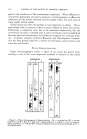
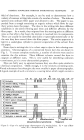
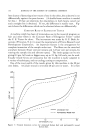
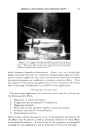
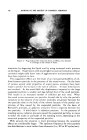
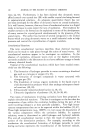
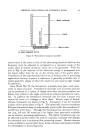
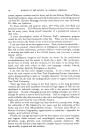
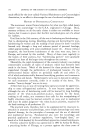
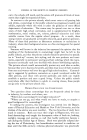
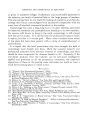
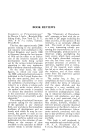
128 JOURNAL OF THE SOCIETY OF COSMETIC CHEMISTS gard to the conditions of the measurement employed. When different in- strumental approaches are used to measure a certain property or effect of a substance, all the results obtained may be equally valid but only some of these results will be useful. Useful results are often the hardest or most expensive to obtain. This is particularly true in cosmetics where so many subjective terms are current. Ultimately, a subjective term has to be measured subjectively, but the instrument can play a valuable part if some correlation can be established between physical measurement and subjective response to a cosmetic prod- uct. Cosmetic research at Evans Research and Development Corpora- tion has been greatly aided by a variety of techniques, some common and some less well known. PAPER CHROMATOGRAPHY Paper chromatography within a space of ten years has grown from nothing to one of the most important methods of analysis in the whole ASCENDING DESCENDING 1 2 3 1 2 SF SF SF OP q¾ OP SL SF SF SL Figure 1.--Paper chromatogram of brown hair dye. SL = starting line, SF = solvent front, R = red, B = blue, P = pink, G-Y = green-yellow, Y = yellow, 1 = 4:1:5 n-butanol- acetic acid-water, 2 = 100:20:44:1 n-butanol-ethanol-water-ammonium hydroxide and 3 = 4:1 phenol-water.

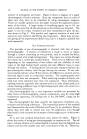
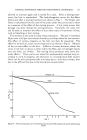
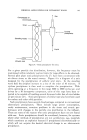
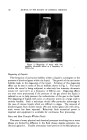
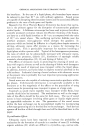
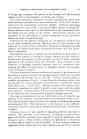
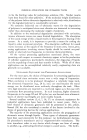
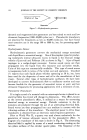
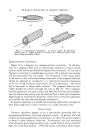
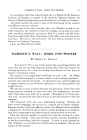
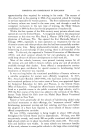
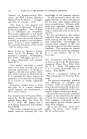
COSMETIC KNOWLEDGE THROUGH INSTRUMENTAL TECHNIQUES 129 field of chemistry. For example, it can be used to demonstrate how a variety of common writing inks consist of a number of colors. The inks are spotted onto ordinary filter paper and allowed to dry. The paper is sus- pended from a trough containing an organic solvent which flows by cap- illary action down the paper. The dyes in the writing inks have different solubilities in the solvent flowing past them and different affinities for the filter paper. As a result, they migrate from the starting point at different rates so that after a few hours the mixture is resolved into its components. These can usually be identified chemically or spectrophotometrically or by the rate they have moved down the filter paper. The entire apparatus is kept in a sealed glass cylinder to prevent evaporation of the solvent from the paper. From dyes in writing inks it is a short step to dyes in hair coloring com- positions. Chromatograms of a commercial brown hair dye are shown in Fig. 1. To ensure complete resolution, a number of solvents were used to examine the dye mixture. These different 'solvents caused the dyes to migrate at different rates. This is very useful for identifying unknown constituents, as it is a very characteristic property. Dyes are fairly easy to separate because they are often quite similar in chemical composition. Oddly enough, it is the mixtures containing unre- lated substances that often give the most trouble in paper chromatography. A good example of such a mixture is a waving lotion which might contain a 0.0 0.1 0.2 0.3 0.4 0.5 0.6 0,7 0.8 0.9 1.0 14 Ninhydrin 13 Alkaline KMn04 + NolO,, 12 AgNO3 + K2Cr207 11 NctN s + 12 10 Dichlorophenolindophenol 9 AgNOs+ NH40H 8 AgNOs + ultra violet 7 KOH + sodium nitroprusslde 6 Platinic Iodide 5 Nesslers 3 B•'omophenol blue+AgNOs 2 HIO4+benzidine 1 Ninhydrin + aseorbie acid NH4•I • Mo•oethnnolnmine ? Thiogl•olic •::id Monoethanoldmine hydrochloride Thioglycerol Figure 2.--Copy of a typical paper chromatogram of a waving lotion. Rs = rate of flow value, •/b = absorption and B = bleach.
Purchased for the exclusive use of nofirst nolast (unknown)
From: SCC Media Library & Resource Center (library.scconline.org)