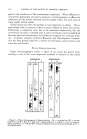
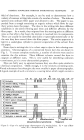
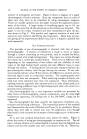
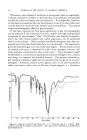
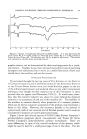
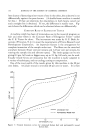
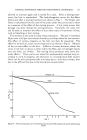
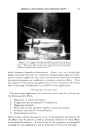
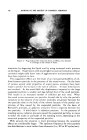
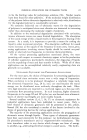
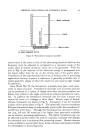
130 JOURNAL OF THE SOCIETY OF COSMETIC CHEMISTS mixture of mercaptans and bases. Figure 2 shows a diagram of a paper chromatogram of such a mixture. Since the components have no color of their own, they have to be visualized by using chromogenic reagents. These are usually sprayed onto the paper to locate the separated constit- . uents of the lotion. A large variety of visualizing agents (up to 19) are : used to make sure that all the substances in the mixture are detected. The .. paper is cut into strips, visualized and then reassembled to give the pic- . ture shown in Fig. 2. The positive and negative reactions of each sub- . stance are very useful in identifying the components. Space does not per- . mat giving all the experimental details here, but it is hoped to publish this i work separately. GAs CHROMATOGRAPHY The principle of gas chromatography is identical with that of paper' chromatography. A mixture of substances is made to move as vapors through a column containing an inert powder, such as crushed fire-brick, which is coated with a high boiling liquid. The vapors are carried through the column by a carrier gas, usually helium. They move at different rates depending on the temperature of the column and the solubility of each vapor in the high boiling liquid coating and take different times to pass through the column. A sensing device continuously compares helium, the gas entering the column, with the gas leaving the column. If any sub- stance besides helium comes off the column, the difference is noticed, and an electrical signal is sent to a strip-chart recorder. The resulting peaks each represent at least one compound. When analyzing complex mixtures, one peak may often represent more than one compound. Thus, rechromato- raphang material, especially that represented by an early eluted peak, on a column bearing a different type of high boiling liquid often will reveal it to gcontain many substances. Gas chromatography has a very important variable not possessed by other forms of chromatography, namely temperature, and, by using high temperature apparatus, oils boiling even in the 250-300øC. range can be separated. Gas chromatography has been used for the separation of perfume con- stituents and flavoring substances. The tremendous power of this method was illustrated by the work of Dimick and Corse (3) on strawberry flavor, which they were able to resolve into over 30 components even though l they found it only occurred to the extent of about eight p.p.m. in the straw-. berry. As in any new method, precautions must always be taken. Figure 31 shows the results of using gas chromatography to examine an oil. The Gill was in toluene solution so it seemed logical to assume that the big peak was• toluene and that the smaller ones were constituents of the oil. However, I

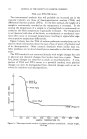
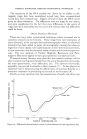
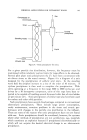
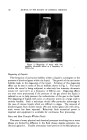
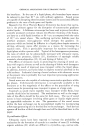
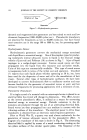
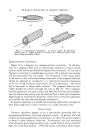
COSMETIC KNOWLEDGE THROUGH INSTRUMENTAL TECHNIQUES 131 •3 I I • Stort 5 4 3 a 1 0 TIME (minutes) Figure 3. Gas chromatogram of an oilin toluene solution. Carrier gas, helium flow rate, 65 mi./min. temperature, 153øC. stationary phase, celite coated with silicone oil column length, 2 meters sample volume, 0.02 ml. 1 Start 6 5 4 3 2 1 0 TIME (minutes) Figure 4.--Gas chromatogram ooe "pure" toluene, Carrier gas, helium flow rate, 65 ml./min temperature, 153øC. stationary phase, celite coated with silicone oil column length, 2 meters sample volume 0.02 ml. when "pure" toluene was examined by gas chromatography, it was dis- covered, as can be seen in Fig. 4, that many of the small peaks resulted fiom the so-called "pure" toluene. This is probably true for many of the things which in the cosmetic industry today are called "pure." Many off- odor problems, lack of uniformity, and even allergenic reactions might be traced back to the starting materials. It is well known that "pure" com- pound A from supplier B often cannot be used in a formulation to replace "pure" compound A from supplier C. Here is a source of vexation that might speedily be removed if chromatographic specifications could be set for certain materials.
Purchased for the exclusive use of nofirst nolast (unknown)
From: SCC Media Library & Resource Center (library.scconline.org)