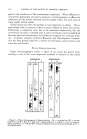
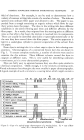
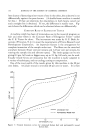
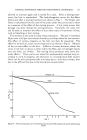
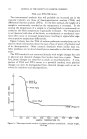
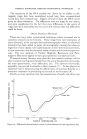
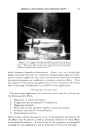
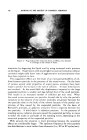
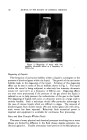
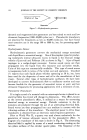
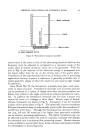
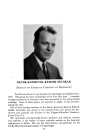
146 JOURNAL OF THE SOCIETY OF COSMETIC CHEMISTS Figure 5.--Degassing of water with low intensity ultrasonic waves at a frequency of 800 kc./sec. Degassing of Liquids The formation of cavitation bubbles within a liquid is contingent on the presence of dissolved gases within the liquid. The growth of the cavitation bubbles leads to the degassing of the liquid. Evidence of this degassing effect can be seen in terms of the air bubbles shown in Fig. 5. The water within the vessel is being subjected to relatively low intensity ultrasonic waves (1 watt/cm2.) at a frequency of 800 kc./sec. Degassing effects are even more pronounced if the pressure of the gas above the liquid is reduced so as to help prevent the redissolution of the gas in the liquid. The degassing of liquids with sonic or ultrasonic waves on a large scale is entirely feasible. Such a technique should offer particular advantage in the case of viscous liquids which are difficult to degas. The removal of dissolved gases from molten metals (39) and molten glass (22) with ultra- sonic waves has been reported. Relatively little acoustical power is required and equipment is available for continuous flow processing. Mass and Heat Transfer l•ithin Fluids The rates of many physical and chemical processes involving two or more phases are limited by diffusion in the fluid phases despite extensive me- chanical agitation. Usually a boundary layer persists in the fluid phases at

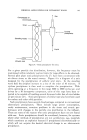
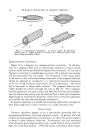
CHEMICAL APPLICATIONS FOR ULTRASONIC WAVES 147 the interfaces. In the case of a liquid phase, this boundary layer cannot be reduced to less than 10 -3 cm. with ordinary agitation. Sound waves are capable of disrupting these boundary layers and the associated diffusion gradients in the case of both gases and liquids. Research (52, 53) at Western Reserve University has shown that cavita- tion is the primary agency for the disruption of concentration gradients within liquids. A Schlieren microscope has been used to prove that ultra- sonically produced cavitation reduces the effective thickness of the bound- ary layer at a solid-liquid interface to 10 -4 cm. as compared with the value of 10 -3 cm. stated above. The oscillating cavitation bubbles near the interface produces micro-agitation which disrupts the gradient. In processes which are limited by diffusion in a liquid phase despite extensive stirring, ultrasonic waves offer promise as a means for increasing the reaction ratks. This is particularly important for reactions involving a liquid phase within a porous solid. Typical of the heterogeneous processes, the rates of which can be substantially increased with ultrasonic waves, are extraction processes, dialysis (31), dissolution of sparingly soluble materials, electrodeposition (52, 53) and dyeing of fabrics (5). The effects of ultrasonic waves in promoting the cleaning of metal sur- faces with organic solvents as well as the cleaning of fabrics with detergents is in part the result of improved mass transport within the liquid phase. In addition, however, cavitation helps to disperse material adsorbed on the solid surfaces. Industrial cleaning of metal surfaces with ultrasonic waves at the present time is probably the most important processing application for sound waves. Sound waves are also capable of reducing concentration gradients within gas phases. Unfortunately information is not generally available in the literature as to the magnitude of the effects or the practicality of using sound waves for promoting mass transport in gases on a large scale. Inasmuch as sound waves expedite mass transport within fluids, heat transfer should also be increased. The mechanisms as well as the magni- tude of the effects should be the same for both cases. The use of sound waves in heat exchangers involving either gases or liquids might permit an appreciable reduction in size. The generation of the sound waves within the heat exchanger can be accomplished readily by incorporating a flow-type generating unit in the feed line to the exchanger. Such devices operate off the flow of fluid through them and will be described later in this paper. Crystallization Effects Ultrasonic waves have been reported to increase the probability of nucleation for the formation of crystals in a number of cases (3) including organic solutions (21) which are difficult to crystallize, e.g., sucrose solu-
Purchased for the exclusive use of nofirst nolast (unknown)
From: SCC Media Library & Resource Center (library.scconline.org)