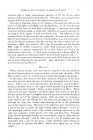
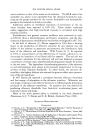
PHYSICAL AND CHEMICAL PROPERTIES OF SHELLAC 317 mixture o( lower molecular weight fatty acid esters. These latter sub- stances serve as natural plasticizing agents. They may be separated from the hard, less soluble network by solvent extraction with benzene, toluene, xylene, trichloroethylene and like solvents. Considerable effort has been devoted to the separation, properties and uses of the less soluble "hard lac resin" (2-6). This resin has been found to be more adherent than shellac to most substrates, but it is more brittle. By extracting 20 per cent of soft lac from whole shellac, the hard lac obtained had a melting point only 7øC. higher. Hard lac resin has some attractive properties. The economic problem of how to dispose of the useless soft resin has so far blocked commercial development. Shellac may be dispersed in alcohols or aqueous alkalies, or a mixture of these. These dispersions deposit films which may be permanent or removable. The character of the film depends on the dispersion in- gredients, and on the amount and kind of softeners or other modifying agents employed. The flexibility of shellac films may very well be due to the chains of seven methylene groups which are present in, for example, aleuritic acid, one of the constituent acids: HO--CH,.(CH•) 5CHOH--CHOH--(CH0 7COOH This is indicated by some recent work done in the adhesives field by Stivala, Powers and others (7-9). At the Indian Lac Research Institute, Vetman and others (10-12) have measured many of the basic physical properties. All the details would be superfluous here. You are referred to the original papers. Clarke (13) found interesting x-ray diffraction patterns for shellac. There was a weak ring characteristic of an amorphous structure, and a relatively sharp ring corresponding to a crystalline structure. When the observed sample was heated in an inert atmosphere, the diffused ring became more intense, and the sharp ring weaker, disappearing entirely when a completely polymerized state was reached. Unfortunately, Clarke gave n6 further details. Another investigator, Houwink (14), found x-ray patterns corresponding to long chain groups in shellac. In Table 1 is presented the percentage composition of shellac in terms of the individual acids and fractions which have been isolated up to the present time. It will be noticed that aleuritic acid and shellolic acid and its CH= homologues together make up 73 per cent of the lac complex. With this information, work on modifying shellac or preparing derivatives can be carried out on a more secure foundation than was possible only a few years ago. Futhermore we can better visualize the relationship between structure and properties.

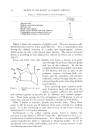
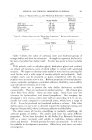
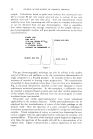
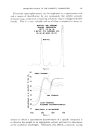
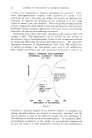
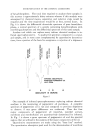
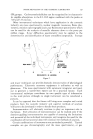
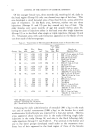
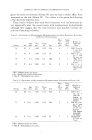
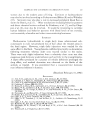
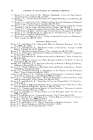
318 JOURNAL OF THE SOCIETY OF COSMETIC CHEMISTS TABLE 1,--CONSTITUTION OF THE LAC COMPLEX Per Cent by Weight Aleuritic acid Shellolic acid and homologues Kerrolic acid Butolic acid (approx.) Esters of wax alcohols and acids (approx.) Unidentified neutral material, dyes, etc. Unidentified polybasic acid interesters 46 27 5 1 2 7 12 100% Figure 1 shows the structure of shellolic acid. This was unequivocally determined last year by Yates and Field (15). It is a sesquiterpene acid having the skeletal structure of a rather rare sesquiterpene: cedrene, which occurs in only a few known plant species. The spatial structure shown is according to that deduced for cedrene by Stork and co-workers (16,17). Yates and Field state that shellolic acid forms a lactone with great ease through the primary hydroxyl group Figure 1.--Shellolicacid: m.p. 206øC. and one of the carboxyls. In the lac complex shellolic acid probably exists both as the lactone, and also as part of the polyester systems involving both car- boxyls and the secondary and primary hydroxyls, linked through aleuritic, ker- rolic and butolic acids with other shellolic acid molecules. Even assuming quite extensive poly- ester fk)rmation, there still remain in the shellac complex sufficient free hydroxyl and carboxyl groups to account for its adherent and coherent proper- ties. These polar groups and the arrangement of CH2 groups in sets of seven may account for the control obtained in setting hair with shellac. Table 2 relates to aleuritic, kerrolic and butolic acids. These three acids, it will be noted, are all hydroxy fatty acids of fairly low melting point. It is also interesting to note that all four of the known acids in shellac have 15- or 16-carbon skeletons. Erythrolaccin is the yellow coloring matter found in shellac. Its structure was elucidated in 1959 by Yates (18). He found it to be 1,2,5,7- tetrahydroxy-3-methyl-anthraquinone. It is therefore not susceptible to sodium hypochlorite, which is employed in bleaching shellac. It can be decolorized with sodium hydrosulfite, and work is going forward in our own laboratories toward this end.
Purchased for the exclusive use of nofirst nolast (unknown)
From: SCC Media Library & Resource Center (library.scconline.org)