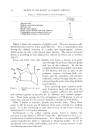
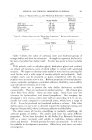
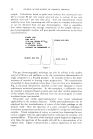
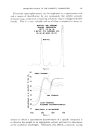
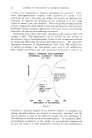
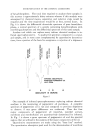
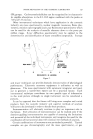
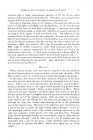
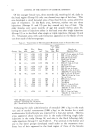
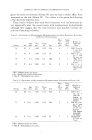
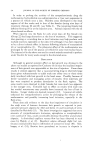
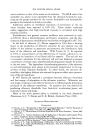
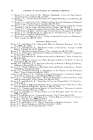
PHYSICAl, AND CHEMICAL PROI'ERTIES OI,' SHEI.LAC 319 TAm. F. 2.--HYD•ox¾ FA,rrr¾ Acxt)s ISOL•TV.D WOnt •4leuritic •tcid: m.p. 100 101 øC. HOCH.,(CH=) sCHOH--CHOH(CH=),COOH Butolic ztcid: m.p. 54-55øC. C•4H=s(OH) (COOH) Kerrolic •lcid: m.p. 132øC. CHa(CHs)v,(CHOHhCOOH l•accaic acid, the red coloring matter of shellac, is completely destroyed by sodium hypochlorite, and therefore offers no problem in bleaching shellac to a very pale color. Its structure is so far undetermined. The hydroxyl groups of shellac, as mentioned before, play an important role in its chemistry and technology. This is particularly true of the vicihal 9,10-hydroxy groups of aleuritic acid. For example, they may be easily chelated with acetone, as shown in Fig. 2. The series of reactions shown proceeds at room temperature. In this case, acetone chelation was employed to protect the vicihal hydroxyls during the oxidation of aleuritic ackt to the corresponding di-acid (19). In bleaching shellac, too vigorous treatment with sodium hypochlorite can bring about cleavage at the 9,10 position. The practical result is a soft bleached shellac, coupled with formation of water-soluble aldehydo acids, which cannot be recovered. Borax dispersions are widely used in industry, as cosmetic chemists are aware. Borax, in addition to neutralizing the acid groups, undoubtedly combines, through the boric acid oeormed from hydrolysis of borax, with the vicihal hydroxyl groups. This type of reaction, shown in Fig. 3, is similar to that which occurs between boric acid and mannitol (20), resulting in a complexed acid stronger than boric. Aleuritic acid H()CHs(CHs)t, CHOH--CHOH(CH,2) 7COOH acetone ) --H.20 H()CH• -R CH- - -CH--R' C(X)H (acetal) 0 O CH• C--CH:• H()()C-R CH---CH R • C(X)H I I • :•o • O O -- -• CH:•--C CH:• HOOC R--CHOH--CHOH- R'--COOH 9,10-dihydroxyhexadecane-l,16-dicarboxylic acid Figure 2.--Chelation of aleuritic acid with acetone.

320 JOURNAL OF THE SOCIETY O1: COSMETIC CHEMISTS l)ispersions of shellac in borax, especially those made with less than the calculated stoichiometrical equivalent, are receiving a good deal of at- tention by research groups in this country and India. Boric acid esters of shellac are said to be high melting point resins (21), but no details have been divulged. In discussing recent progress made in our own laboratories, we would state that one of our main activities is the preparation of esters and other derivatives. We believe that the most usetiff derivatives will involve a fundamental change in the shellac complex. In trying to bring about such a change, as for example, by reacting shellac directly with polyols and polyacids, we find it almost impossible to avoid producing insoluble gels, useless for any industrial purpose. We like to start with a less complex material. We call it "basic lac substance." OH HO--CH O-- CH HO--B 4- HO-B OH HO CH O- CH q- 2HsO HC---()H O--CH HC--O () CH q- HO -B __ H • B Figure 3.--Chelation ooe aleuritic acid with boric acid. + H•() 'l'his is a liquid substance, produced in good yield fi't,m the same raw materials which we use to make bleached shellac. But the process is materially different. Basic lac substance may be described as a mixture of the building blocks of shellac. Table 3 compares some of its constants with those of orange shellac. Note particularly the low iodine number. The double bond of shellolic acid seems to be mainly responsible for the color reversion ()f bleached shellac under the influence of heat. Aleuritic acid, having no double bond, may be heated for hours at 2(X)øC. without yellowing. ,his(), bleached shellac or samples of basic lac substance with an iodine wfiue of about 10, darken rapicily when heated. However, when the iodine value of basic lac substance is reduced t()al)r)ut 3, the tendency to darken is greatly reduced. We are studying the reactions of basic lac substance with those materials which might be expected to yield resins with higher melting point, greater flexibility, better adhesion, less tendency to yellow, and so on.
Purchased for the exclusive use of nofirst nolast (unknown)
From: SCC Media Library & Resource Center (library.scconline.org)