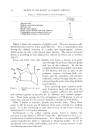
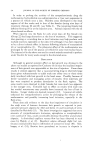
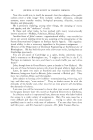
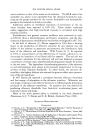
PHYSICAl, AND CHEMICAL PROPERTIES OF SHELLAC 32l TABLE 3.--ORANGE SHELI,A(2 AND "BAsic LAc SUBSTANCE" COMPARED Basic l,ac Orange Shellac Substance Acid value 68-75 190-195 Saponification wdue 175-200 235-245 Ester value 100-130 45-50 Hydroxyl value 310-325 375-385 Iodine value 13-16 2-3 TABLE 4.--ORANO, E SHELI,AC AND "BASIC LAC •UBSq'ANCE " RATIOS OF FUNCTIONAL G•,OUPS Basic l.ac Orange Shellac Substance Carboxyl 1.5 4 Ester 2 1 Hydroxyl 6 8 'Fable 4 shows the ratios of carboxyl, ester and hydroxyl groups of orange shellac and basic lac substance. As might be expected, the latter is fat' more tractable than shellac itself. It is far less prone to form insoluble gels. With polyols, such as ethylene glycol, diethylene glycol and sorbitol, we obtain soft products, some of which adhere to metals with surprising tenacity. We expect to develop resins useful in wave sets by carrying this work further with a wide range of reactive polyols and polyacids. Such complex esters can be produced at prices competitive with the most popular wave set resins now in use. Built-in properties of internal plastici- zation, molecular springiness, controlled adhesion, flexibility, removability and reduced corrosiveness are in view. Shellac esters are at present the on}y shellac derivatives available commercially. They are marketed in alcohol solution. All of them give softer fihns than shellac Some are even tacky. Some have very low tolerance for hydrocarbons and aerosol propellants. Our company has developed a very viscous, sticky ester with an acid value of 2-3--an un- usually low value compared to commercial esters, which have a range of 45-65. It can be produced and marketed without a solvent. I,ike other shellac esters, its use so tar is directed toward the industrial coating and fingernail lacquer field, where it enhances adhesion and flexibility. The above esters all involve esterifying, or partially esterifying, the carboxyl groups of shellac. The stearic acid ester has quite different properties. It has been described by the Indian Lac Research Institute (22) as a waxy, nontacky solid soluble in naphthas, toluene, alcohol, esters and ketones. It holds promise for wave set materials. It will soon be available in development quantities. Other fatty acid esters are under investigation.

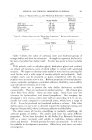
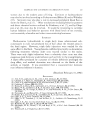
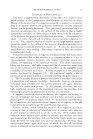
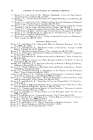
322 JOURNAL OF THE SOCIETY OF COSMETIC CHEMISTS In passing, it is interesting to note that in India, the red dye of shellac is being investigated for possible use in lipstick. And the pure laccaic acid obtained from the dye complex is being tested in an antihemorrhagic fluid. A final note on quality and purity. In addition to those matters covered by F.D.A. regulations, refined wax-free bleached shellac is today much improved over that available two years ago. Table 5 describes such ']'ABI,I' 5,----SPECIFICATIONS O1' COMMERCIAL REFINED (W^x-F•v.•) Moisture As low as 2.0% Ash 0.1-0.3% Sulfates as Na•SO4 0.01-0.07% Chlorides as NaCl 0.08-0.15% Combined chlorine as C1 2.0-2.6% Acid value 85-95 Iodine value (maximum) 10 a shellac now available, with extremely low chlorides and snlfates, pale without being overbleached, and which can be dried down to 2 per cent moisture easily, by the use of low temperature conditioned air. From a bleached shellac of this type, low moisture esters can be prepared. It is evident that recent progress is lifting shellac chemistry out of the realm of obscurity. New methods and new materials are opening up new fields. A new look at shellac as a chemical rather than a commodily is stimulating formulatots in the cosmetic as well as in other fields. The concept of the shellolic-aleuritic combination as the heart of the shellac complex is leading to a better appreciation and understanding of its physical properties. Studies on chemical derivatives of shellac are certain to provide a whole new class of shellac-based chemicals. (Received June 1, 1961) REFERENCES (l) Weinbcrgcr, H., and Gardner, W. H., 5 t. Ind. Eng. ( hem., 30, 454 (1938). (2) ( idvani, B. S., and Kamath, N. R., London Shellac Research Bureats, 7•'ch,ica/ No. 1 (1944). (3) Verman, l.. C., Ibid., No. II (1937). (4) Verman, L. C., and Bhattacharya, R., Ibid., No..q (1935). (5) Bhattacharya, R., and Gidvani, B. S., [bid., No. I.• (1938). (6) Bhattacharya, R., and Heath, G. D., [bid., No. 16 (1938). (7) Rutzler, J. E., .It., 5 t. Ind. Eng. Chem., 50, 903 (1958). (8) Stivala, S.S., and Powers, W. J., Ibid., 50, 935 (1958). (9) Alter, H., and Sollet, W., [bid., 50, 922 (1958). (10) Verman, l.. C., London Shellac Research B•o'eau, 7•chnica/ Paper No. 3 (1936). (l 1) Verman, ] .. C., Ibid., No. • (1935). (12) Vetman, 1,. C., [bid., No. 10 (1936). (13) Cl:trke, G. I,., .% Ind. Eng. Chem., 18, 113] (1926). (14) Houwink, R., "Physikalische Eigenschaften ,nd b'einbau yon A/al•o'• und Ku,slharzen," Leipzig, Akad. Verlag (1934). (15) Yates, P., and Field, A., 5 t. •tm. Chem. Soc., 82, 5764 (1960). (16) Stork, G., and Clarke, F. H., Ibid., 77, 1072 (1955). (17) Stork, G., and Breslow, J., Ibid., 75, 329l (1953). (18) Yates, P., Unpublished reports (1959).
Purchased for the exclusive use of nofirst nolast (unknown)
From: SCC Media Library & Resource Center (library.scconline.org)