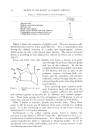
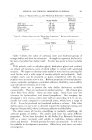
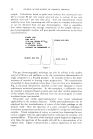
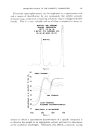
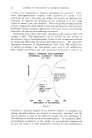
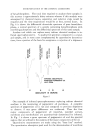
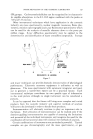
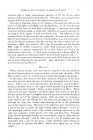
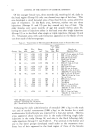
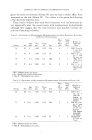
INSTRUMENTATION IN THE COSMETIC LABORATORY 32.t (19) Nagel, W., and Mertens, W., Bet., 69, 2050 (1936). (20) Boeseken, J., and Meulenhoff, J., Proc. Acad. Sci. Amsterdam, 27, 174 (1924). (21) "Shellac," private publication, Angel() Bros., Cossipore (Calcutta). (22) Bhattacharya, R., and Gidvani, B. S., I,ondon Shellac Research Bureau, Technical Paper No. 15 (1938). INSTRUMENTATION IN THE COSMETIC LABORATORY By G. M. LEt(m and A. P. KENT* Presented May 12, 1961, New York City A•:rHOUGI-t the spatula continues to be a useful instrument, more astute apparatus has become an essential part of the modern cosmetic laboratory. The term instrumentation in this instance is applied generi- cally to the spectral and chromatographic facilities which in less than twenty years have become basic tools of the industry. Many did not even exist twenty years ago. Instrumentation as applied to analysis, control, elucidation of structure, product development and cosmetic research is an essential adjunct to the laboratory. The wide variety of raw materials and the complexity of formulations typical of the cosmetic industry today make rapid, precise and specific means of analysis mandatory. Spectral and chromatographic instrumenta- tion fulfills this requirement in increasing variety and utilization is now, in many instances, routine. After much early work in paper and columnar chromatography, gas-liquid partition chromatography finds a wide range of application from the assay of raw materials to the determination of extremely low concentrations of a specific ingredient in a finished formula- tion. In many cases samples need not be altered, or only a minute amount may be necessary for analysis. For repetitive work enormous savings of time may be achieved, and in research instruments lead the way to more revealing methods and frequently to basic discoveries. The following examples will demonstrate the scope and versatility of these instrumental techniques. Stearic acid or most fatty acids or their triglycerides can be rapidly and accurately assayed by means of gas chromatography. The methyl ester is prepared, perhaps by the boron trifluoride method, and injected into the instrument. From the resulting chromatogram, the type and con- centration of the impurities can be determined in addition to the assay of the acid. Figure l shows a typical chromatogram of a stearic acid * Colgate. Palmolive Co., Jersey City 2, N.J.

INSTRUMENTATION IN THE COSMETIC LABORATORY 32.t (19) Nagel, W., and Mertens, W., Bet., 69, 2050 (1936). (20) Boeseken, J., and Meulenhoff, J., Proc. Acad. Sci. Amsterdam, 27, 174 (1924). (21) "Shellac," private publication, Angel() Bros., Cossipore (Calcutta). (22) Bhattacharya, R., and Gidvani, B. S., I,ondon Shellac Research Bureau, Technical Paper No. 15 (1938). INSTRUMENTATION IN THE COSMETIC LABORATORY By G. M. LEt(m and A. P. KENT* Presented May 12, 1961, New York City A•:rHOUGI-t the spatula continues to be a useful instrument, more astute apparatus has become an essential part of the modern cosmetic laboratory. The term instrumentation in this instance is applied generi- cally to the spectral and chromatographic facilities which in less than twenty years have become basic tools of the industry. Many did not even exist twenty years ago. Instrumentation as applied to analysis, control, elucidation of structure, product development and cosmetic research is an essential adjunct to the laboratory. The wide variety of raw materials and the complexity of formulations typical of the cosmetic industry today make rapid, precise and specific means of analysis mandatory. Spectral and chromatographic instrumenta- tion fulfills this requirement in increasing variety and utilization is now, in many instances, routine. After much early work in paper and columnar chromatography, gas-liquid partition chromatography finds a wide range of application from the assay of raw materials to the determination of extremely low concentrations of a specific ingredient in a finished formula- tion. In many cases samples need not be altered, or only a minute amount may be necessary for analysis. For repetitive work enormous savings of time may be achieved, and in research instruments lead the way to more revealing methods and frequently to basic discoveries. The following examples will demonstrate the scope and versatility of these instrumental techniques. Stearic acid or most fatty acids or their triglycerides can be rapidly and accurately assayed by means of gas chromatography. The methyl ester is prepared, perhaps by the boron trifluoride method, and injected into the instrument. From the resulting chromatogram, the type and con- centration of the impurities can be determined in addition to the assay of the acid. Figure l shows a typical chromatogram of a stearic acid * Colgate. Palmolive Co., Jersey City 2, N.J.
Purchased for the exclusive use of nofirst nolast (unknown)
From: SCC Media Library & Resource Center (library.scconline.org)