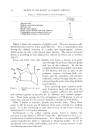
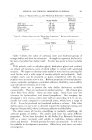
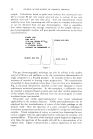
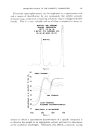
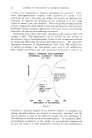
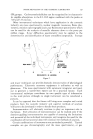
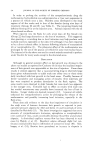
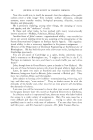
324 JOURNAL OF THE SOCIETY OF COSMETIC CHEMISTS sample. Calculations based on peak areas indicate this commercial sam- pie to contain 86 per cent stearic acid and also to contain 13 per cent palmitic acid and I per cent oleic acid. Acid and saponification values would be more time consuming and still not give as complete information as can be obtained from one gas chromatogram. Acid or saponifica- tion values represent the average composition of the sample whereas a gas chromatographic analysis will give specific information 'as to the fatty acid distribution. STEARIC ACID TEMP 185 øC. 14 lbs. psio. HELIUM 90 CC/min ' COLUMN 5FT. 25 % dl - ETHYLENE GLYCOL SUCCINATE ON CHROMOSORB W PALMITIC ACID 1:5% Figure 1. STEARIC ACID 86% C ACID I% The gas chromatographic technique can also be utilized in the quality control of flavors and perfumes or for the quantitative determination of single component in a finished product. An example of this is the deter- mination of menthol in shaving cream preparations. The concentration of menthol in these products is less than 1 per cent but, as is indicated in Fig. 2, the peak obtained for menthol is more than adequate to insure satisfactory analytical precision. In this procedure, a calibration curve for menthol is prepared based on peak area and after suitable preparation of the sample, the peak area obtained from the chromatogram is readily translated to per cent menthol. Ultraviolet and visible spectrophotometry have found widespread applicability in the cosmetic industry. Visible spectrophotometry can be employed for the standardization of colors of the labels, package or the product itself. Once the spectrum of a color standard is obtained, it constitutes a permanent record and is available for comparison with future samples. Visual comparison of colors, no matter how discerning the eye, cannot compare with the spectrophotometric technique for accuracy and reproducibility. If the color of the standard sample happens to degenerate with time, the spectrum of the sample will still be a representation of its original state. Figure 3 demonstrates a typical application of this tech- niq ue.

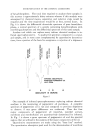
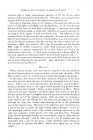
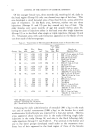
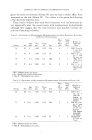
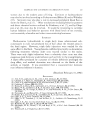
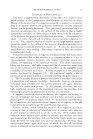
INSTRUMENTATION IN THE COSMETIC I,ABORATORY 325 Ultraviolet spectrophotometry can be employed as a quantitative tool and a means of identification for any compounds that exhibit aromatic character (e.g., compounds containing a benzene ring or conjugated double 1,onds). This is a very valuable tool as all that is required in many in- MENTHOL AND PERFUME SHAVING PREPARATION 150 •C. 5.5 lbs. He METER 15% CARBOWAX 600 ON 60-80 MESH CELITE MENTHOL Figure 2. 90' GREEN STANDARD E 80 •o 70 • 40- STANDARD • COLOR STANDARDS RECORDING SPECTROPHOTOMETER I0- WAVELENGTH IN MILLIMICRONS 460 ,560 660 760 Figure 3. stances to obtain a quantitative determination of a specific compound is to dissolve the sample in an appropriate solvent and read its absorbance at the analytical wavelength. Obviously, this affords a dramatic saving
Purchased for the exclusive use of nofirst nolast (unknown)
From: SCC Media Library & Resource Center (library.scconline.org)