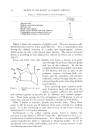
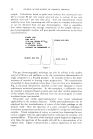
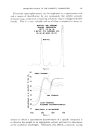
326 JOURNAL OF THE SOCIETY OF COSMETIC CHEMISTS in time, as no separation or isolation procedures are necessary. Ultra- violet spectrophotometry requires small quantities of sample. Con- centrations of only a few parts per million can usually be detected and measured. In general, the precision of this technique is in the range of plus or minus 1 per cent absolute. When the product being analyzed contains compounds which exhibit interfering absorptions at the analytical wavelength being measured, appropriate extraction and/or ion-exchange techniques will remove the interfering constituents. Compounds exist whose ultraviolet absorption peak maxima shift with changes in pH. This phenomenon can be utilized for the analysis of bacteriostats such as hexachlorophene, bithionol and halogenated anobials by employing differential ultraviolet spectrophotometry. The ultraviolet absorption maximum of hexachlorophene shifts from 300 millimicrons in alcohol containing 4 per cent glacial acetic acid to 314 millimicrons when alcohol containing 4 per cent ammonium hydroxide is used (1, 2). PRODUCT CONTAINING H/XACHLOROPHENE DIFFERENTIAL ULTRAVIOLET SPECTRUM I cm. CELL • A•COHOL /• .... " • SAMPLE • , • REFERENCE 4% 360 z6o WAVELENGTH I" MILLIMICRONS Figure 4. 'l'herefore, if identical aliquots of an alcoholic solution of a product con- raining hexachlorophene are treated as previously described and the acid in solution is used as the reference sample, the only absorption at 314 millimicrons should be that ofhexachlorophene. All absorption effects of interfering constituents in the sample are automatically compensated for and the result is a valid quantitative method for the determination

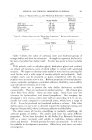
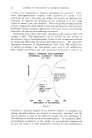
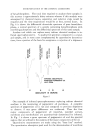
INSTRUMENTATION IN THE COSMETIC I,ABORATORY 327 of hexachlorophene. The total time required to analyze three samples in this manner is approximately thirty minutes whereas if this analysis were attempted by chemical means, separation and isolation steps would be required and the time requirement would be at best, several hours. In Fig. 4 is shown the differential ultraviolet spectrum of pure hexachloro- phene, a normal spectrum of a sample containing hexachlorophene with interfering adsorptions and the differential spectrum of this same sample. Another tool which can replace many tedious chemica! analyses is in- frared spectrophotometry. A qualitative spectrum compared to a stand- ard sample, and in some cases complemented by quantitative determina- tions, form a portion of the basis for acceptance or rejection of a shipment. / bJ oo :Do •[n,- 0 _1_o ._In,' I•. n" ..• 0o O- o I-'0 Z m Z © INFRARED ABSORPTIONS REDISTILLED PEPPERMINT OIL NaCL PRISM WAVELENGTH IN MICRONS Figure 5. One example of infrared spectrophotometry replacing tedious chemical analyses is the monitoring of peppermint oil purchases. A complete spectrum of peppermint oil is run and compared to previous shipments to observe if any gross differences are evidenced. Then the four major components of peppermint oil (menthol, menthyl acetate, menrhone and mentholutah) are quantitatively determined by infrared. In Fig. 5 is shown a gross spectrum of peppermint oil and the spectral regions that are utilized in the analysis of the major components of the oil. Quantitative measurements are made using the "base line" method. The quantitative absorption peak used for the determination of menrhone
Purchased for the exclusive use of nofirst nolast (unknown)
From: SCC Media Library & Resource Center (library.scconline.org)