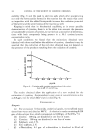
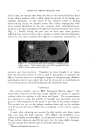
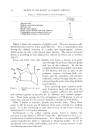
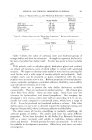
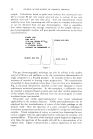
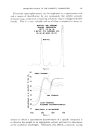
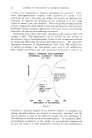
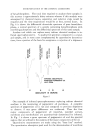
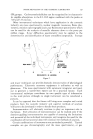
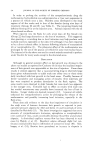
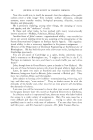
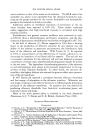
EFFECT OF VARIOUS METALLIC IONS 313 skin in vitro, we noticed that when the skin of the animal had been fixed in the culture medium with a nickel clamp the growth of the fungus was checked. Secondly: in the course of our research aimed at finding self-sterilizing tissue, we became aware that tissues impregnated with silver nitrate, blackened by the sun, retained their antistaphylococcic property even after having been through the automatic laundry seven times (Fig. 1). Finally during the past year we have seen three patients suffering from contact eczema due to propyl or methyl p-hydroxybenzoate which are also used as preservative agents in numerous preparations of Figure. 1 .--Tissue pieces after seven washings, on Staphyloeoccus aureus culture. Left, control, right, previously impregnated with AgNOa solution and exposed to the sun. cosmetic and food products. Therefore we have thought it of value, from the thecretical point of view as well as practically, to examine the effect of certain metals on a pathogenic fungus of the guinea pig, •4chorion quinckeanum and on two molds that may be of concern to manufacturers of cosmetic products, Penici//ium glaucum and •4spergi//us niger. TECHNIQUE The culture medium used is BBL Sabouraud Maltose Agar.* The metal salts in the form of chlorides (except AgNOa) are added in aqueous solution while the medium is still warm and liquid. The concentrations are calculated to make the number of metallic ions equivalent and are given in milliatomgrams of the metal in one liter of the culture medium. The controls are •un on the culture medium alone and on the medium with C1 ions (in the form ofHC1)that correspond to the several concen- tratiors. A week after culturing one records the first results and three weeks later one reads the final outcome. This affords the possibility to es- tablish a probable retarding effect on the growth as well as its inhibition. Three culture tubes are used for the test yet, for some slight diverge•- cies the response has been the same in all three experiments. * Baltimore Biological Laboratory Co.

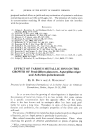
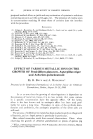
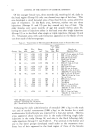
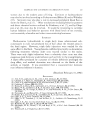
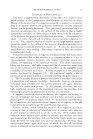
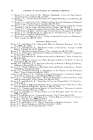
314 JOURNAL OF THE SOCIETY OF COSMETIC CHEMISTS •i-.__ Achorion G Peniciltium gl. Aspergittus n. 0,3 1 3 10 30 0,3 ' 1 3 •10 •30 0,3 1 3 t0 30 Li * d- -I- -i- -I- -I- -t- -I- -+ 4- -I- -I- -t- Sr ++ H- H- + -F -F -+ + -+ + d- -F -+ _ ___ AI +*+ -b -F + -- + + -I- -- -k '+ + +--_ Cr *+* -+ -F + -- -k -t- -t- -- + 4 + _+ - Fe *+* + + - _ + + + - + . + + • -- Co +* -+ + -- -- -i- + -I- - + '• -- - ¾ + • - Ni ** -F _ -- -- + _ -- -- -I- - • -- Cu** -+ -• -- -- + + - - + -• - - Zn +* + -t- - - + 4 - - + 4 + - _ Ca ** + .... -• 4 + _ _ 4 + + •F - Au *"•' + + - + 4- -- -l- .+ _ Ag" H- + -- -F + - + '+ -- p.** + -?- _ + - ,. - ß i• t 3 t0 30 90 1 3 10 30 90 1 3 10 30 90 HC• + + + + - 4- + 4- + 4,. + + + + + Plate 1.--+, normal growth, 4-, delayed growth, -- inhibition. RESULTS (SEE PLATE 1) Of the metals that have been examined for inhibiting the growth of /Ichorion, cadmium has been found the most active followed by nickel, cobalt and silver. Some activity has been noticed with zinc, copper, gold, palladium and iron. The Cr +++ and A1 +++ may be rated as inactive, for the control with HCl (90 millimoles) which is equivalent in C1 ions to the concentration 30 of these two salts provides an inhibited culture. (In this case, to make sure, one considers all the molecules hydrolyzed and so an AI+++ ion corresponds to 3 HCl.) The metallic ions most active on Penici//ium g/aucum and Atspcrgi//us niger are first Cd, Ni and Ag, then Co, Zn, Cu, Pd and Au. The other cations tested have but a slight effect. DISCUSSION These experiments show that of the metals that have been examined, cadmium is the most effective. Unfortunately the ions of this metal are known as being markedly toxic to man this limits their possible use as an antifungal agent to some particular cases. Nickel and silver have an equivalent effect, yet the first has an eczematogenic power not to be disregarded which also puts a limitation upon its utilization. Silver, which does not have the unfavorable features of cadmium and nickel, can be used for preserving finished products. The concentration in which it has
Purchased for the exclusive use of nofirst nolast (unknown)
From: SCC Media Library & Resource Center (library.scconline.org)