CHEMICAL STRUCTURE AND ANTIMICROBIAL ACTIVITY OF BIS-PHENOLS II. Bactericidal Activity in the Presence of an Anionic Surfactant By GEORGE R. WALTER and WILLIAM S. GuMp* A PREVIOUS report by Gump and Walter cited the bacteriostatic and fungistatic properties of a series of bis-phenols (1). Numerous other workers have evaluated bis-phenols in general for microbiological activity (2). A review of the literature will indicate that the great majority of published investigations have been concerned with bacteriostatic or fungi- static activity. Several papers have appeared wherein the authors refer to the bactericidal activity of hexachlorophene (G-11©) the size of the inhibi- tion zones on agar plates is measured and taken as criterion of the bacteri- cidal effect (3, 4). Besides our own work (2, 5) with dichlorophene (G-4 ©) and hexachlorophene, the number of publications dealing with truly bactericidal action are few indeed (6, 7). In addition, bactericidal data have often been erroneously interpreted because of the highly bacteriostatic nature of the bis-phenols coupled with the omission of a neutralizer in the test procedures. Some reports, however, have appeared which depict bactericidal action where adequate precautions against bacteriostatic effects were taken (8). Several instances have been reported relating to an enhancement phe- nomenon between anionics and bis-phenols (9, 10). Preliminary work in our laboratories demonstrated that certain anionic surfactants of the alkylaryl sulfonate type will solubilize hexachlorophene and maintain bactericidal action. It was observed that bis-phenols other than hexa- chlorophene exhibited bactericidal properties when in the presence of an anionic surfactant, and a series of bis-phenols showing bacteriostatic activity, as previously reported (1), was selected and screened for possible bactericidal activity. Our concern was primarily that of detecting lethal action at low levels of the test compound. It was deemed desirable that the technique employed should measure any kill observed quantitatively, inasmuch as it was antici- pated that the magnitude and rate of kill would not be such that extinction * Sindar Corp., Delawanna, N.J. 477

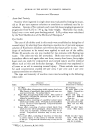
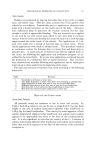
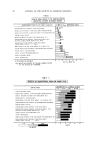
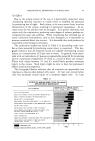
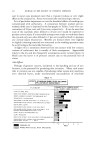
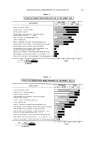
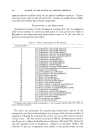
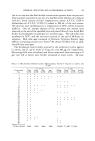
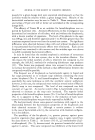
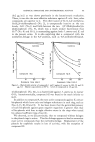
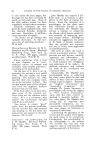
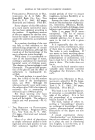
478 JOURNAL OF THE SOCIETY OF COSMETIC CHEMISTS type procedures could be used, viz. the phenol coefficient method. Extinc- tion type tests, due to lack of sensitivity, would not readily detect differ- ences between weakly bactericidal compounds. EXPE•.IMENT^I. AND D•scuss•o• Compound numbers of the Ns-phenols employed in this investigatiom refer to the numbers in a previous publication (1) and are listed in Table 1.1 Bis-phenols not demonstrating bactericidal action of 95 per cent kill better are omitted from this report. TABLE 1--NAtaES s•o NvtaB•Rs ov BIS-PHENOLS Compound No.* 1 2 3 4 5 6 7 8 9 15 16 19 20 21 24 30 31 32 33 34 36 37 38 39 40 41 42 43 47 48 2,2'-methylenebis (3,4,6-trichlorophenol) 2,2'-methylenebis (4,5,6-trichlorophenol) 2,2'-methylenebis (3,4,5-trichlorophenol) 2,2'-methylenebis (4~bromo-3,6-dichlorophenol) 2,2'-methylenebis (4-bromo-5,6-dichlorophenol) 2,2'-methylenebis (4-chlorophenol) 2,2'-methylenebis (4-methylphenol) 2,2'-methylenebis (4,6-dichlorophenol) 2,2'-methylenebis (5,6-dichlorophenol) 2,2'-ethylidenebis (4-chlorophenol) 2,2'-ethylidenebis (6-bromo-4-chlorophenol) 2,2'-(2,2,2-trichloroethylidene)-bis (6-bromo-4-chlorophenol) 5,5'-dichloro-2,2'-stilbenediol 3,5,3',5'-tetrachloro-2,2'-stilbenediol 2,2'-benzylidenebis-(4,6-dimethylphenol) 2,2'-thiobis (4-chlorophenol) , 2,2'-thiobis (4-bromophenol) 2,2'-thiobis (4,6-dichlorophenol) 2,2'-thiobis (6-bromo-4-chlorophenol) 2,2'-thiobis (3,4,6-trichlorophenol) 2,2'-thiobis (4-chloro-6-isopropyl- 3-methylphenol) 2,2'-thiobis (4-chloro-3,5-dimethylphenol) 2-hydroxy-2-methoxy-5,5'-dichlorodiphenyl sulfide 1,1 '-methylenebis (2-naphthol) 3,3'-methylenebis (2,4,6-trichlorophenol) 3,3'-methylenehis (4-bromo-2,6-dichlorophenol) 4,4'-methylenebis (2,3,6-trichlorophenol) 2,2'-oxybis (tetrachlorophenol) 4,4',6,6'-tetrabromo-o,o'-diphenol salicil (2,2'-dihydroxybenzil) * Numbers kept unif•)rm with numbering in J. Soc. Cosmetic Chemists, 11,307 (1960) for future reference purposes. The basic test procedure for ascertaining bactericidal activity of the compounds was that of inoculating a test system with a known number ofl organisms followed by enumeration of the survivors after twelve minutes i contact time. The test system consisted of 100 ml. distilled water contain- ing 30 ug./ml. sodium dodecylbenzene sulfonate (Ultrawet©-K) (Atlantic) and the specified level of bis-phenol. Aliquots of alcoholic (S,D.A. 30) solutions of the test compounds were added to the anionic-water system,
Purchased for the exclusive use of nofirst nolast (unknown)
From: SCC Media Library & Resource Center (library.scconline.org)