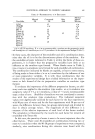
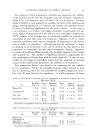
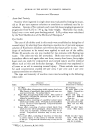
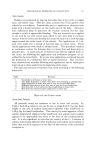
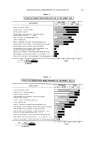
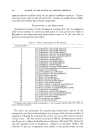
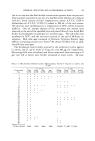
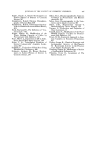
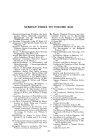
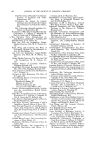
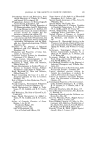
CHEMICAL STRUCTURE AND ANTIMICROBIAL ACTIVITY 479 but in no case was the final alcohol concentration greater than one per cent. The inoculum consisted of one mi. of a distilled water dilution of a 24-hour A.O.A.C. broth culture of either Staphylococcus aureus A.T.C.C. 6538 or •Escherichia coli A.T.C.C. 11229 (11) added to 100 mi. of the test system. 3_11 solutions were equilibrated to a temperature of 20øC. before inoculum addition. One ml. sample aliquots of the inoculated test system were removed at the end of the specified time and placed directly into Astell Roll •Fubes (Consolidated) containing 4 mi. antidote agar. The roll tubes were incubated at 34øC. and the survivors counted at the end of 48-hours in- eubation. Roll tube agar consisted of Dextrose Tryptone Extract Agar [(Difco) containing one per cent Tween © 80 (Atlas) fortified with an addi- itional 0.5 per cent agar. The bis-phenols were initially screened in the surfactant system against IS. aureus and E. coli at levels of 15/•g./ml. and 100 •g./ml. respectively. IPercentage kills were calculated and those compounds demonstrating a 95 Iper cent kill or better were further evaluated at lower levels. All com- [TABLE 2--BIs-PHENOLS DEMONSTRATING BACTERICIDAL ACTIVITY AGAINST ,•. aureus AND E. coli , S. aureus-- , , E. coli , Compound 15•g 10•g 5•g l•g 100•g 50•g 15•g (level) No. 95 99 95 99 95 99 95 99 95 99 95 99 95 99 (% kill) 5 * * 6 * * * * 7 * * 15 * * * * 16 * * * * 19 * * * * 20 * * * * * * 21 * * 24 * 30 * * * * 31 * * * * 32 * * * * 33 * * * 34 * * * * 36 * * 37 * * 38 * * 39 * * * 40 * * 41 * * 42 * * * * 43 * * * * 47 * * * 48 * * Initial count/•nl, of test system 8000 6500 4000 4000 18,000 17,000 17,000

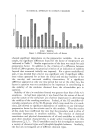
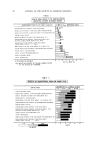
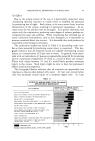
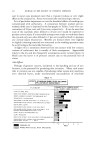
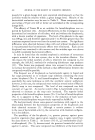
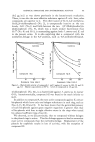
480 JOURNAL OF THE SOCIETY OF COSMETIC CHEMISTS pounds for a given dosage level were examined simultaneously so that the activities would be relative within a given dosage level. Results of the bactericidal evaluation may be seen in Table 2. Those compounds dem- onstrating a 95 per cent kill or better are asterisked at the corresponding dosage level. The efficacy of Tween 80 as an antidote for hexachlorophene was ported by Lawrence (12). Antidote effectiveness in this investigation was determined by inoculation of roll tubes, with and without the bis-phenols,I with a known number of organisms. The level of bis-phenols in the agarl was 100/•g./ml. and therefore approximately 5 to 30 times greater than the• maximum expected carry-over from the actual test system. No significantl differences were observed between tubes with and without Ns-phenol, andl it was presumed that bacteriostatic effects were eliminated. Each active• bis-phenol was examined in this manner and the antidote agar was shownl to nullify completely bacteriostatic effects. It may be noted that the method employed a minimum of extraneous• organic material in the test system, due to the inoculum dilution. For• this reason the initial numbers of cells is relatively low compared to, forl example, the A.O.A.C. methods for evaluating disinfectant type productsl (11). This factor was purposely taken into account in this evaluation to increase the sensitivity of the method so that differentiation between the compounds would be possible. The frequent use of Ns-phenols as bacteriostatic agents in liquid and bar soaps prompted us to evaluate soap solutions containing the most l active bis-phenol (No. 3) and hexachlorophene (No. 1). We employed essentially the same technique as with the synthetic anionic surfactant however, in this case, the compounds were tested at several ratios of Maxine (Swift) soap to test compound. The level of test compound was held constant at 1 •g./ml. As may be noted in Fig. 1, bactericidal action was observed to decrease as the soap ratio increased. The superior lethal properties of the hexachlorophene isomer (No. 3) to that of hexachlorophene (No. 1) is apparent in Fig. 1. Interest in the reduction of bath water counts by hexachlorophene was previously reported by Ayliffe (8). We had previously drawn some general conclusions with regard to the relationship between the bacteriostatic properties of the Ns-phenols and their chemical structure (1). Although a certain pattern is evident in the case of bactericidal activity, the connection with chemical configura- tion is less definite. The specificity of the bis-phenols, i.e., greater potency against gram positive organisms than against gram negative ones, is again noted from the data shown in Table 2. An isomer of G-11, 2,2'-methylenebis-(3,4,5- trichlorophenol) (No. 3), demonstrated the greatest bactericidal activity against S. aureus. This same compound was inhibitory at the lowest level
Purchased for the exclusive use of nofirst nolast (unknown)
From: SCC Media Library & Resource Center (library.scconline.org)