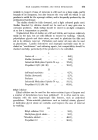
HAIR LACQUER SYSTEMS AND THEIR EVALUATION 479 PROPELLANT SYSTEM The pressurized hair lacquer is a surface coating product, and so the quantity and composition of the propellants used must produce a relatively coarse spray, in conjunction with the particular valve used. This aspect has now assumed greater importance because if inhaled spray particles do constitute a health hazard, then the danger increases as the particle size decreases. Several other major considerations, including flammability characteristics, corrosion problems and cost, also govern the choice of propellant system. The chlorofluorohydrocarbon propellant systems used for hair lacquers usually consist of a mixture of propellants 11 and 12, or propellant 12 alone. Methylene chloride and 1,1,1-trichloroethane are also used in conjunction with propellant 12, serving both as solvents and pressure depressants. A combination of propane and propellant 11, referred to below, has not, so far, been used in Great Britain, largely because the odour of the propane available has been poor, although it is now improving. The ratio of propellant 11 to propellant 12 may be varied, although the 50/50 mixture is most frequently used, partly because of economic con- siderations. By increasing the proportion of propellant 11 to propellant 12, the internal pressure of the pack is reduced and a wetter spray of larger average particle size results. The refillable "mother and daughter" packs normally contain a propellant mixture having a preponderance of propellant 11, as the necessary over-pressurizing of the "mother" pack with nitrogen may otherwise create pressures which are too high for safety, particularly as a larger can is used for the "mother" pack. It might be noted here that the refillable "daughter" pack must be thoroughly purged of air. The use of propellant 12 alone reduces some of the problems of compati- bility and perfume stability. It also has the dubious advantage of giving the purchaser the impression that the pack contains a greater quantity of product, as the volume occupied by a 65ø,/0 concentrate/35% propellant 12 fill is about 15--20% greater than that occupied by a product containing 35% concentrate and 65% of a propellant 11/12 mixture. FLAMMABILITY The flammability of hair lacquers is under investigation, but having regard to the vast number which have been produced and used, without mishap, it may well be that the danger is exaggerated. Nevertheless, the formulator of a pressurized hair lacquer must consider this aspect carefully, and choose the least flammable formulation consistent with efficiency. The methods employed for testing the flammability of pressurized pro- ducts, and the interpretation of the results obtained thereby are, themselves, the subject of controversy. However, the aerosol industry throughout the

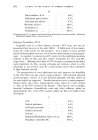
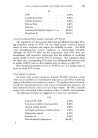
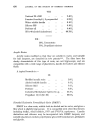
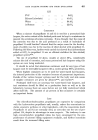
480 JOURNAL OF THE SOCIETY OF COSMETIC CHEMISTS world uses the C.S.M.A. methods•, which provide a valuable means of comparing the flammability hazards of various formulations. Felton and Yeomans • recently suggested an alternative method, using a 12 oz drawn steel aerosol can as a combustion chamber, and a sparking plug as an ignition source. The flammable nature of the solvents used in the conventional hair lacquer renders the use of flammable propellants, such as hydrocarbons and vinyl chloride, inadvisable except in limited amounts in combination with the chlorofluorohydrocarbon propellants 1 1 and 12. In the U.S.A., formu- lations containing propane and propellant 1 1 have been used. The formu- lation given below was tested by C.S.M.A. members 23, and the recommended classification was "nonflammable". XI E. 755 (PVP/VA copolymer) Lanogene .... 'Silicone .... Perfume .... Absolute ethyl alcohol Propellant 11 .. Propane .... 0.750% 0.060% 0.030% 13.995ø./o 77.000% 8.000% If 80% by weight, or more, of a chlorofluorohydrocarbon propellant is used, even with highly flammable solvents, the flammability hazard is negligible due to the flame inhibiting properties of these compounds. This has been confirmed recently during tests carried out by Kempe 2•. The ratio of propellant to concentrate will, however, produce a spray containing a high proportion of fine particles which is undesirable. A product contai- ning 70ø//o byweight of a mixture of propellants 11 and 12, and 300//0 of lacquer concentrate will give a flame projection of 9-10 • when tested by the C.S.M.A. flame projection test, but as the ratio of propellant to concentrate decreases, the flame extension increases until a product containing 65% concentrate and 35% propellant 12 will produce a flame extension of almost 2'. It should be mentioned that the discharge rate, and the spray pattern influence these results. For water-based hair lacquers, containing a film former dissolved in aqueous alcohol and pressurized by a hydrocarbon propellant, the flame extensions will be of the same order as the conventional 70/30 propellant/ concentrate lacquer. Labelling as "non-flammable" was given by C.S.M.A. members •a for the following basic formulation :--
Purchased for the exclusive use of nofirst nolast (unknown)
From: SCC Media Library & Resource Center (library.scconline.org)