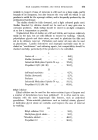
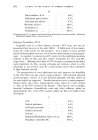
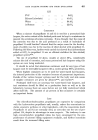
HAIR LACQUER SYSTEMS AND THEIR EVALUATION 473 notably in respect of ease of removal, is still used on a large scale, partly because of its cheapness, but also because the very stiff set which it can produce is useful for the upswept coiffure, and is frequently preferred by the professional hairdresser. The shellac should be fully dewaxed, and a light coloured grade used. Shellac bleached by chlorine should not be used as it may give rise to corrosion problems. Bulk shellac should be stored in air-tight containers at as low a temperature as possible. Unplasticized films of shellac are stiff and brittle, and rupture relatively easily on the hair, but are still difficult to remove by washing. Glycols, polyethylene glycols and their esters, are used to plasticize the film and aid in its ultimate removal. Phthalates and castor oil may also be used as plasticizers. Lanolin derivatives and isopropyl myristate may be in- cluded as "conditioners" and softening agents, but compatibility should be checked carefully, particularly if the product is to be cold-filled. I Castor oil .......... 0.6% Shellac (dewaxed) ...... 1.8% Industrial Methylated Spirits 74 o.p... 27.6% Propellant 12/11 (50:50) .... 70.0% II isoPropyl myristate ...... 0.7% Shellac (dewaxed) ...... 2.7% Perfume .......... 0.5% Industrial Methylated Spirits 74 o.p... 31.1% Propellant 11/12 (50:50) .... 65.0% Ethyl Cellulose Ethyl cellulose can be used for the water-resistant type of lacquer and a number of formulations have been published 4. It is often used in com- bination with the more hygroscopic film formers, such as polyvinyl pyrrolidone. Water-miscible plasticizers such as triethyl citrate, glycerol or diethylene glycol oleate are suitable, and improve the ease of removal by washing. III Ethyl cellulose T.10 ...... Diethylene glycol oleate ...... *Absolute alcohol ........ Propellant 12 ........ 2.0% 2.0% 46.0% so.o%

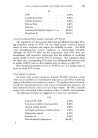
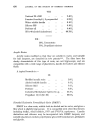
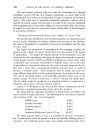
474 JOURNAL OF THE SOCIETY OF COSMETIC CHEMISTS IV Ethyl cellulose N.10 Diethylene glycol oleate Polyvinyl pyrrolidone *Absolute alcohol .. Propellant 11 .. Propellant 12 .. 0.6% 0.7% o.7% 28.0% 35.0% 35.0% *Formulations of U.S. origin quote either SDA-40 alcohol or absolute alcohol. Industrial Methylated Spirits 74 o.p. is used in the U.K. PolyvinyZ Pyrrolido,te (VVV) Originally used as a blood plasma extender, PVP came into use for pressurized hair lacquers in the early 1950's. It fulfils most of the require- ments for a film former for hair lacquers. It is soluble in water, alcohol and alcohol/propellant mixtures, but it has the disadvantage of being hygros- copic. As supplied, it contains about 5% water, but the equilibrium moisture contents of films at 50% and 75ø/0 relative humidities are 17ø/0 and 25•o respectively. Although dried films of PVP are glossy, transparent and hard, water plasticizes the film, causing softening and tackiness which is a dis- advantage as the greatest need for a hair lacquer arises when conditions of high humidity prevail. The incorporation of some plasticizers not only improves the flexibility oS the PVP film, but also reduces hygroscopicity. Oleyl alcohol, glyceryl monoricinoleate, Cilrofiex A-2 and dimethyl phthalate (10-25% based on the resin solids) are suggested. Lano]in derivatives serve a similar purpose 5. Silicone fluids also reduce hygroscopicity when added at a rate of from 1--10% on the PVP content of the lacquer. Film formers such as shellac, dimethyl hydantoin forInaldehyde resin and ethyl cellulose, added at approximately 10ø/0 of the PVP content, stiffen the fihn and render it less hydrophilic. V PVP ........ Diethyl phthalate ...... isoPropyl myristate .... Shellac (dewaxed) .... Perfume ........ Industrial Methylated Spirits 74 o.p. Propellant 11/12 (50: 50) .. 2.2% 0.4% 0.6% 0.3ø,/0 0.s% 26.0% 70.0%
Purchased for the exclusive use of nofirst nolast (unknown)
From: SCC Media Library & Resource Center (library.scconline.org)