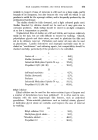
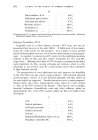
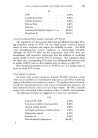
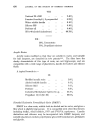
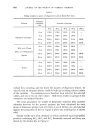
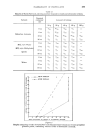
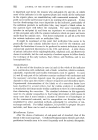
FLAMMABILITY OF PROPELLANTS 493 There appear to be three reasonable sources of hazard: (a) Ignition of the spray during use of the dispenser this is covered by the flame extension test. (b) Explosion of the dispenser under extreme conditions, and (c) Possible leakage of flammable materials from damaged or defective units. Taking these in reverse order, we consider that the evidence available shows that leakage from a pressure pack presents no greater hazard than that from other common household articles. From past experience, the risk of explosion and subsequent fire appears to be the greatest and a test method for this, together with some results, is described below. Flame extension tests are discussed subsequently. BURS•'/FiRE TEST The apparatus for this test consists of a cylindrical steel brazier and a surrounding frame. The brazier is 1 • in diameter and 1 • 3 '• high. It hasa closed base, air vents through about a quarter of the surface of the upper half of the cylinder, and a grid over the top. The frame is 6' in diameter, and arranged symmetrically around the fire. To it is fixed a cylinder of cretonne cloth, 6 • in diameter and 4 • high,with its base 2 • above the ground. The lower half of the brazier is filled with a slurry of isopropyl alcohol and sand, which should just not have liquid showing free on top. This mixture is ignited and when burning well, the dispenser under test is placed centrally on the grid with its axis horizontal. A positive result is recorded if, on the explosion of the dispenser, the cretonne "curtain" is ignited, a negative result if it is not. Care should be taken to ensure that the sand/isopropyl alcohol slurry is not sufficiently fluid to be blown about by the explosion, and so confuse the results. A gas-ring has been tried as an alternative source of heat but was aban- doned as it was frequently extinguished by the force of the explosion, without having ignited the contents of the dispenser. A series of tests using this apparatus has been carried out employing 6 oz, 8 oz, 12 oz, and 16 oz tinplate containers. In so far as was practicable each size of container was filled with 10 g, 20 g, 40 g, 80 g and 160 g commercial butane (about 55% nbutane, 35% isobutane and 10% propane) together with sufficient water or odourless kerosene, or 50/50 w/w water/methylated spirit mixture, to leave approx. 20% ullage in the container at 70øF. The filling weights are given in Table 1, and the results of the tests in Table 2. These are presented in fractional form, the upper figure being the number of

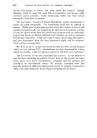
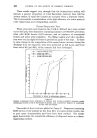
494 JOURNAL OF THE SOCIETY OF COSMETIC CHEMISTS Table 1 Filling weights in gram, of dispensers used in Burst/Fire tests. Nominal Solvent container Amount of butane size 10 g 20 g 40 g 80 g 160 g 6 oz 119.6 116.5 110.2 97.6 -- 8 oz 179.4 176.3 170.0 157.4 -- Odourless kerosene 12 oz 233.0 230.0 223.5 211.0 185.8 16 oz 318.0 314.8 308.5 296.0 270.8 6 oz 135.6 130.6 120.5 100.2 -- 50% w/w Water 8 oz 204.2 199.1 189.0 168.6 -- 50% w/w Methylated 12 oz 265.5 260.4 250.2 230.1 189.6 Spirits 16 oz 363.0 357.9 347.8 327-5 287.0 6 oz 149.3 142.6 129.2 •02.4 -- 8 oz 225.3 218.6 205.2 178.4 -- Water 12 oz 293.3 286.6 273.2 246.4 192-8 16 oz 401.3 394.6 381.2 354.4 300.8 curtain fires occurring, and the lower the number of dispensers tested. It was felt that an adequate picture could be built up by taking selected values of the variables. Ten containers have therefore been tested at the selected values, and one or two at other values. Only those results on groups of ten containers are analysed further. The mean proportion by weight of flammable material (this includes odourless kerosene for the present purpose) has been calculated for each group of dispensers giving 0 out of 10 fires, 1 out of 10 fires, etc., and plotted against the proportion of fires in Figure 1 where the resulting line is shown solid. Similar results have been obtained on widely marketed Arcton-propelled products containing 20%, 60ø,/0 and 70% flammable material and these are shown by the broken line in Figure 1.
Purchased for the exclusive use of nofirst nolast (unknown)
From: SCC Media Library & Resource Center (library.scconline.org)