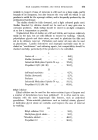
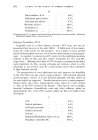
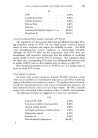
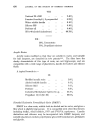
HAIR LACQUER SYSTEMS AND THEIR EVALUATION 477 A suggested formula isn: -- X DMHF resin, refined grade .... 5.0% Liquid lanolin fraction ...... 0.5?/0 Polyethylene glycol 400 monolaurate .. 0.5% Perfume .......... 1.0% Anhydrous alcohol ...... 93.0% Fill :-- 40% Concentrate (above) 60% Propellant Devlex A.515 This resin, at present being produced in experimental quantities only, is a 50/50 copolymer of N-vinyl-5-methyl-2-oxazolidone and vinyl acetate TM. It produces clear films with a low degree of hygroscopicity. It is compatible with a variety of plasticizers, lanolin derivatives and silicone fluids, but requires the use of 1,1,1-trichloroethane or methylene ch!oride, in con- junction with ethyl alcohol to produce a satisfactory product. Toxicity of Film Formers Although the synthetic fihn formers described above have been subjected to extensive toxicity tests, the long-term effects of inhaled particles are now being questioned, and a brief survey of the position is given below. The first report of pulmonary thesaurosis, alleged to result from the inhalation of hair lacquer spray particles, was made by Bergmann et al TM in 1958. In the same year, pulmonary alveo!ar proteinosis was reported by Rosen et al •4, and a further case was reported by Ede!ston •. Calandra and Kay •6, and Draize and his colleagues •7, were unable to produce a com- parable inha!ation disease in animals using PVP, PVP/VA, DMHF, shellac, modified acrylic resin and lanolin. Bergmann •8 has since reported twelve new cases of thesaurosis, whilst Schepers •9 has suggested that some cases of alleged thesaurosis may be sarcoidosis. However, the problem of toxicity is now being investigated in many quarters, but whatever the outcome of these investigations, any modification of formulation or of valve design which reduces the possibility of inhalation of the sprayed lacquer is a progressive step. Plasticizers and Modifying Agents None of the resins developed so far for hair lacquers is ideal, and the

478 JOURNAL OF THE SOCIETY OF COSMETIC CHEMISTS addition of plasticizers or softeners is necessary to control the flexibility, adhesion, gloss, clarity and moisture sensitivity of the film. Many ingredients used in hair lacquer formulations possess plasticizing or softening properties, although they may be included in the formulation to fulfil other functions. Lanolin derivatives, cetyl and oleyl alcohols, isopropyl myristate and other similar materials used as hair "conditioning" and spreading agents, may act as softeners or true plasticizers. Perfumes, which may be present in con- centrations as high as 20ø,/o in relation to the resin content, contain essential oils, esters, ketones, alcohols, etc., and their plasticizing or softening effect may be considerable. Silicone fluids, included to increase water repellency, lubricity and gloss, act similarly. Since the addition of true plasticizers is also necessary, the combined plasticizing effect of the various ingredients must be carefully checked to ensure that the final film is satisfactory in all respects. It is not only necessary to check that the final concentrate and propellant are compatible, but also to ensure that, during the drying of the film, there is no gelling or precipitation of any individual ingredient which will result in a lustreless film of poor adhesion. This applies particularly to the water- based product xvhere the solvent composition changes sharply as the film dries. Some ingredients function as softeners rather than as true plasticizers and may exude from the film, which may or may not be desirable because, although the exudate may act as a lubricant and impart anti-static pro- perties, it may also render the film dull. Examples of the types of plasticizers used with various film formers have already been given, and it is only necessary to state the general principles underlying the choice of a plasticizer, which are governed by the physical properties of the resin concerned, and by the properties required of the final film. With the more hygroscopic resins, water-miscib!e and humectant plasticizers should either be avoided or used in very low proportions. Glycols increase the tackiness of PVP films sharply. For the water-resistant resins, water-miscible plasticizers such as diethylene glycol oleate, triethyl citrate, and glycols may be used. Plasticizers, or modifying agents with surface active properties, will assist in the spreading of the hair lacquer over the hair. This property is more important witIt the water-based product because of the higher surface tension of the deposited droplets. An interesting class of "stiffening" agents for pressurized hair lacquers has been described •0. The incorporation of certain substituted benzophenone derivatives, particulxrly 2.2%.4•tetrahydroxybenzophenone, is reported to increase markedly the stiffness of hair lacquer films.
Purchased for the exclusive use of nofirst nolast (unknown)
From: SCC Media Library & Resource Center (library.scconline.org)