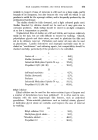
MODERN COSMETICS--ILLUSION AND REALITY 505 and least with the specialities, make-up standing half-way. The differences are partly basic to the group, e.g. it is much more difficult to demonstrate the effectiveness of a cream which will moisturise in "x" minutes, than a depilatory which removes hair in "x" minutes. There are, however, other factors which reflect the failure of the technical side of the industry to provide the best possible products within the limitations of a particular group. Cosmetic specialities are many and varied representative examples include anti-perspirants and deodorants, depilatories, suntan preparations, shampoos, hair lacquers and hair waving preparations. With most of these products, women find what they have been encouraged to expect from the advertising and sales promotion. This is often restrained, sometimes in- formative and occasionally cautionary of the results which can be expected. The reason for this modesty is due to the fact that it is possible for the user to make critical comparisons of both the product and promise and, even more important, of various brands of the same product. Even the most sophisti- cated advertising will not persuade a woman of the speed and safety of a particular depilatory if it takes 15 minutes to act and leaves her skin raw and inflamed. With suntan preparations, anti-perspirants and home perms, the ability of the user to make objective comparisons between the various brands has the interesting result that the selling value of an expensive name is at a discount and these particular products are brought largely on their merit. Much technical effort had to be put into the formulation of these products to enable them to withstand this user appraisal. Thus, the comparatively low key to which the users' expectations are pitched, together with the existence of a basis for real criticism of the products, makes it difficult to sell inferior products however well they may be advertised. This group of products is generally satisfactory not because it presents easier problems of formulation than the other two groups, but possibly because testing is easier. Few scientists would quarrel with the proposition that formulation and testing should be a continuous process in which changes of formula are immediately evaluated and the final test on the final formula merely a confirmation of all the work which has gone before. The testing of cosmetic products, by which I mean solely their evaluation by users or potential users, is still at a rudimentary stage, and conventional laboratory testing is only of limited help. It is fortunate that in the specialities group, the product characteristics which enable the user to differentiate between good and bad products also enable semi-quantitative laboratory tests to be developed which are of enormous value in formulation. For example, the successful depilatory is a compromise between speed of action of hair removal and potential skin damage. Variations in ease of hair removal between individual testers can

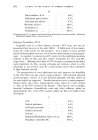
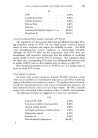
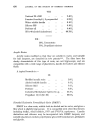
506 JOURNAL OF THE SOCIETY OF COSMETIC CHEMISTS often be greater than those produced by formula changes, so that there is a need to carry out experiments on uniform switches of hair. In this way speed of action can be evaluated by studying the factors which are likely to influence it, e.g. pH, strength and type of active agent, effect of different cations, etc. Testing on human subjects to determine the irritation factor should then result in a practical depilatory. Similarly, shampoo formulation and testing can be carried out using switches of hair under conditions which approximate closely to the salon, and measurements made which would be difficult to carry out in the salon itself. Anti-perspirant and deodorant products would certainly not be as effective as they are today if the only methods of assessment were subjective, but in fact the amount of perspi- ration secreted in a given time can be determined, whilst bacteriological tests give a good index of deodorant effectiveness. Many more such tests have been developed along the lines of those described as useful aids to formula- tion. On this basis, formulation and testing can proceed simultaneously and for the development of this group of cosmetics the laboratory does not need to be organised in a different way from other laboratories in the field of applied chemistry, e.g. paint or textiles laboratories. The potential user is keyed to a higher degree of expectation with make-up preparations than with the specialities group, and the discrepancy between expectation and performance is greater. Beautiful models, presented with all the skill of modern advertising, create an illusion which is certainly not within the capabilities of the average woman to attain. It is, however, reasonable for the average woman to assume that if these products create an illusion of outstanding beauty on models she will also appear more beautiful when she uses them. Until a few years ago, perhaps it would have been justified to claim that the current lipsticks were just about as good as they could be--but not today. The darker shades with which we were then satisfied are rapidly disappearing from the market and in their place are clear, bright, pastel shades. No doubt the glowing prose describing these lipstick colours in the crayon is fully justified they are clear, bright, subtle, sunlit and basically there is no conflict between reality and prose. But lipsticks are ultimately worn and judged on the lips, even if they are bought on crayon colour and rub-out colour on the wrist. Modern lipsticks exhibit certain defects primarily caused by the need to incorporate increased amounts of titanium dioxide to obtain paler shades. The emergence of eye make-up has compelled women to use subdued pastel lipstick colours to avoid a major clash of interest on the face and as the use of eye make-up is likely to increase considerably, this factor alone makes the return of dark lipstick shades unlikely. Orange, coral, peach and pink lipsticks exhibit the true crayon colour
Purchased for the exclusive use of nofirst nolast (unknown)
From: SCC Media Library & Resource Center (library.scconline.org)