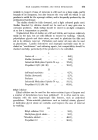
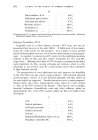
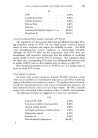
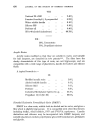
THE ANALYSIS OF SYNTHETIC DETERGENTS 519 is the only suitable technique. However, butanol and higher molecular weight alcohols are immiscible with water, while isopropanol is immiscible with a concentrated aqueous solution of sodium carbonate, and these can be used in liquid-liquid extractions. Ion-exchange resins The use of ion-exchange resins differs from the solvent extraction techniques, but it is usefully considered with them as, along with extractions, it can be built into a composite analytical scheme of separations. Ion- exchange resins provide the only simple means of separating anionic, cationic, and non-ionic surfactants. Though simple in principle, the practical use of ion-exchange resins with surface-active solutions involves several complicat- ing factors such as the polarity of the solvent, usually an aqueous alcoholic medium, the swelling and shrinking of the resin, and hydrolysis of the sur- factant on the resin or during elution. A great deal of work on the subject has been done by P. Voogt, among others, but only a little of this has yet been published ø'•ø. Comprehensive scheme of analysis The number of combinations of different surfactants that may be present in a commercial detergent is infinite, and no efficient general scheme of separation can be drawn up the method of analysis must be chosen to deal with the particular types of ingredient known or expected to be present. One decision to be made in dealing with several components is whether to extract them one at a time by the successive application of specific techniques or whether to proceed by division and sub-division, e.g. with six components, first separate two or three from the others, then proceed separately with each group. The latter technique is more complicated, but errors are smaller. Another decision is whether to separate each component in a reasonably pure form, or whether to extract two more more ingredients together and deduce the contents by difference. The case of a simple detergent containing free oil, ethanolamide, and alkylarylsulphonate, together with inorganic salts and water may be taken as au example. Scheme 1 is to extract the free oil with light petroleum from a 50% aqueous ethanolic solution of the sample, then the alkanolamide with ethyl ether after dilution to 20-30% ethanol, and finally the alkylarylsulphonate with chloroform from the residual aqueous solution, or with ethanol from a dried residue. Scheme 2 is to extract the first two components together, using ethyl ether, then separate these later and to extract the alkylarylsulphonate from the aqueous layer. Scheme $ involves extraction of free oil with light petroleum, free oil plus a!kanolamide with ethyl ether, and the total of the organic compounds with ethanol, all on separate samples and the individual

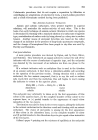
520 JOURNAL OF THE SOCIETY OF COSMETIC CHEMISTS contents is deduced by difference. In a simple case such as the above, the respective merits of the different approaches are readily ascertained, but with more complex mixtures, especially those containing ethylene oxide derivatives, a great deal of work is needed to find the best scheme of separation or even to find a good one. COLORIMETRIC DETERMINATION Co!orimetric methods of determination are not used so much as volumetric, but they are better discussed first because they employ reagents which are used as indicators in volumetric procedures. The most widely used colori- metric method for artionic surfactants is that of Jones n which consists of shaking an aqueous solution of the sample with methylene blue (designated MB. C1) and chloroform. The surface-active agent forms a salt which is chloroform-soluble, while the excess of methylene blue remains in the aqueous layer, e.g. RSOaNa q- MB. C1 = RSOa.MB q- NaC1 water chloroform soluble soluble By spectrophotometric measurement of the blue chloroform extract, or by comparison with standards, the surfactant content of the solution can be determined. Subsequent workers have tried to eliminate interferences to which the method is subject, and a useful procedure for analysing river water and sewage effluents is that of Longwell and Maniece in which a preliminary extraction with methylene blue from alkaline solution is carried out. Methylene blue is readily oxidized to azures which may be present in the reagent when purchased and which interfere with the colorimetric deter- mination as they compete with methylene blue for the anionic surfactant. The azures can be readily removed by a pre-extraction as described by Abbott 1•. Some of the triphenylmethane dyes, such as rosaniline, have also been used, but we have found them to be much inferior to methylene blue. Carboxylic acids are surface active only in neutral or alkaline solution, and methylene blue cannot be used for their determination. The only suitable alternative reagent, discovered after a wide search, is dimidium b•'omide, described by Holness and Stone •. For cationic surfactants, a wide range of reagents is available bromophenol blue is frequently used, though we have found methyl orange •a to be better, as it can be used at lower pH values giving more precise results with primary, secondary and tertiary, besides the quaternary amines. For determining non-ionic surfactants, most co!orimetric methods are based on precipitation procedures and use a conventional co!orimetric or titrimetric estimation of the inorganic reagent in the precipitate or flitrate.
Purchased for the exclusive use of nofirst nolast (unknown)
From: SCC Media Library & Resource Center (library.scconline.org)