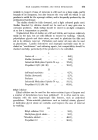
472 JOURNAL OF THE SOCIETY OF COSMETIC CHEMISTS keep the water content to a minimum. Certain film formers, such as Devlex A.515, may require the addition of methylene chloride or 1,1,1- trichloroethane to the alcohol. Methylene chloride may also be used to prevent precipitation of the film former, and other ingredients, when chilled concentrates are used for cold-filling. Methylene chloride may cause damage to painted, lacquered or plastic surfaces if the sprayed lacquer impinges upon them. For water-based lacquers, IndustriM Methylated Spirits diluted with de-ionized water is used. Film Formers The ideal hair lacquer should provide a set, without tackiness, which will be maintained under varying conditions of humidity. It should impart gloss and a good "feel" to the hair, should have good adhesion and not flake off. The film should be sufficiently water-soluble to permit re-comb- ing, and also removal by washing. No film former will meet these require- ments fully and although some of the more recently introduced resins show improvements in some respects over the old established products, it is still necessary to incorporate modifying agents into the fornmlation to minimise or eliminate undesirable properties. A wide variety of film formers have been tested, but most have proved unsuitable in some respect. Instability of colour, odour, corrosion problems, skin irritation and poor solubility in suitable solvents, are some of the causes for rejection. The development of new film formers for hair lacquers may now be retarded, as the screening for toxicity of inhaled spray particles will have to be carried out over long periods. For the conventional hair lacquer the film former should be soluble in anhydrous ethyl alcohol (Industrial Methylated Spirits 74 o.p. is used) and in the final alcohol/propellant system. For water-based hair lacquers the film former must be soluble in 50-60% ethyl alcohol. It has been men- tioned above that auxiliary solvents, such as methylene chloride may be used where the solubility in alcohol, particularly at low temperatures, is inadequate. The concentration of film former varies with the type and the particular purpose for which the hair lacquer is marketed, but it is usually within the range of 2.5-10% in the concentrate. There is an extensive literature dealing with the chemical and physical properties of film formers used in hair lacquers, which also gives details of large numbers of formulations. It is, therefore, only necessary to sum- marize these details hereunder. Shellac The first film former to be used in pressurized hair lacquers was shellac which, although it does not fulfil many of the requirements quoted above,

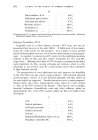
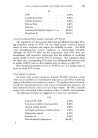
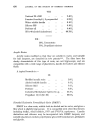
HAIR LACQUER SYSTEMS AND THEIR EVALUATION 473 notably in respect of ease of removal, is still used on a large scale, partly because of its cheapness, but also because the very stiff set which it can produce is useful for the upswept coiffure, and is frequently preferred by the professional hairdresser. The shellac should be fully dewaxed, and a light coloured grade used. Shellac bleached by chlorine should not be used as it may give rise to corrosion problems. Bulk shellac should be stored in air-tight containers at as low a temperature as possible. Unplasticized films of shellac are stiff and brittle, and rupture relatively easily on the hair, but are still difficult to remove by washing. Glycols, polyethylene glycols and their esters, are used to plasticize the film and aid in its ultimate removal. Phthalates and castor oil may also be used as plasticizers. Lanolin derivatives and isopropyl myristate may be in- cluded as "conditioners" and softening agents, but compatibility should be checked carefully, particularly if the product is to be cold-filled. I Castor oil .......... 0.6% Shellac (dewaxed) ...... 1.8% Industrial Methylated Spirits 74 o.p... 27.6% Propellant 12/11 (50:50) .... 70.0% II isoPropyl myristate ...... 0.7% Shellac (dewaxed) ...... 2.7% Perfume .......... 0.5% Industrial Methylated Spirits 74 o.p... 31.1% Propellant 11/12 (50:50) .... 65.0% Ethyl Cellulose Ethyl cellulose can be used for the water-resistant type of lacquer and a number of formulations have been published 4. It is often used in com- bination with the more hygroscopic film formers, such as polyvinyl pyrrolidone. Water-miscible plasticizers such as triethyl citrate, glycerol or diethylene glycol oleate are suitable, and improve the ease of removal by washing. III Ethyl cellulose T.10 ...... Diethylene glycol oleate ...... *Absolute alcohol ........ Propellant 12 ........ 2.0% 2.0% 46.0% so.o%
Purchased for the exclusive use of nofirst nolast (unknown)
From: SCC Media Library & Resource Center (library.scconline.org)