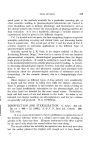
406 JOURNAL OF THE SOCIETY OF COSMETIC CHEMISTS they move towards the centre of the lobe and duct. In the human gland, the lobes are in different states of maturity it seems that new acini constantly arise from walls of the duct, grow into sebaceous units, fuse with adjacent lobes, and ultimately degenerate (1). Sebaceous glands occur over much of the body, though not normally on the palms or soles, and only sparsely on the dorsal surfaces of the hand and foot they are largest and most numerous in the mid-line of the back, on the forehead and face, in the external auditory meatus and on the ano- genital surfaces (1). In a number of sites sebaceous glands open directly to the surface of the skin and not by way of a hair follicle. Examples of such glands are the Meibomian glands of the eyelid and Tyson's glands of the prepuce (1). Free sebaceous glands are also found in the areolae of the nipples and along the red margin of the upper lip (5). In the last site such glands are often visible to the naked eye as pale yellow bodies which vary in size from minute specks to about 1.5 mm in diameter. These are known as Fordyce's spots, and appear to increase in number with age. Large sebaceous glands not associated with hair follicles occur in many mammals (6). Such are the flask-shaped preputial glands- opening by single ducts alongside the urethra- of rodents, the inguinal glands of rabbits, the dorsal gland of kangaroo rats (7), the large supracaudal gland of guinea pigs (8), the abdominal glands of shrews, the intermandibular sebaceous glands of bats and pigs (6), the large "brachial glands", one on the ventral surface of each shoulder, of male lemurs (6), and glands in the cloacal region of marsupials (9). In the human foetus the sebaceous gland can be seen, as a small knob on the mid-posterior wall of the developing hair follicles, by 17 weeks of age (10). It is interesting to note that each developing follicle carries an apocrine sweat gland as well as a sebaceous gland, but the apocrine gland subsequently disappears except in a few regions of the body. THE COMPOSITION AND FUNCTION OF SEBUM Sebum is a complex mixture of lipid substances, and its detailed chemical composition is still incompletely known. Information which is available is based not on pure sebum, but on the mixture of sebum and epidermal lipids which makes up the surface film. As much as 30 per cent of the skin surface fat may consist of free fatty acids. Though more than half of these are saturated and unsaturated C, and C, acids, there is a wide range including branched and unbranched

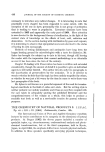
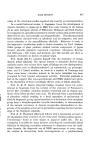
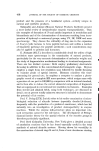
THE SEBACEOUS GLANDS 4O7 el? , Clõ , C14 and some shorter carbon chains (11,12). The remaining material consists of esterified acids, wax alcohols, squalene, sterols, and a small quantity of paraffin hydrocarbons which some authors believe are of environmental and not of endogenous origin. It seems probable that the long fatty acids, ranging from 5 to 22 carbons with an average length of 16, are synthesized within the sebaceous cell, and that most of these are made into triglycerides. However, the esters are subjected to lipolytic activity by enzymes present in the sebaceous ducts and on the skin surface, and are broken down to diglycerides, mono- glycerides and free fatty acids. Indeed, hydrolysis of triglycerides of exogenous origin has been demonstrated on the skin surface C14 labelled tripalmitin was spread on the back, and 3 hr later labelled free fatty acids were isolated from the surface fat (11). Several functions have been attributed to sebum but they are by no means undisputed. In hairy mammals the sebum may be important in waterproofing the hair and perhaps, as in cattle, it may seasonally reduce the thermal insulation by the coat (13). In man, it has been stated that the lipid film both controls moisture loss from the epidermis and protects the skin from fungal and bacterial infection. Cornified epithelium such as a cutting from a plantar callus becomes hard and brittle if it is allowed to dry out, but remains pliable as long as it contains 10 per cent by weight of water (14). The stratum corneum receives moisture from below and loses it by evaporation at the skin surface, but the major barrier against water loss through the skin is not at the surface but either near the base of the stratum corneum or throughout the entire cornified layer. At relative humidities of 60 per cent or more the moisture content remains high enough to maintain the pliability of the keratin. Under the lower relative humidity of winter weather or in rapidly flowing air the stratum corneum can, however, dry out with consequent chapping of the skin surface. If the cornified epithelium is treated with organic solvents and then extracted with water, the water-holding capacity of the epithelium is greatly decreased (15). This suggests that the water-holding power of the cornified epithelium depends on the presence of lipids, but an alternative explanation might simply be that lipid solvents damage natural barriers. It may be unnecessary to doubt the view dear to cosmetic chemists that under adverse environmental conditions the application of lipid materials helps to keep the stratum corneum pliable and to prevent the chapping of skin, but it is debatable how far naturally-occurring lipids play such a
Purchased for the exclusive use of nofirst nolast (unknown)
From: SCC Media Library & Resource Center (library.scconline.org)