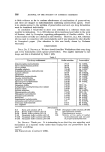
408 JOURNAL OF THE SOCIETY OF COSMETIC CHEMISTS role and, if they do, whether sebum contributes to any protective surface film, or whether the lipid is mainly supplied by the epidermal cells them- selves. To complicate the issue further, it is perhaps worth commenting that the hydrolysis of triglycerides on the skin surface must produce a small quantity of glycerol (11). Though this substance has never been demonstrated in sebum, it would have a moisturizing effect by virtue of its hygroscopic properties. It is widely believed that free fatty acids on the skin surface hinder the growth of pathogenic organisms [for review see (16)]. Circumstantial evidence supports the view that sebum, or at least the product of its hydro- lysis, is fungistatic. Fungi causing athlete's foot preferentially colonize areas which are not supplied by sebaceous glands ringworm of the scalp becomes rare after puberty when sebum production increases. It is also evident that free fatty acids have a limited action against certain bacteria, for example Streptococcus pyogenes (16). Both these properties of sebum have been challenged by Kligman (17). Admitting that fatty acids by themselves are antifungal in vitro, he claims that this potential is inacti- vated in the presence of horny material. He also states that the addition of sebum has no effect on streptococci or staphylococci growing on discs of isolated stratum corneum in agar culture. He therefore suggests that the sterilizing power of the skin is due largely to desiccation, a process supported equally by a wide range of inanimate surfaces. A critic of these studies has suggested that they only demonstrate the self-evident proposition that sebum does not prevent the growth of organisms which normally occur on the skin surface. They tell us nothing about the possible role of sebum in prevention of infection by other organisms which might prove patho- genic (18). CONTROL OF SEBACEOUS GLANDS Sebaceous glands are primarily under the control of androgens and this fact has been established by many studies in animals and man. For example, androgens enlarge sebaceous glands in rats (19), rabbits (20), hamsters (21), and mice (22), and also affect homologues such as the pre- putial gland of the rat or the supracaudal gland of the guinea pig (8). The sebaceous glands of man are minute during the prepuberal period but undergo vast enlargement at puberty, when the sebum output of males increases more than fivefold (23). Administration of testosterone increases the sebum output of prepuberal boys (23), but not of adult males where the glands would appear to be already under maximal stimulation by endo- genous androgens (23). In eunuchs, who secrete only about half as much

THE SEBACEOUS GLANDS 409 sebum as normal males, the glands can, however, be stimulated by adminis- tered testosterone (24). The stimulating action of androgens cannot be produced in the absence of the pituitary body, as shown by experiments in rats (25,26). It has been claimed that the necessary pituitary hormone is separable from other pituitary fractions, and it has been given the name of "Sebotropin" (27). The production of sebum by eunuchs appears to be correlated with the urinary excretion of 17-hydroxycorticoids and 17-oxosteroids (24) thus the activity of the sebaceous glands of eunuchs, who lack gonadal testo- sterone, appears to be dependent on adrenal androgens. The secretion of sebum by adult women is only a little less than that by normal men. Up to the age of 50 it is greater than in castrate men, but after that age it falls (23). This pattern suggests that the sebaceous glands in premenopausal women may be responding to androgens secreted not only by the adrenals but also from other sources. The ovary may be implicated, though it has not been possible to demonstrate any change in sebum secretion after bilateral ovariectomy (28). Oestrogens decrease the size of the sebaceous glands of animals (19-30), and reduce sebum production in man (3,4,31). When large amounts of oestrogen are given, however, the glands will still respond to small amounts of androgens given at the same time and thus oestrogens do not seem to antagonize androgens at their site of action. As they were unable to demonstrate a local, as distinct from a systemic, effect by local applica- tion of oestrogen (23), Strauss et al suggested the possibility that oestrogens could act systemically by suppressing endogenous androgen secretion. There are, however, several pieces of evidence against this view. Though it was possible to suppress sebum secretion in castrates by administration of oestrogen, the treatment appeared to have no parallel effect on the excretion of 17-hydroxycorticoids or 17-oxosteroids (24). Moreover, from animal experiments it appears that while the effect of androgens is produced by a stimulation of cell division and by an increase in the anabolic capacity of each sebaceous cell, oestrogens have different points of action. In rats which have been treated with oestrogen and androgen over the same period, the rate of cell division in the sebaceous glands is very little less than that in animals treated with androgen alone nevertheless, the sebaceous glands are smaller (32). Thus it seems that oestrogens decrease the size of the glands by increasing the rate of cell breakdown so that the synthetic potential is reduced, rather than by any interference with cell division. In addition, this action of oestrogens, unlike that of androgens, does not
Purchased for the exclusive use of nofirst nolast (unknown)
From: SCC Media Library & Resource Center (library.scconline.org)