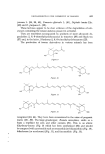
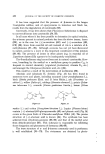
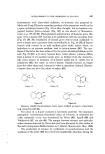
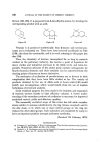
DEVELOPMENTS IN THE CHEMISTRY OF IONONES 441 perenne L. {34, 30, 40), Fumaria officinalis L. (41), Digitalis lanata Ehr. (42) and D. purpurea L. (35). These lactones appear to be clear evidence of the degradation of sub- stances containing the ionane skeleton present in actinidol. They are sometimes accompanied by products of more advanced de- gradation: 2, 6, 6-trimethylcyclohexanone in tomatoes (39) and black tea (27) and, in the latter, 2-hydroxy-2, 6, 6-trimethylcyclohexanone (27). The production of ionone derivatives in various animals has been ø Figure 9 OH Figure 10 OH HO •OH Figure 11 OH Ho Figure 12 O'H V 'OAc recognized (43, 44). They have been encountered in the urine of pregnant mares (45--50). The large grasshopper, Romala microptera, emits as a foam a repellant for ants and other enemies (51). This is an allenic dihydroxy-ionone (Fig. 9) which has been synthesized {52) and should be compared with carotenoids such as neoxanthin (or foliaxanthin) (Fig. 10), foliachrome (or neochrome)(Fig. 11), and fucoxanthin (Fig. 12).

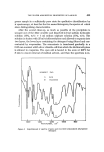
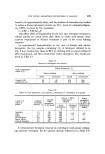
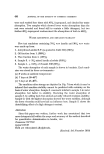
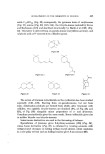
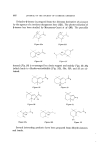
442 JOURNAL OF THE SOCIETY OF COSMETIC CHEMISTS It has been suggested that the presence of [Monone in the fungus Trentepohtia iolithus, and of epoxy-ionone in tomatoes and black tea, results from the degradation of carotenoids (53). Conversely, it has been shown that Phycomyces blakesteenus is disposed to convert [I-ionone into carotenoids (54, 55). In all cases where it has been possible to determine its optical rotation, the a-ionone present in natural products has been the dextro isomer, hence (2R), as is the case for (+)-a-carotene (6R) and (+)-e-carotene (6R, 6'R) (56). Irone from essential oil and resinoid of iris is a mixture of 6- methylionones (57--59). Although a-ionone has not yet been discovered in nature, a-irone is a more or less important constituent of this mixture (59, 60). The presence of irones in other plants (e.g. in essential oil of Ligusticum datum (15)) appears to be inadequately established. The 6-methylionone ring has not been met in natural carotenoids. How- ever, branching by the methyl or a methylene group in position C24 is frequent in steroid chemistry (ergosterol, [I-sitosterol, vitamin D2, etc.) and amongst the triterpenes (eburicoic acid, etc.) (61). This could be a result of the intervention of methionine (62). Abscissic acid (abscissin II, dormin) (Fig. 18) has been found in numerous trees and plants, including sycamore (Acer pseudoplatanus L.), birch (Betuta pubescens Ehrh. and B. lutea Michx.), ash (Fraximus ex- celsior L.), willow (Salix sp.), cabbage (Brassica oteracea L.), potato (Solan- um tuberosum L.), avocado (Persea gratissima Gaertn.), lemon (Citrus Figure 13 Figure 14 medica L.) and cotton (Gossypium hirustum L.). Lupins (Phaseus luteus) contain (+)-abscissyl-[t-D-glucopyranoside (63) and phaseic acid (Fig occurs in the green fruits of Phaseolus multifiorus Willd. (10). The precise structure of (+)-abscissic acid is known (64). The synthesis has been achieved from 2-hydroxy-a-ionone (65, 66) and that of the methyl ester from dehydro-[Monone (67). This substance is responsible for inhibiting shoot elongation and phenomena of dormancy (68, 69). The trans structure of a- and [Monones commonly used in perfumery is well established (70---73). The cis-isomers are obtained by photo-
Purchased for the exclusive use of nofirst nolast (unknown)
From: SCC Media Library & Resource Center (library.scconline.org)