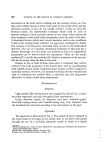
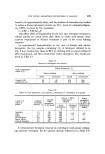
MECHANICAL PROPERTIES OF VIRGIN AND TREATED HUMAN HAIR FIBRES 405 Virgin hair To act as a reference base for comparison purposes measurements were made on twenty samples of virgin hair the values of the elastic and loss moduli, E' and E" respectively, and their average standard deviations are presented in Table I. These values agree well with those obtained previously (12). Table I The visco-elastic properties of virgin hair at 75 •orh at 25øC *E' *E" Sulphur content % 3.51 3.20 4.00 5.92 4.12 4.12 3.51 3.61 3.55 4.12 4.00 4.28 3.70 4.60 3.74 4.92 5.04 4.96 3.94 4.20 0.214 0.115 0.160 0.201 0.148 0.181 0.161 0.181 0.174 0.161 0.152 0.180 0.218 0.166 0.202 0.167 0.166 0.223 0.205 0.172 5.9 5.7 5.9 6.3 5.1 6.5 5.1 4.4 4.9 4.7 4.6 4.8 7.0 5.9 6.5 5.5 6.0 6.4 5.2 -- Average 4.10 0.177 5.6 S. Der. 0.66 0.027 0.7 *Ncm-2 X 10 -15 However, considerable scatter was observed. This is not unusual and can probably be accounted for by the biological inhomogeneity of each individual fibre (the reproducibility of the instrument was of the order of z2% and therefore can be eliminated as a source of scatter). This in- homogeneity can be traced to two most likely causes: (i) difficulty in determining accurately the cross-sectional area of the keratin fibre, and (ii) variation in the sulphur content of each hair. The sulphur content of each fibre was determined using a polarographic method and these results are also included in Table I. While no clear correlation between the sulphur content and the elastic modulus, E', emerged (13) there was a correlation

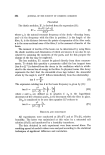
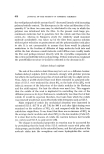
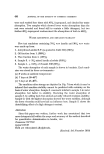
4O6 JOURNAL OF THE SOCIETY OF COSMETIC CHEMISTS with the loss modulus, E", significant at the 5•/o level. This result indicates that the increase in loss modulus could be attributed to the differing cross- linked densities between individual fibres. Although an explanation does not spring to mind readily, it is possible that even at these low extensions some residual disulphide interchange is occurring this would be facilitated in those hairs with higher sulphur content, and perhaps contribute more to the value of E". This concentration dependence of mechanical properties with sulphur content has been reported previously by Ripa and Speakman (14) for creep experiments in the post yield region. Although the mechanism must be different at greater stresses it is significant that variation in the concentration of sulphur can determine changes in the mechanical proper- ties. Measurements on treated fibres Having established a set of values for E', E" and tan • for virgin hair keratin, we are in a position to examine treated fibres and relate changes in these quantities, where possible, to structural modifications brought about by these treatments. 1:8 Dihydroxynaphthalene (DHN) The binding of organic molecules to hair keratin has been shown to fayour those compounds which are uncharged and contain both hydro- philic and hydrophobic groups such a material is DHN. The absorption isotherm of DHN on hair indicates that there is a considerable uptake at 20øC (1.25 X 10 -3 mole DHN g-• hair) (15) and that there may well be corresponding changes in the values of the storage (E') and loss moduli (E*) accordingly hairs treated with DHN (15) were examined by the rocking beam oscillator technique. The data are listed in Table II. It is Table 1I The visco-elastic properties of treated hair at 75 • r.h at 25øC Treatment *E' S. Dev. *E" S. Dev. 1,3 D.H.N. 3.9 0.3 0.26 0.05 2 •o Thioglycolate 3.5 0.2 0,17 0.02 $5.2 •o Polymer 3,7 0.7 0.24 0.04 $9.2 •o Polymer 3.8 0,2 0.27 0.03 $21.5 •o Polymer 3.8 0.8 0.27 0.08 S.D.S. on cuticle free hair 5.8 1.2 0.32 0.05 Cuticle free hair 4.3 0.6 0.22 0.04 Pin-Up 4.5 0.5 0.20 0.0S Textra 4.7 1.0 0.21 0.05 *lq cm-2 x 10-15 ?Percentage uptake of polymer
Purchased for the exclusive use of nofirst nolast (unknown)
From: SCC Media Library & Resource Center (library.scconline.org)