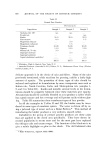
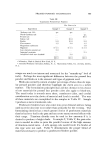
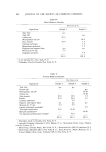
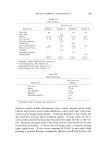
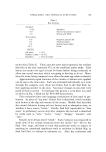
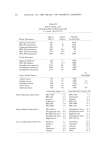
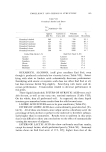
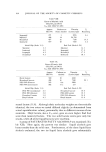
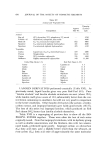
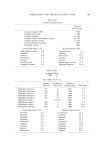
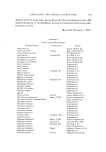
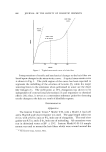
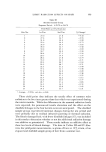
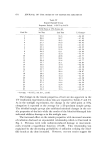
640 JOURNAL OF THE SOCIETY OF COSMETIC CHEMISTS Feel Index (SFI) of various emollients. The SFI is the ratio of Initial Slip/Total End Feel. Initial Slip was considered very important, and was rated per se, on a 1-5 scale (slight to much slip). Middle Feel could not be ranked reproducibly, since qualities such as "absorption time" are highly variable, depending on skin type. Creams would "rub in" quicker on a dry skin than on an oily skin, and absorption time varied greatly with the location to which cream is applied. Palms, for exa•nple, absorb very little. End Feel was divided into four subcategories, as shown in Table II. With very little practice it is possible to describe quite reproducibly the sensations of smoothness, friction, oiliness, and moistness. The same in- vestigator was able to repeat his own results at any given time, or his own results a week or a month later, or the results of other investigators. Overall SFI scores were reproducible within approximately 10 to 15%. This reproducibility is the primary justification for presenting the data which follow. The SFI evaluation procedure relieves us of the necessity to ask dozens or hundreds of persons to evaluate each product. The SFI scores of over 85 different cosmetic emollients are reported below. RESULTS The Control Lotion (no emollient, Table II) showed an Initial Slip 4.0. Its End Feel score of 10.5 is the sum of the following four corn- ponent scores: S•noothness 2.5 (fair to good s•noothness) Friction 3.0 "(drags) Oiliness 3.0 (waxy) Moistness 2.0 (slightly dry) 10.5 (out of a possible score of 20.0) This control lotion was almost perfect for our purposes, since it gave quite average results (SFI z 4.0/10.5). Its Middle Feel was also quite mediocre, showing values of 3.0 for "break" quality, medium "absorp- tion time," and a 3.5 value for "change in texture." This lotion becomes extremely draggy during the transition period to complete dry out. Materials which show SFI scores below the 4.0/10.5 Control Lotion score are likely to worsen the skin feel of emulsion cosmetics. Materials showing substantially higher scores can presumably improve them.

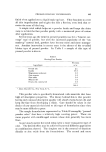
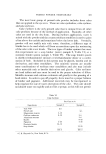
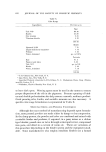
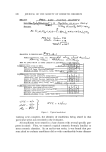
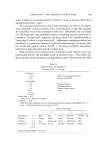
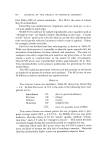
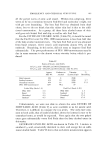
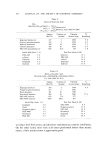
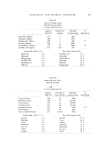
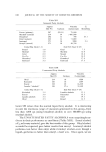
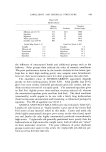
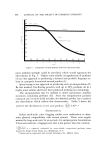
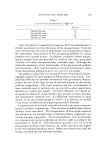
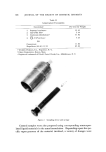
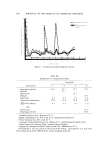
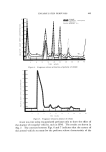
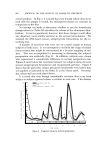
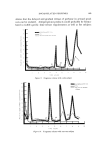
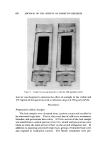
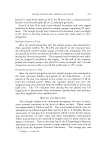
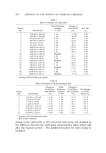
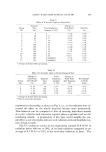
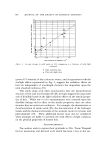
EMOLLIENCY AND CHEMICAL SrI'RUCTURE 64l A relatively emollient material, PEG 200 monooleate (whose "work sheet" is shown in Fig. 1), is used to illustrate the complete evaluation procedure. The POLYOL MONOESTERS OF OLEIC ACID, in general, are a uniformly poor group in terms of skin feel (Table III). Only the PEG 200 monooleate (SFI -- 4.0//15.7) gave a decent result. All except PPG 2000 oleate are either water-soluble or water-dispersible (a property which seems to be unfavorable to final skin feel). In this particular series, PEG 200 monooleate gave a considerably better End Feel (15.7) than PPG 2000 monooleate (11.3), even though the latter is not water-soluble. In the case of PPG 2000 monooleate, however, oleic acid represents only 12% of the molecular weight, compared to 54% in PEG 200 monooleate. Ap- parently, greater "oiliness" is favorable to high End Feel scores. If this is true, it may be possible to correlate End Feel with HLB values of emol- lients. The approximate molecular weight of each emollient was determined from saponification values where available, and from the theoretical struc- ture otherwise. The number of carbons in the homolog portion of each series is also shown in the tables. Viscosities of the finished products (7% emollient in "Base Formula") were recorded after each cream or lotion had aged approximately 30 days. HLB, hydroxyl values, per cent branching (7o side chains/total mol wt) and iodine values (degree of unsaturation) were among the other factors considered in attempting to correlate Skin Feel with chemical structure in this initial study. POLYOL POLYESTERS OF OLEIC ACID (Table III) apparently present the same problems as the polyol monoesters of oleic acid. None of them are very good, in spite of their greater molecular weight resulting from esterification of polymerized glycerol. All of these esters formed heavy, pasty, or gelatinous lotions. Polyol esters of fatty acids are not usually used as emollients for this reason they were included in this study only to help find correlations to chemical structure. The greater the water solubility of emollients, the more Initial Slip they give to emulsions containing them and, usually, the poorer the End Feel. In contrast, the oilier they are, the better their End Feel. This will be seen dramatically in the next group of emollients to be considered. FATTY AI.COHOL ESTERS OF OLEIC ACID (Table III) show an immediate improvement in final skin feel over the two series of polyol esters of oleic acid. Even the least efficacious fatty alcohol oleic ester, hexadecyl oleate (End Feel • 13.0), was substantially better than 907o of
Purchased for the exclusive use of nofirst nolast (unknown)
From: SCC Media Library & Resource Center (library.scconline.org)