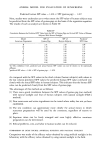
20 JOURNAL OF THE SOCIETY OF COSMETIC CHEMISTS GC/MS analysis using selected ion monitoring eliminates the need for prior separation and concentration of 1,4-dioxane due to the excellent selectivity of detection. Dedicated equipment is not required the instrument is used unmodified. Sample analysis is rapid requiring 15-30 minutes per determination with no backflushing or specialized column treatment needed between determinations. A detection limit of 0.5 mg/kg can routinely be obtained. EXPERIMENTAL APPARATUS A Hewlett Packard 5992 B benchtop GC/MS was used throughout this study. The Hewlett Packard Flexible Disk Software was used for convenience but the standard tape software is satisfactory. The column used was 2 mm x ! mm glass, Chromosorb 103 (60/80). The porous polymer was pre-treated by Soxhlet extraction with acetone then toluene and vacuum dried. Operating conditions are listed in Table I. Table I Operation Conditions Gas Chromatography--Chromosorb 103 (60/80), 2mm x lmm glass column He Flow--25 cm3/min Initial Temperature--100øC Final Temperature--200øC Program Rate--8øC/min Injection Port--150øC Solvent Wait--8.0 min Run Time--11.0 min Mass Spectrometry Ion Monitored (amu) 88.00 98.00 Dwell Times (msec) 1000 100 Mass Window (amu) _+0.15 _+0.15 CHEMICALS The methanol used was HPLC grade obtained from J.T. Baker (Phillipsburg, NJ). Perdeuterotoluene (99+ %) was purchased from Aldrich Chemicals (Milwaukee, WI). 1,4-dioxane was purchased from Burdick & Jackson Laboratories Inc. (Muskegon, MI). Chromosorb 103, 60/80 mesh, (Johns Mansville Co.) was purchased from Supelco, Inc. (Bellefonte, PA). All water used was reagent grade obtained from a Millipore Milli-Q water system. PREPARATION OF STANDARD SOLUTIONS Calibration standards were prepared from a stock solution made by diluting 1.00 g of 1,4-dioxane to 100 ml with methanol. From this solution standards of 0.5, 1.5, 10 and 100 mg/l are made by dilution.

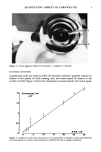
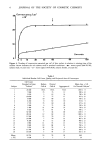
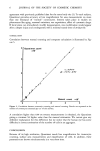
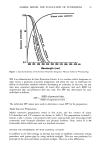
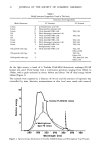
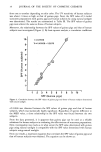
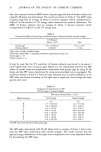
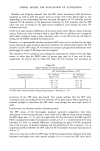
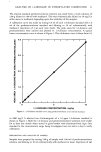
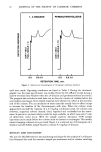
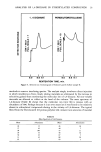
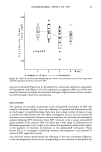
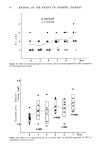
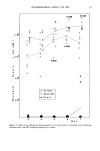
ANALYSIS OF 1,4-DIOXANE IN ETHOXYLATED COMPOUNDS 21 The internal standard perdeuterotoluene solution was made from a stock solution of 1.00 g diluted to 100 ml with methanol. This was volumetrically diluted to 10 mg/l in either water or methanol depending upon the solubility of the samples. A calibration curve was made by mixing 5.0 ml of each 1,4-dioxane standard with 1.0 ml of the perdeuterotoluene standard and diluting to 10 ml volumetrically with methanol. Injections of 3 /zl each were made. The peak areas for 1,4-dioxane and perdeuteroluene were ratioed and plotted vs. 1,4-dioxane concentration. A typical lower concentration curve is shown in Figure 1. The calibration curve is linear from 0.5 1.1.1 4.0 o 3.0 2.0 1.0 5 1,4 DIOXANE CONCENTRATION, mg/kg lO Figure 1. 1,4-Dioxane standard curve using perdeuterotoluene as an internal standard. to 1000 mg/l. A selected ion chromatogram of a 1.0 ppm 1,4-dioxane standard is shown in Figure 2. Both the 1,4-dioxane and perdeuterotoluene solutions were stable for at least one month when stored in glass bottles with aluminum-lined caps. One standard in the concentration range being investigated was run twice a day to verify calibration. PREPARATION AND ANALYSIS OF SAMPLES Samples were prepared by mixing 5.00 g of sample with 1.00 ml of perdeuterotoluene solution and diluting to 10 ml volumetrically with methanol or water. Injections of 3/zl
Purchased for the exclusive use of nofirst nolast (unknown)
From: SCC Media Library & Resource Center (library.scconline.org)