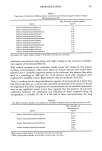
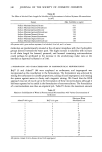
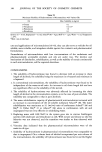
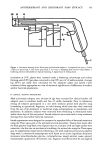
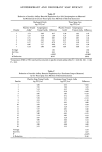
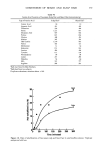
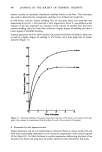
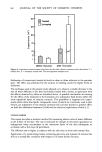
358 JOURNAL OF THE SOCIETY OF COSMETIC CHEMISTS Twenty-four hours following the last supervised wash, placebo and antimicrobial soap washed axillae were extracted with the TSG and total aerobic bacteria counted. Experimental results revealed a significant reduction in recoverable aerobic axillary microbial population by the antimicrobial soap when compared to the placebo soap (Table V). The antimicrobial soap was shown to reduce bacterial populations an average 0.35 log units (p 0.03), representing a 55% overall reduction in recoverable aerobic axillary bacteria. In conclusion, these results demonstrate that the Thran spray gun can be employed to quantitate the in vivo antimicrobial efficacy of antiperspirant and bar soap products. This technique compares favorably with the mechanical scrub method in terms of both reproducibility and in its ability to detect changes in the population levels of cutaneous microorganisms. The mechanical scrub method, however, extracts larger numbers of bacteria per cm 2 in a smaller sampling volume and is recommended for studies requiring concentrated bacterial samples such as those involving quantifying pathogens or other low level (! x 103 CFU/cm 2) bacterial populations. The Thran spray gun offers several advantages over the mechanical scrub including ease of sampling, increased sampling volume with recoveries of 98%, and the reproducibility of sampling pressure which allows collection of several samples on the same site without inducing localized erythema. This method should have broad application in assessing the antimicrobial efficacy of topically applied products. ACKNOWLEDGEMENT The authors thank Dr. J. E. Heinze, Dr. F. Yackovich, and Ms. M. B. Finkey for their assistance during the course of the present investigation. REFERENCES (1) W. B. Shelley, H.J. Hurley, A. C. Nichols, Axillary odor, Arch. Dermatol., 68, 430-446 (1953). (2) J.j. Leyden, K.J. McGinley, E. Hi51zle, J. N. Labows, and A.M. Kligman, The microbiology of the human axilla and its relationship to axillary odor, J. Invest. DermatoL, 77, 413-416 (1981). (3) J. N. Labows, K.J. McGinley, and A.M. Kligman, Perspectives on axillary odor,J. Soc. Cosmet. Chem., 34, 193-202 (1982). (4) P.J.H.Jackman, Body odor--the role of skin bacteria, Seminars in Dermatol., 1,143-148 (1982). (5) P. Williamson and A.M. Kligman, A new method for the quantitative investigation of cutaneous bacteria,J. Invest. DermatoL, 45,498-503 (1%5). (6) G. Rebell and D. M. Pillsbury, Factors affecting the rapid disappearance of bacteria placed on the normal skin,J. Invest. DermatoL, 14, 247 (1959). (7) J. A. Ulrich, Technics of skin sampling for microbial contaminants, Hosp. Top., 43, 121-123 (1%5). (8) C. W. Shaw,J. A. Smith, M. E. McBride, and W. C. Duncan, An evaluation of techniques for sampling skin flora,J. Invest. Dermatol., 54, 160-163 (1970). (9) G. P. Bodey, J. Arnett, and S. DeSalva, Comparative trial of bacteriostatic soap preparations: nexachlorophene versus triclosan and triclocarban, Current Therapeutic Research, 24, 542-550 (1978). (10) D. M. Updegraff, A cultural method of quantitatively studying the microorganisms in the skin, J. Invest. Dermatol., 43, 129-137 (1964). (11) L.J. Vinson, E. L. Ambye, A. G. Bennet, W. C. Schneider, andJ.J. Travis, In vitro tests for measuring antibacterial activity of toilet soap and detergent bars,J. Pharm. Sci., 50, 827-830 (1%1). (12) E. Eigen, A. Legenjei, and S. Weiss, An in vivo method for the detection of residual antimicrobial activity on human skin,J. Soc. Cosmet. Chem., 26, 441-425 (1975). (13) D. Taber, F. Yackovich, and J. Brown, Jr., The microbiological availability of soap bacteriostats, J.A.O.C.S., 44, 473-475 (1%7).

ANTIPERSPIRANT AND DEODORANT SOAP EFFICACY 359 (14) P. B. Price, The bacteriology of normal skin: A new quantitative test applied to a study of the bacterial flora and the disinfectant action of mechanical cleansing,J. Infec. Dis., 63, 301-308 (1938). (15) A. R. Cade, Antiseptic soaps: A simplified in vivo method for determining their degerming efficiency, Soap Sanit. Chem., 26, 35-38 (1950). (16) V. Thran, Mikrobiologische untersuchung von oberflachen-ein probennahmegerat, Fleishwirtsch, 59, 950-953 (1979). (17) R. F. Smith, A medium for the study of the ecology of human cutaneous diphtheroids, J. Gen. Microbiol., 57,411-417 (1969). (18) N.H. Shehadeh and A.M. Kligman, The effect of topical antibacterial agents on the bacterial flora of the axilla,J. Invest. Dermatol., 40, 61-71 (1963). (19) J. G. Voss, Effects of an antibacterial soap on the ecology of aerobic bacterial flora of human skin, Appl. Microbid, 30, 551-556 (1975).
Purchased for the exclusive use of nofirst nolast (unknown)
From: SCC Media Library & Resource Center (library.scconline.org)