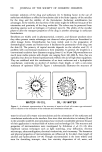
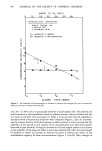
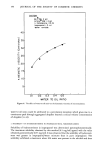
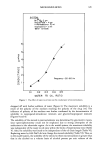
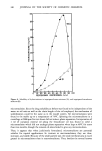
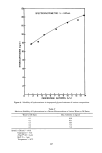
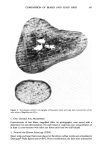
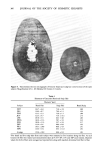
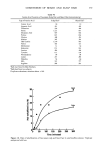
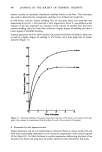
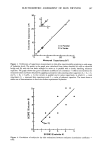
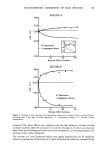
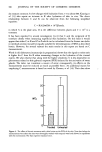
386 JOURNAL OF THE SOCIETY OF COSMETIC CHEMISTS ments were taken in the center of each area. The test sites were then occluded with a thin film of anhydrous white petrolatum. The occlusive film was produced from approximately 2.5 mg (+ 10%) of petrolatum dispensed onto the center of a site and spread over the entire area with the tip of a thin, fire polished glass rod. Care was taken to form a continuous film, and not to apply petrolatum outside the test area. The measurements were repeated ten minutes later when relative stabilization of the new capacitance values had occurred. The two sets of capacitance measurements were used to calculate what we designated as "Water Diffusion Index" (WDi) using the formula WDi = ICao - Co]/Co in which C•o = capacitance (in Farads) measured at ten minutes after occluding the skin with petrolatum, and Co = capacitance before occlusion. In order to observe more closely the changes taking place after occlusion, in two subjects measurements were taken immediately following application of petrolatum and were repeated at short intervals over the ten minute period. EFFECT OF TREATMENT WITH A LOTION ON THE RATE OF TRANSEPIDERMAL WATER DIFFUSION Twelve healthy subjects with dry skin were selected for the study using the criteria described above. After a seven day pretest period, which consisted in washing the forearms with Ivory © soap and water, the subjects treated one forearm with a skin lotion daily for ten to twelve days. The lotion was a water-in-oil emulsion containing the following ingredients in decreasing order of concentration: water, diisopropyl sebacate, glyceryl monostearate, cetyl alcohol, glycerine, and mineral oil. The contralat- eral forearms were left untreated. Both arms were washed with soap and water and thoroughly rinsed shortly before each treatment. A last application of lotion was made at the end of the treatment period. Then after approximately five minutes the arms were washed with soap and water, and the WDi was determined in three sites on each arm as described above. RESULTS AND DISCUSSION EVIDENCE FOR THE CAPACITATIVE NATURE OF C MEASUREMENTS Figure 1 shows that C values observed over a wide range of skin hydration levels conformed with summation rules applicable to pure capacitors. This provides evidence for the capacitative nature of the C values reported in this paper. The results also show a linear relationship between C and skin hydration in agreement with observations made by others (2) in skin hydrated by increased environmental humidity. RELATIONSHIP BETWEEN SUBJECTIVE SKIN DRYNESS AND ELECTROMETRICALLY DETERMINED WDi Figure 2 shows the correlation between the dryness scores observed by the two evaluators on the forearms of the experimental group. The sub-group, which lacked signs of superficial dryness, was clearly identifiable within the population all members of the sub-group were scored "1" on the 1-5 scale (coefficient of correlation = 1). The

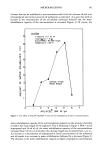
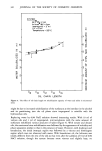
ELECTROMETRIC ASSESSMENT OF SKIN DRYNESS 387 30- 20 IO / 0 I I • I o IO 0 In Parallel [] In Series I I • I • I • I 20 30 Measured Capacitance (nF) Figure 1. Verification of capacitance measurements in skin after experimentally producing a wide range of hydration levels. The points in the graph were calculated from values obtained (a) with an electrical bridge and (b) with the test leads arranged in series or in parallel with a closely matching reference capacitor. The graph shows that good correlation (coefficient of correlation -- 0.98) is seen between the measured values and those obtained by applying summation rules assuming ideal capacitors C t = Cs q- C• and Ct = (Cs x C•)/(Cx q- C•) for circuits in parallel and in series respectively, in which C• = total capacitance, Cs = measured skin capacitance and C• = value of reference capacitor. The insert shows a similar set of determinations in three sites before experimental hydration. _ ß •'(n=7) a I • I • [ , I I I I 2 3 4 5 SCORE (Evolua•or A! Figure 2. Correlation of subjective dry skin evaluations between evaluators (correlation coefficient 0.83).
Purchased for the exclusive use of nofirst nolast (unknown)
From: SCC Media Library & Resource Center (library.scconline.org)