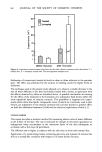
ABSTRACTS 4o5 accumulated relative to the permeability of skin and the effects of various permeation enhancers on diffusion into and through the skin. The potential impact of such information on the cosmetics indus- try is obvious. One problem for such studies is that an ideal model does not exist. Various animal studies, human studies, and in vitro diffusion stud- ies all have drawbacks which limit their usefulness. Although still not ideal, the use of the nude mouse onto which human skin has been grafted has many advantages. In this model the human skin maintains most of its inherent qualities and can be used to study permeation of radiolabeled compounds by means of autoradiography, tape-stripping, or simi- lar analytical methods. Results indicate that a number of compounds are capable of permeating into or through the epidermis. Electron spin resonance as a possible new technique for characterizing the fluidity of cosmetic semisolid bases J. K. Lim, Ph.D., J. N. Dalal, and N. S. Dalal, School of Pharmacy, Medical Center, West Vir- ginia University, Morgantown, WV 26506 An investigation was made for the possibility of using electron spin resonance (ESR) as a new technique for characterizing the fluidity (viscosity) of cosmetic semisolid bases. Currently used meth- ods of fluidity (viscosity) measurements do not normally yield consistent results for semisolid bases the inconsistency is related to the different ways of applying stress to a sample during measure- ments. ESR was selected because it can provide information on molecular motion without actually (mechanically) disturbing a sample. The present study suggests that ESR has the potential .for developing into a quick (a few minutes per sample), sensitive (a few milligrams of sample needed), nondestructive, and reliable method for characteriz- ing fluidity of semisolid bases. Details of the methodology and its potential will be demon- strated by application to 4 semisolid bases, 3 belonging to the polyethylene glycol (PEG) family and petrolatum, and the advantages and possible shortcomings of this method will be discussed. Germall II and Germaben II: a significant advance in cosmetic preservation William E. Rosen, Ph.D., Sutton Laboratories, Inc., 116 Summit Ave., Chatham, NJ 07928 In spite of increased sophistication of cosmetic scientists in preventing microbial contamination of cosmetic products, the battle to formulate safe, well-preserved cosmetics is far from won. Germall II (Diazolidinyl Urea), the newest and most active member of the Germall (imidazolidinyl urea) family of antimicrobial preservatives, retains the safety of Germall 115 (Imidazolidinyl Urea), and also pro- vides enhanced activity against mutated bacteria, yeast, and mold. The physical, toxicological, and microbiological properties of Diazolidinyl Urea will be described, and applications to cosmetic formulations will be discussed. Diazolidinyl Urea, a combination of Germall II and parabens, is a complete broad-spectrum preservative in clear liq- uid form. The properties of Germaben II will be described, and applications will be presented which stress economy and convenience of use.
Purchased for the exclusive use of nofirst nolast (unknown)
From: SCC Media Library & Resource Center (library.scconline.org)