204 JOURNAL OF THE SOCIETY OF COSMETIC CHEMISTS (10) (11) (12) (13) (14) (15) (16) (17) (18) (19) (7) D. S. Orth and L. R. Brueggen, Preservative efficacy testing of cosmetic products. Rechallenge testing and reliability of the linear regression method, Cosmet, Toilet., 97, 61-65 (1982). (8) D. S. Orth, "Evaluation of Preservatives in Cosmetic Products," in Cosmetic and Drug Preservation. Principles and Practice, J. J. Kabara, Ed. (Marcel Dekker Inc., New York, 1984), pp. 403-421. (9) C. N. Baker, C. Thornsberry, and R. W. Hawkinson, Inoculum standardization in antimicrobial susceptibility testing: Evaluation of overnight agar cultures and the rapid inoculum standardization system, J, Clin, Microbiol,, 17, 450-457 (1983). A. W. Bauer, W. M. M. Kirby, J. C. Sherris, and M. Turck, Antibiotic susceptibility testing by a standardized single disk method, Am. J. Clin. Pathol,, 45, 493-496 (1966). R. F. D'Amato and L. Hochstein, Evaluation of a rapid inoculum preparation method for agar disk diffusion susceptibility testing, J. Clin. Microbiol,, 15, 282-285 (1982). Preservation Subcommittee of the CTFA Microbiological Committee, Preservation Testing of Aqueous Liquid and Semi-Liquid Eye Cosmetics (Cosmetic, Toiletry and Fragrance Association, Inc., Wash- ington, D.C., 1975). C. C. Garber and R. N. Carey, "Laboratory Statistics," in Clinical Chemistry. Theory, Analysis and Correlation, L. A. Kaplan and A. J. Pesce, Eds. (C.V. Mosby, St. Louis, 1984), pp. 287-300. E. Freese, C. W. Sheu, and E. Galliers, Function of lipophilic acids as antimicrobial food additives, Nature 241, 321-325 (1973). R. E. Buchanan and N. E. Gibbons (Eds.), Bergey's Manual of Determinative Bacteriology, 8th ed. (The Williams & Wilkins Company, Baltimore, 1974), p. 532. Ibid. p. 217. C. W. Moss and M. L. Speck, Identification of nutritional components in trypticase responsible for recovery of Escherichia coli injured by freezing, J. Bacteriol., 91, 1098-1104 (1966). H. S. Bean, Preservatives for pharmaceuticals, J, Soc, Cosmet. Chem,, 23, 703-720 (1970). D. S. Orth, C. M. Lutes, S. R. Milstein, and J. J. Allinger, Determination of shampoo preservative stability and apparent activation energies by the linear regression method of preservative efficacy testing, J. Soc. Cosmet. Chem,, 38, 307-319 (1987). (20) A. L. Barry, R. E. Badal, and R. W. Hawkinson, Influence of inoculum growth phase on microdi- lution susceptibility tests, J, Clin, Microbiol., 18, 645-651 (1983). (21) J. H. Wicks, R. L. Nelson, and G. E. Krejcarek, Rapid inoculum standardization system: A novel device for standardization of inocula in antimicrobial susceptibility testing, J. Clin, Microbiol., 17, 1114-1119 (1983). (22) C. G. Mayhall and E. Apollo, Effect of storage and changes in bacterial growth phase and antibiotic concentrations on antimicrobial tolerance in Staphylococcus aureus, Antimicrob. Agents Chemother., 18, 784-788 (1980).

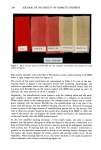
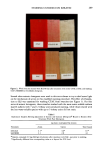
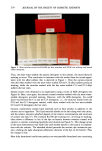
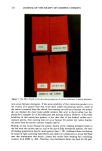
J. Soc. Cosmet. Chem., 40, 205-214 (July/August 1989) Dyestaining and the removal of cationics from keratin: The structure and the influence of the washing anion C. ROBBINS, C. REICH, and J. CLARKE, Colgate Palmolive Co., 909 River Road, Piscataway, NJ 08854. Received February 24, 1989. Synopsis The Red-80 dye-staining procedure has been modified to help serve as a tool to study the removal of cationic surfactants from keratin surfaces. Results from this method and radiotracer studies demonstrate that monofunctional cationic surfactants are not completely removed from hair by washing with anionic detergents. Shorter chain length anionics are more efficient for removing cationics than longer chain length anionics. When washing hair with sodium lauryl sulfate, significantly more lauryl sulfate is left behind on hair previously treated with cationic detergent than on hair containing no cationic detergent. Lipid components of conditioning products (including fatty alcohols) adsorb onto hair along with cationic actives. The ratio of lipid/cationic adsorbed increases with the ratio of lipid/cationic in the formulation. Conditioner lipids, to a certain extent, facilitate removal of the cation from the substrate however, evi- dence also suggests that they participate in anionic detergent buildup on hair. Fully formulated conditioner products behave analogously to the binary systems containing cationic and lipid. Mechanisms are proposed to provide working models to help explain these results. INTRODUCTION In 1969, Scott, Barnhurst, and Robbins (1) described the use of a dye-staining proce- dure using Direct Fast Rubine W.S. dye to detect cationics on keratin substrates. In 1980, Crawford and Robbins (2) described the use of Red-80 dye to replace Rubine, because the latter dye is no longer being manufactured. This test is now widely used in the cosmetics industry as a rapid qualitative screening tool to detect cationics on keratin surfaces. Normally a cationic conditioner or solution containing a cationic ingredient is applied to either a hair or wool swatch, and after rinsing, dye solution is applied and the keratin is rinsed. If a cationic ingredient with a chain length of more than ten carbon atoms is on the swatch, it stains. If the swatch does not stain, the interpretation is that virtually no cationic is bound to the swatch. The objective of this work was to determine if the Red-80 staining procedure could be adapted to help study the removal of cationic/conditioning agents by anionic surfac- rants/shampoos. Thus, we have modified this dye-staining procedure by adding a wash step between application of the cationic and the dye. The new procedure is not intended to replace the former one, but it is intended to be used in conjunction with the former 205
Purchased for the exclusive use of nofirst nolast (unknown)
From: SCC Media Library & Resource Center (library.scconline.org)