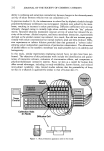
206 JOURNAL OF THE SOCIETY OF COSMETIC CHEMISTS procedure to complement it. This manuscript describes this new procedure and how varying the structure of the washing detergent influences staining and the interpreta- tion of the results. EXPERIMENTAL MATERIALS All sodium alkyl sulfate detergents were purchased from Eastman Kodak Co. and were greater than 96% pure. Ammonium lauryl sulfate (ALS)* and the alkyl ether sulfates were obtained as 30% aqueous solutions from Henkel Incorporated. Sodium deceth-2 sulfate (SDES) was obtained from Vista Chemical Corporation as a 30% aqueous solu- tion, and the alpha olefin sulfonate (AOS) detergents were obtained from the Witco Chemical Corporation as 30 to 60% aqueous solutions. Stearalkonium chloride (SAC) was used as Ammonyx 4002 from Onyx Chemical, and cetrimonium chloride (CTAC) was obtained as a 25% aqueous solution (Genamin CTAC) from American Hoechst. [•4C]SAC and CTAC were synthesized by Andrew Charig along with [35S]ALS and SDES. MODIFIED STAINING PROCEDURE Wet out under running tap water (approximately 100 degrees F) either two wool swatches (3) (3 X 4.5" and approximately 1 g each) or one 3-g blonde hair swatch (4) made from 8" hair. Apply 5 ml of 1 to 2% cationic or fully formulated conditioner and rub into the swatch for 60 seconds. Rinse under running tap water for 60 seconds. Wash the swatches with 5 ml of anionic detergent (5 to 20%) by working into a lather for 60 seconds. Rinse under the tap for 60 seconds. Immerse swatches into a small beaker containing 40 ml of 0.5% Red-80 (5) dye solution for 30 seconds. Rinse the swatches under the running tap for 30 seconds, and dry on a screen rack at room temperature. RADIOTRACER EXPERIMENTS The above-mentioned radiolabeled compounds were diluted with their non-radioactive counterparts to make final solutions of 1.7% CTAC in water, 5% ALS in water, and 1% SAC in 30:70 ethanol water. The final activities of the test solutions were 0.15 microcuries per ml for CTAC, 0.30 microcuries per ml for ALS, 0.30 microcuries per ml for SDES, and 0.075 microcuries per ml for SAC. Wool swatches were prepared for radiolabeling experiments by treating the swatches, which weighed roughly 1.5 g, with 3 ml of 20% triethanolammonium lauryl sulfate * Acronyms for surfactants used in this work: ALS, ammonium lauryl sulfate AOS, alpha olefin sulfonate CTAC, cetrimonium chloride SAC, stearalkonium chloride SDES, sodium deceth-2 sulfate SLS, sodium lauryl sulfate.

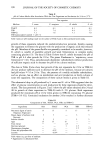
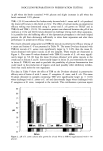
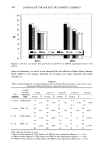
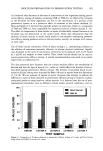
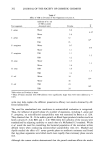
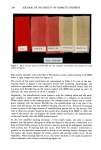
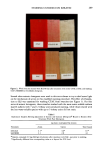
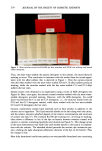
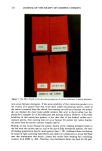
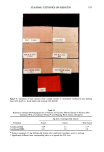
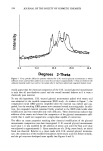
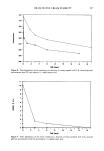
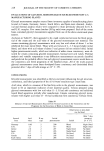
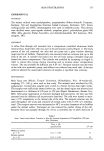
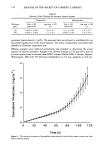
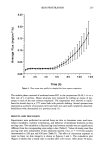
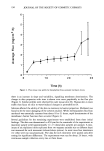
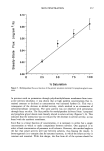
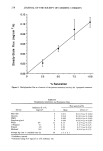
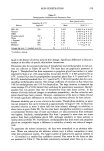
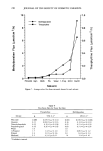
STAINING CATIONICS ON KERATIN 207 (TEALS), rubbing by hand for two minutes, and then rinsing under 100 degrees F running tap water for an additional two minutes. Following overnight drying, the washed swatches were cut with a pair ofpinking shears into 0.14-g segments, having areas of approximately 1.3 square inches, and put aside for use in binding experiments. In general, five swatches were prepared for each treat- ment. In all binding experiments, stainless steel wire gauzes with rectangular holes cut slightly smaller than the test swatches were placed over beakers. A test swatch was then wet with tap water, excess water squeezed out, and the swatch placed over the hole. Then, 0.3 ml of test solution was applied as evenly as possible to the wool, which was rubbed for one minute between two lengths of rubber tubing mounted on metal rollers. The wool swatches were rinsed in a beaker of tap water for 45 seconds, followed by a 15-second rinse in a second beaker, after which very little radioactive material could be removed from the wool by further rinsing. A final rinse was performed for one minute under running tap water. Depending upon the particular experiment, after the above-mentioned treatment, wool swatches could be either hung up to dry or treated again after squeezing out excess water using rubber tubing placed over the ends of crucible tongs. After drying, wool swatches were dissolved by placing each in a counting vial, adding 1 ml of 2M NaOH, and heating in an oven for 1.5 hours. Three reference vials were also prepared, in which a wool swatch was dissolved following addition of a known amount of the radiolabeled compound being tested. After cooling, approximately 12 ml of Aquasol-2 LSC cocktail was added to each vial, followed by addition of 0.25 ml of concentrated perchloric acid. The vials were then shaken vigorously, resulting in a clear solution ready for counting. RESULTS AND DISCUSSION For initial testing, CTAC and SAC, two commonly used conditioning actives, were selected for study. In one of the first experiments, a series of alkyl sulfates of varying chain length (C8, C10, C12, C14) was selected to simulate the shampooing detergent. These alkyl sulfates were used to wash swatches treated with CTAC and then stained according to the procedure described in the experimental section. The results of this experiment are depicted in Figure 1, which shows less staining for the swatches washed with C8 and C 10 alkyl sulfates compared to the swatch not washed with anionic detergent, and no staining for the swatches washed with C12 and C14 alkyl sulfates. Similar results were obtained for both bleached and light blonde hair tresses, with less overall staining for the unbleached hair. The initial, but erroneous, conclusion was that dodecyl and tetradecyl sulfates are more effective for removing CTAC from the keratin. The next step was to run a quantitative adsorption experiment to help explain these dye-staining results. In this study we actually compared the removal of labeled SAC from swatches by labeled SDES and ALS. Swatches treated with SAC or CTAC stain similarly after washing with anionic detergents such as SDES and ALS, i.e., washing
Purchased for the exclusive use of nofirst nolast (unknown)
From: SCC Media Library & Resource Center (library.scconline.org)