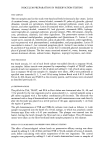
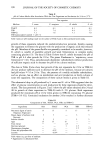
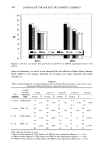
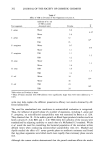
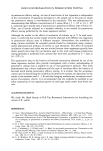
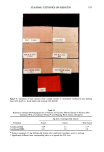
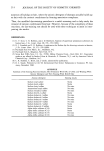
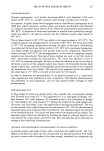
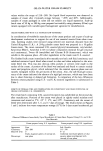
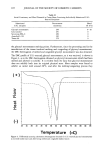
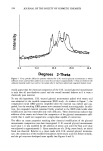
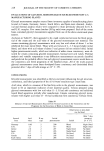
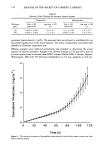
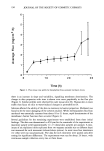
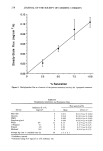
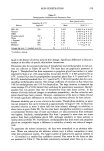
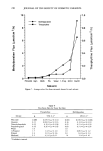
222 JOURNAL OF THE SOCIETY OF COSMETIC CHEMISTS Table II Initial Consistency and Bleed Potential in Cream Bases Containing Individually Substituted U.K.- Sourced Excipients Substituted Penetrometer Bleed U.K. excipient consistency (% w/w) Glyceryl monostearate 299 9-10 Cetyl alcohol 281 0 Syncrowax ERL-C 284 0 Amerchol L- 101 282 0 Tween 60 270 0 the glyceryl monostearate melting points. Furthermore, since the processing used in the manufacture of the cream involved melting and congealing of glyceryl monostearate, the DSC thermogram of melted and congealed glyceryl monostearate was also obtained. The DSC profile of U.S.-sourced glyceryl monostearate, as it was received, is shown in Figure 3, as is the DSC thermogram obtained on glyceryl monostearate which had been melted and allowed to solidify. It is evident from the data that glyceryl monostearate does not solidify back into its original physical state. Most samples were found to exhibit an initial melt around 60øC, and after the melting/congealing process they (+) (-) Temperature (oC) Figure 3. Differential scanning calorimetry thermograms obtained for U.S.-sourced glyceryl monostearate as received (solid trace) and after being melted and congealed (dashed trace).

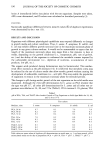
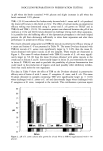
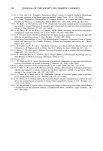
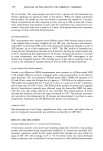
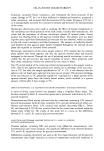
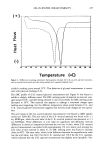
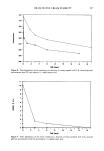
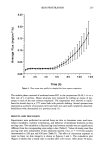
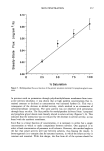
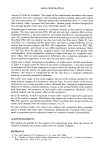
OIL-IN-WATER CREAM STABILITY 223 (+) (-) Temperature (oC) Figure 4. Differential scanning calorimetry thermograms obtained for U.K.-sourced glyceryl monostea- rate as received (solid trace) and after being melted and congealed (dashed trace). yielded a melting point around 55øC. This behavior of glyceryl monostearate is consis- tent with previous findings (5,6). The DSC profile of U.K.-sourced glyceryl monostearate (see Figure 4) was found to exhibit a slightly different trend. The DSC melting point of material as received aver- aged around 65øC, and after being allowed to melt and solidify the DSC melting point decreased to 59øC. This material also appears to undergo a structural change upon melting and congealing, but the different temperature values noted between U.S.- and U.K.-sourced glyceryl monostearate suggests that the structural changes are not equiva- lent. The acid values of the two sourced glyceryl monostearates were found to differ signifi- cantly (see Table III). The acid value of the U.S.-sourced material was found to be 5.1 eq. KOH/gm, while the acid value of the U.K.-sourced material was measured as 1.1 eq. KOH/gm. These differences in acid value are significant and definitely indicate differences in chemical composition between the two lots. In fact, when U.K.-sourced glyceryl monostearate was spiked with approximately 2% w/w stearic acid (raising the acid value of this material to about 5), its DSC melting point was found to decrease down to 60øC. The ester value, which is the difference between the saponification value less the acid value, was 166.9 for the U.K. material and 158.9 for the U.S. material, which indicated that the U.K. glyceryl monostearate was slightly more lipophilic. Fur-
Purchased for the exclusive use of nofirst nolast (unknown)
From: SCC Media Library & Resource Center (library.scconline.org)