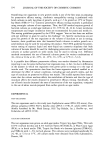
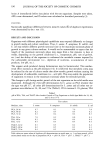
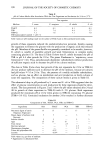
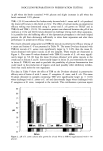
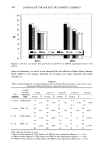
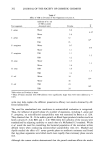
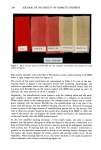
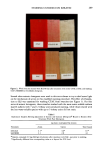
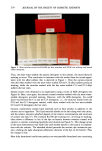
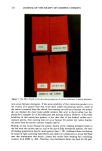
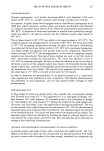
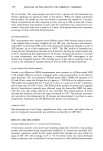
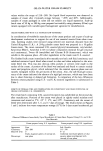
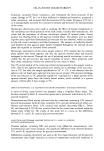
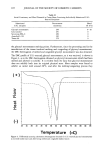
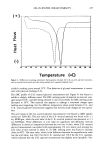
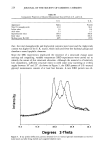
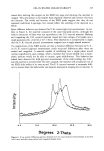
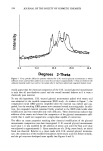
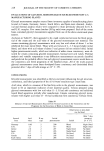
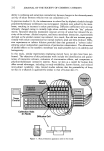
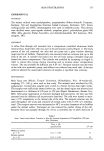
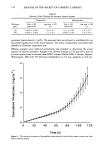
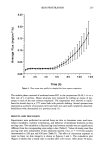
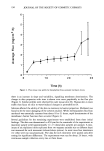
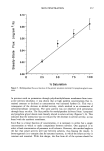
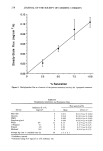
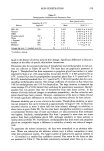
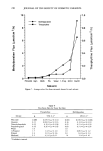
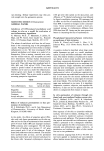
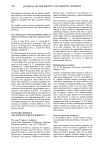
200 JOURNAL OF THE SOCIETY OF COSMETIC CHEMISTS pH 7' 6 5 4 3 2 1 0 24hrs 48hrs Figure 3. pH of E. coli cultures after growth for 24 and 48 hr in TSB(-G) supplemented with 0-5% glucose. from our laboratory, in which it was observed that the addition of Brain Heart Infusion Broth (BHI) to test samples increased the D-values over those obtained with saline inocula (3). Table IV Effect of Growth Medium and Suspending Liquid on D-Values Obtained Using S. aureus and E. coli in Preservative Efficacy Testing of a Cream and Several Test Lotions Growth medium/ Cream Lotion C Lotion D Lotion E Test suspe_9_nding o[iN•ms liq•iid D-value X D-value X D-value X D-value X Lotion F S. aureus TSALT/saline 15 20 14 5.4 9.2 15' 21'* 14' 5.8* 15 22 14 6.2 6.5 S. aureus TSB(-G) 60 94 49 10 20 63* 86** 52* 10' 65 78 55 10 19 E. coli TSALT/saline 22 55 5.1 11 45 21'* 58** 5.3 12 20 60 5.4 12 42 E. coli TSB(- G) 47 86 9.0 12 60 44** 84** 7.6 11 40 80 6.2 10 53 20** 44*** 57*** Table values are D-values in hours. * Mean D-values obtained in TSALT/saline and TSB(-G) were significantly different (p = 0.01). ** Mean D-values obtained in TSALT/saline and TSB(-G) were significantly different (p -- 0.05). *** Mean D-values obtained in TSALT/saline and TSB(-G) were significantly different (p = 0.10).

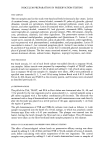
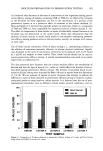
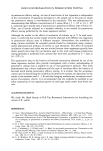
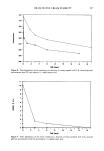
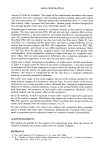
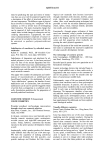
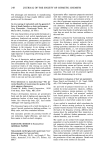
INOCULUM PREPARATION IN PRESERVATION TESTING 201 It is believed that decreases in the rates of inactivation of test organisms during preser- vative efficacy testing of samples containing TSB or TSB(-G), as reflected by increases in the D-values for these organisms, are due to the inactivation of a portion of the preservative system or to a protective effect of nutrients in the culture medium (3). Moss and Speck (17) reported that peptides present in trypticase, which is a component of TSB and TSB(-G), were responsible for improved recovery of freeze-injured E. coli. The effect of components of these broths on repair of sublethally injured bacteria or on D-values was not determined in the current work. These data demonstrate that the addition of broth inocula or sterile broth media to test samples undergoing preserva- tive efficacy testing produces errors in the test results, namely, an increase in D-values, in most cases. Use of broth inocula constitutes a form of abuse testing (i.e., determining tolerance to the addition of extraneous materials, dilution, or adverse physical conditions). Signifi- cant decreases in the rates of inactivation of bacteria were produced with 0.2% broth (0. ! mL/50 mL sample) in these studies. Thus, broth inocula should not be used in routine preservative efficacy testing. A similar recommendation was made in an earlier report from our laboratory (3). The data presented here illustrate that the culture medium affects the metabolism of bacteria and that the type of inocula (i.e., saline vs. broth) affects the kinetics of micro- bial death during preservative efficacy testing. The kinetics of microbial death in pre- servative efficacy testing were discussed by Bean (18) and in reports from this laboratory (3,7,8, 19). We are unaware of reports in recent literature that attempt to address the difference in rates of death obtained in preservative efficacy testing of cosmetic or phar- maceutical products using broth-vs.-saline inocula. It is believed that the use of non- standardized procedures, such as different culture media, growth conditions, and in- lOO 8o 6o 4o I r• 2o / TSALT/SiNE i• TSB(-G) CREAM LOTION C LOTION D LOTION E LOTION F TEST SAMPLE Figure 4. Comparison of D-values obtained in preservative efficacy testing of a cream and four lotions using saline and TSB(-G) inocula of S. aureus.
Purchased for the exclusive use of nofirst nolast (unknown)
From: SCC Media Library & Resource Center (library.scconline.org)