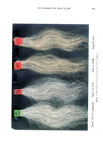
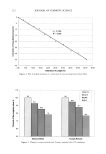
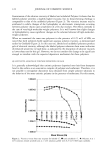
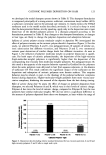
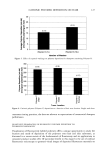
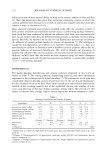
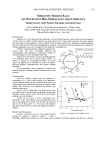
108 JOURNAL OF COSMETIC SCIENCE Table I Physicochemical Properties of Gray and Black Hairs Statistical Hair type Gray Black difference D .... (mm) 0.0832 ñ 0.0145 0.0846 ñ 0.0122 No Drm n (mm) 0.0582 ñ 0.0064 0.0616 ñ 0.0062 Yes A (mm 2) 0.003835 ñ 0.000951 0.004124 ñ 0.000886 No E = D .... /D .... 1.433 ñ 0.218 1.377 ñ 0.169 No Stress-to-break (Gpa) (3.43 ñ 0.58) x 10 • (3.31 ñ 0.65) x 108 No Strain-to-break (%) 50.39 +_ 6.94 49.32 ñ 7.22 No Swelling (%), 5 min 11.78 ñ 3.04 12.43 ñ 2.31 No CHANGES IN HAIR COLOR The differences in color between the four gray hair tresses after 15 days of UV irradiation are very apparent by visual inspection. The hair tresses were put on the fiat glass of a Hewlett Packard ScanJet 6200C scanner and scanned. The computer images of the four hair tresses are presented in Figure 1. It can be seen that tress 2 retained its original color and had virtually the same color as the control, tress 1, but that tresses 3 and 4 developed a yellow tint compared with tress 1. The determined changes in light index, DL, in blue-yellow index, Db, in total color difference, DE, and in yellowing index, DYI, for each tress before and after UV irra- diation are presented in Figure 2. It was found that all of the changes in color index values of tress 2 were minimal, meaning that very little color change took place in tress 2. It was also observed that the light index values (L) for tresses 3 and 4 decreased (DL 0) after UV irradiation. This indicates that tresses 3 and 4 turned slightly darker than their original color. Their blue-yellow index values, b, and the corresponding yellowing index values, YI, of tresses 3 and 4 increased (Db and DYI 0) after UV irradiation. This means that tresses 3 and 4 turned yellower in comparison to their original color. All of these changes in color index values are consistent with our visual observations. The hair-yellowing effect suggests that a UV-induced degradation of hair was taking place. As noted by Roper and Finnimore, a light yellow residual color, or a newly formed yellow photochemical product, remains on hair following UV exposure (12). To compare the effect of UV irradiation on hair color changes of different types of hairs, we studied color changes in dark brown hair according to the procedures described above. Data on DL, Db, and DE of brown hair exposed to 20 days of UV irradiation are presented in Figure 3. Inspection of Figures 2 and 3 shows that the value of the total color difference (DE), 4.45, for the unprotected brown hair after 20 days of UV-B irradiation is smaller than the corresponding DE value of 7.42 for unprotected gray hair after 15 days of UV-B irradiation. This suggests that natural gray hair is more sensitive to color change than natural dark brown hair. It is also interesting to note that brown tresses 3 and 4 were somewhat lightened in color after UV exposure. Their light index values, L, were larger than their original values (DL 0). This suggests that melanin in unprotected brown hair underwent photobleaching during UV irradiation. From Figures 2 and 3, it is seen that both gray and brown hair tresses treated with CATC had small changes in hair

UV DAMAGE ON GRAY HAIR 109
Purchased for the exclusive use of nofirst nolast (unknown)
From: SCC Media Library & Resource Center (library.scconline.org)