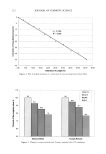
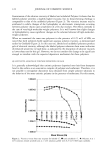
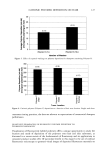
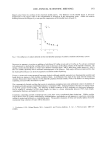
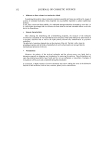
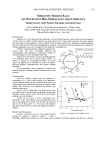
112 JOURNAL OF COSMETIC SCIENCE i~10 y = -0,758x -15 -20 -25 -30 -35 -40 0,00 5,00 10,00 15.00 20.00 25.00 30.00 35.00 40.00 45,00 Extension of Length {%} Figure 4. Plot of length extension vs. contraction of cross-sectional area of hair fibers. 50.00 L o 110 -• ............................................................................................................................................................................................................................................ lOO 9o 80 70 60 50 lOO -- Stress-to-Break lOO , [] NO UV [] CATC • OMC 94.6 [] SLS ........ ___ Young's Modulus Figure 5. Changes in stress-to-break and Young's modulus after UV irradiation.

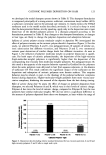
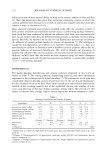
UV DAMAGE ON GRAY HAIR 113 lOO 95 90 85 80 75 70 65 60 55 50 Control CATC OMC ,SLS 0 2 4 6 8 10 12 14 16 UV Exposure Time (days) Figure 6. Changes in dynamic contact angle after UV irradiation. hydrophobic surface, as indicated by essentially no change in the contact angle compared to those fibers that had not been exposed to UV. As a quaternized ultraviolet absorber, CATC deposited on the hair surface to protect hair from UV penetration and also modified the hair surface. Therefore, the hydrophobic surface of tress 2 even after UV irradiation could be attributed to more than one mechanism: either photoprotection of the hair surface, preventing surface damage, and/ or a conditioning effect as a result of its cationic nature. In order to differentiate between these two mechanisms, we washed a part of tress 2 with IPA to remove CATC thor- oughly from the hair surface and then remeasured the contact angles. We found no significant difference in average contact angles between extracted and un-extracted hair fibers. This clearly indicates that the hair surface is protected from UV damage by deposited CATC. As alluded to above, the CATC deposited on the hair surface not only protects hair from UV damage, but also acts as a conditioner. Studies to determine the reduction in the wet combing force were conducted to validate this conditioning effect and are discussed in the section below. REDUCTION IN WET COMBING FORCES Data on the changes in the peak load and the total work of four test gray hair tresses before and after 15 days of UV irradiation are presented in Figure 7. It is seen that the wet combing force increased more than 100% for hair tresses 3 and 4. These observed increases in hair frictional force may be related to the photochemical damages and subsequent removal of the epicuticle layer of hair lipids, such as 18-MEA, which play an important role in the surface properties of hair (5,10). This is also due in
Purchased for the exclusive use of nofirst nolast (unknown)
From: SCC Media Library & Resource Center (library.scconline.org)