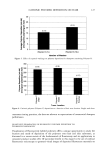
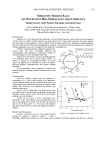
120 JOURNAL OF COSMETIC SCIENCE measure the amount of cationic polymer deposited on a keratin surface. The only truly quantitative method was developed by Goddard and coworkers nearly 30 years ago. It requires the use of radiolabeled cationic polymers (2,3). While this technology is quite powerful and accurate, it is rarely used nowadays, as most personal care research labo- ratories do not have facilities allowing them to use radioactive isotopes. Moreover, it was used mostly to investigate model systems and was only rarely applied to study cationic polymer deposition from surfactant systems (4,5). A titration technique was developed more recently. It requires the use of anionic polymers that form complexes with depos- ited cationic polymers (6). Such technique does not provide meaningful information if the cationic polymer is deposited in the presence of anionic surfactants, as in the case of body washes or shampoos studies, since the surfactant interferes with the complexation of oppositely charged polymers. Fluorescent and colored dyes have been employed to try and measure cationic polymer deposition (7). However, these dyes are usually added after treatment to the observed keratin surface, where they are expected to interact only with the cationic polymer. Thus, the potential for quantitative error can be significant. There have been several recent reports on the covalent attachment of a fluorescent dye to a biopolymer, converting a naturally spectroscopically invisible polymer into a spec- troscopically visible species. The labeling of proteins (8,9), chitosan (10), dextrans (11), guar (12), and carboxymethylcellulose (13) has been discussed in the literature, and the potential use of these fluorescent polymers in personal care studies has been considered (8,9,12). One of us reported recently the preparation and characterization of a fluores- cently labeled cationic hydroxyethyl cellulose using a triazine-modified fluorescein de- rivative (Scheme 1) (14,15). The labeled cationic polymers were employed in model studies (14). We report here the use of these polymers to study deposition from sham- poos. Aspects of this work have been addressed recently (16). Scheme 1.

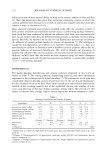
CATIONIC POLYMER DEPOSITION ON HAIR 121 EXPERIMENTAL The preparation, purification, and characterization of fluorescein-modified cationic poly- saccharides have been reported elsewhere (14). The same techniques were used to label the cationic polysaccharides used in this study, namely several cationic hydroxyethyl celluloses (polyquaternium-10) and cationic polygalactomannans (guar hydroxypropyl- trimonium chloride). Table I shows the cationic polymers examined in this study, their solution viscosities, their cationic charge levels, and the levels of fluorescent dye incor- porated. The compositions of the shampoos prepared with the polymers are shown in Table II. Each shampoo was maintained at a pH of 7.0 that provides an optimum pH for fluorescent performance of the dye (13). The polymers were employed at 0.5 wt% in the shampoos for the purposes of this study. Five-gram swatches of virgin blond hair tresses, from one batch of hair purchased from DeMeo Brothers, were washed once with Cl1-15 Pareth-9, a non-ionic surfactant (Union Carbide, Danbury, CT), to remove residual oils and surfactants from the hair. Based on previous work, this treatment was considered to be the most practical for bringing all of the hair fibers into a nearly equivalent ionic state (4). One milliliter of the shampoo formulation was spread at three sites along each tress, and the tress was washed for one minute, rinsed in warm water (30øC) for one minute, and dried using a commercial 1500-watt hair dryer. Each data point represents the average value of measurements from five individual tresses washed one time and, in some cases, ten times with each shampoo. In multiple washing studies, the tresses were dried after each shampoo treatment. One gram of hair was carefully removed from the middle of each tress (unless otherwise specified). It was placed into 99 grams of a 3 wt% NaOH solution. The strongly alkaline solution was kept in the dark at room temperature for 24 hours, whereupon the hair disintegrates and dissolves. The resulting solution was neutralized to pH 7 using aque- ous HC1. All types of hair samples disintegrate in this alkaline medium however, virgin blond hair yields solutions that are nearly void of undissolved residues. Filtration of each solution through a fine fritted glass filter is performed nonetheless. A very small residue was recovered. This residue did not show any fluorescence upon irradiation with a UV light, implying that the amount of polymer trapped, if any at all, is extremely low. The solutions recovered after filtration were then examined by fluorescence spectroscopy, and Table I Cationic Polymers Dye level 4 Polymer INCI name Viscosity 3 (mol g • polymer) Charge level 5 A • Polyquaternium-10 Low 3.2 x 10 5 High B • Polyquaternium-10 Low 1.0 x 10 -4 Low C • Polyquaternium-10 High 5.4 x 10 -5 High D 2 Guar hydroxypropyl trimonium chloride Low 3.7 x 10 5 Low E 2 Guar hydroxypropyl trimonium chloride High 3.6 x 10 -5 Low Available from Amerchol Corporation, Edison, NJ. Available from Rhone-Poulenc, Cranbury, NJ. Low is 1000 cps at 25øC high is 1000 cps at 25øC (Brookfield viscosity). Determined by UV-Vis spectroscopy (14). Low is 1.2% cationic nitrogen high is 1.2% cationic nitrogen.
Purchased for the exclusive use of nofirst nolast (unknown)
From: SCC Media Library & Resource Center (library.scconline.org)